.
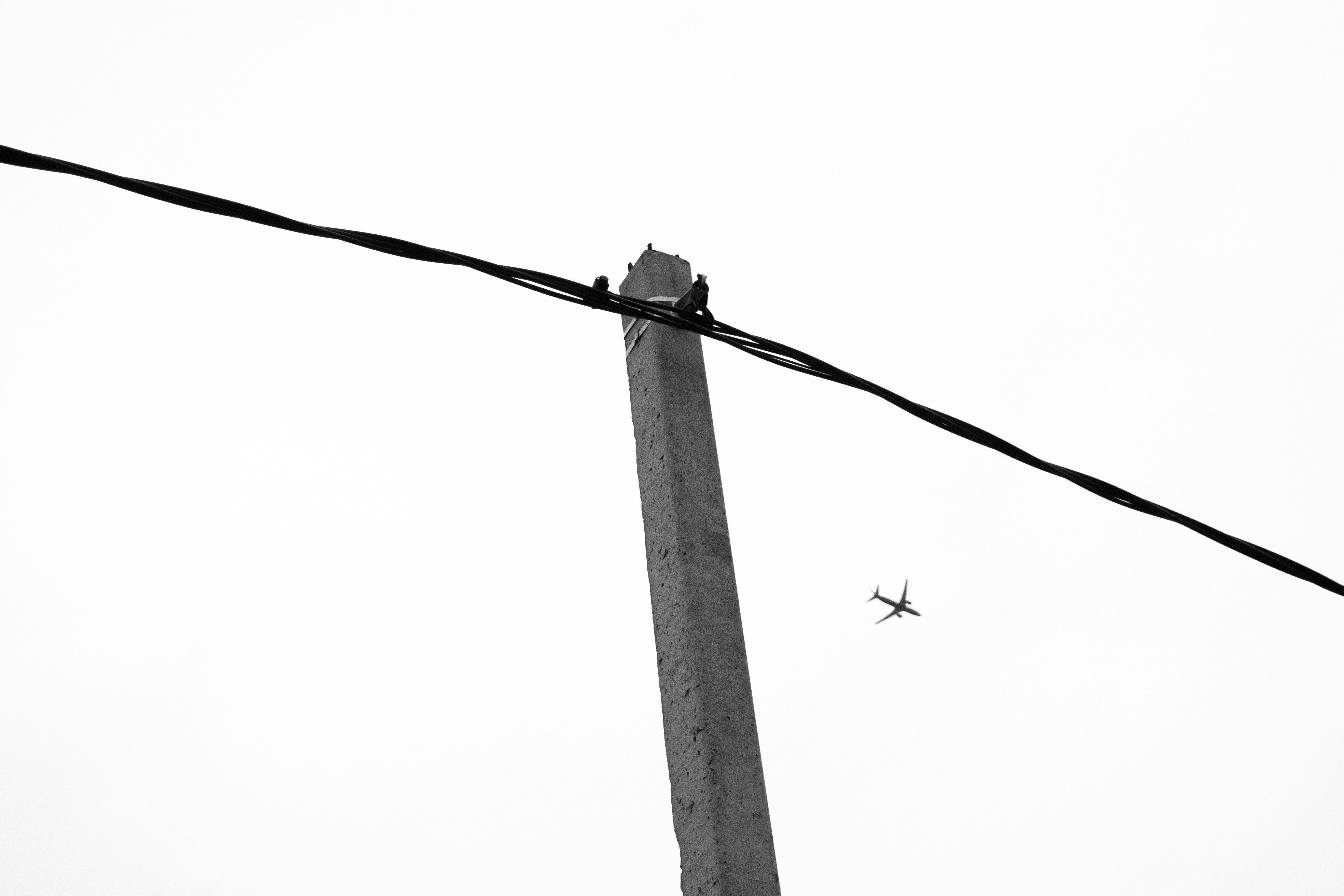
Sometimes, still with my eyes hardened by sleep, I come out into the courtyard and stand there for a few minutes, simply contemplating. I see the triple high‑voltage lines, the fuselage of an aeroplane moving between them, the sometimes frayed, translucent lacework of spiderwebs on the roof cornices, the roads rising and falling, curving through the places that were and are my whole life.
I ask myself whether these lines might not also be a form of language, of writing, just like the sun, the grasses, or the wind itself. Might they be a kind of script whose deciphering depends largely on the sharpness of our eyes and on the sense of occasion with which they plunge into reality and see it differently?
The Polish poet Wisława Szymborska tells us that “Nothing can ever happen twice. / In consequence, the sorry fact is / that we arrive here improvised / and leave without the chance to practise.” It is a variant of the popular saying “nobody is born knowing”. The world’s forms of communication are a little like the false silence of the cosmos: everything depends on the kind of telescope with which we scrutinise it. Our innocence ends the moment we discover a way of reading what lies beyond us.
.
The quoted lines are from Wisława Szymborska’s poem “Nothing Twice”, in the translation by Stanisław Barańczak and Clare Cavanagh, published in Poems New and Collected, 1957–1997 (Harcourt).
.