.
The man came to the holy place dry as a well.
For many days he wandered the same paths where innumerable pilgrims passed, praying, singing, or weeping. He did so without company, without words, without any final thought about anything whatsoever.
In those days the crooked stones of the pavements troubled him deeply, as did the shrines, the small oratories, and the overheated walls of all the labyrinths of that place. The great statues imploring the heavens disturbed him, the dusty ground, and the waterless fountains along the interminable sacred way.
He did not grasp the wearying office of remorse, nor the compulsion toward tears of which they sometimes spoke in strange tongues, languages whose idiom he knew, though not the meaning of their phrases.
His name was Stanislaus Jakubiak. He was a scientist. He called himself an agnostic.
On the seventh day, in one of the alleys that lead from the great square toward the outskirts of the sanctuary, still dazed by the reverberation of the heavy bells of the carillon, he beheld an olive tree.
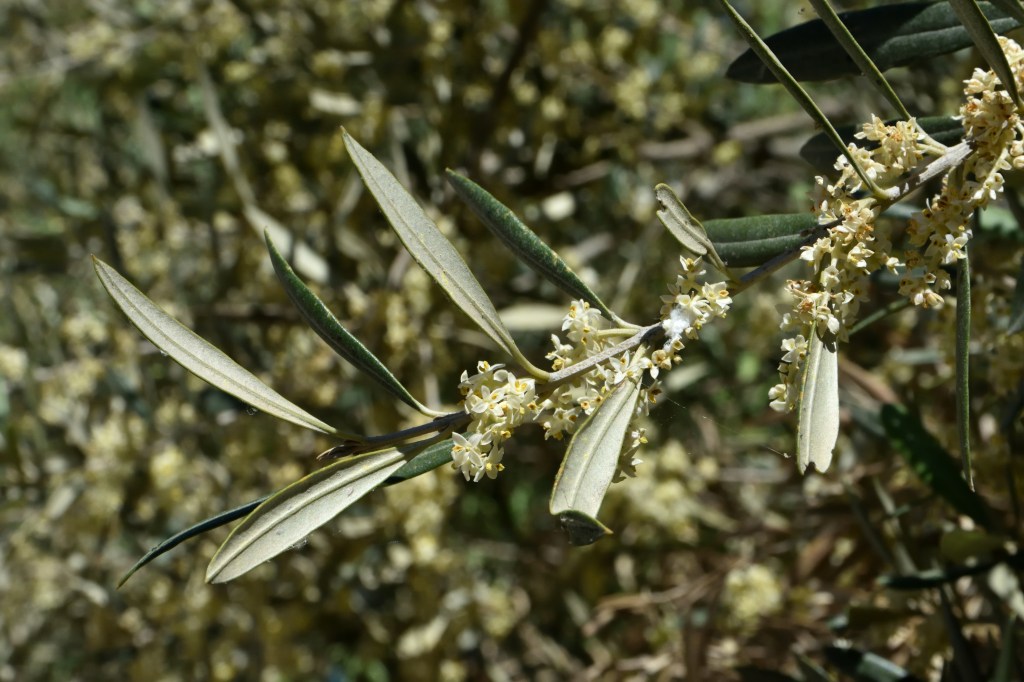
It was a very ancient tree. Of the original trunk only a twisted, bowed remnant endured, as though lightning had once cleft it in two and only one half had survived the sacrifice of existing. Around it stood a low parapet of loosely set shale slats, and between them, the trunk, and the small green‑grey leaves, a thick layer of dust had gathered.
Stanislaus would have signed his name beneath a declaration calling it the finest metaphor of Christian faith.
Pausing a few instants, he saw a small bird with yellow feathers hop there and lift its beak. And he noticed that from the faded leaves of the branches an immaculately white flower sprang forth — alive, resilient. And he felt that from the harmonious breathing of the stones, the bird, and the tree, a silence was rising, the very silence we feel in lands lost from maps.
The Pole perceived that this fossil was a dwelling. Forms of love depended upon that ruin and proved that nothing in this world is so definitive and so fragile that it cannot take us unawares.
He recalled a poem by Zbigniew Herbert that says: “In dust they buried our soul, / in the wind they will uncover our bones still joined.”
He was not certain the poem belonged to Herbert. Nor that the verses said exactly that.
He felt only weary. He wiped his eyes. He saw things.