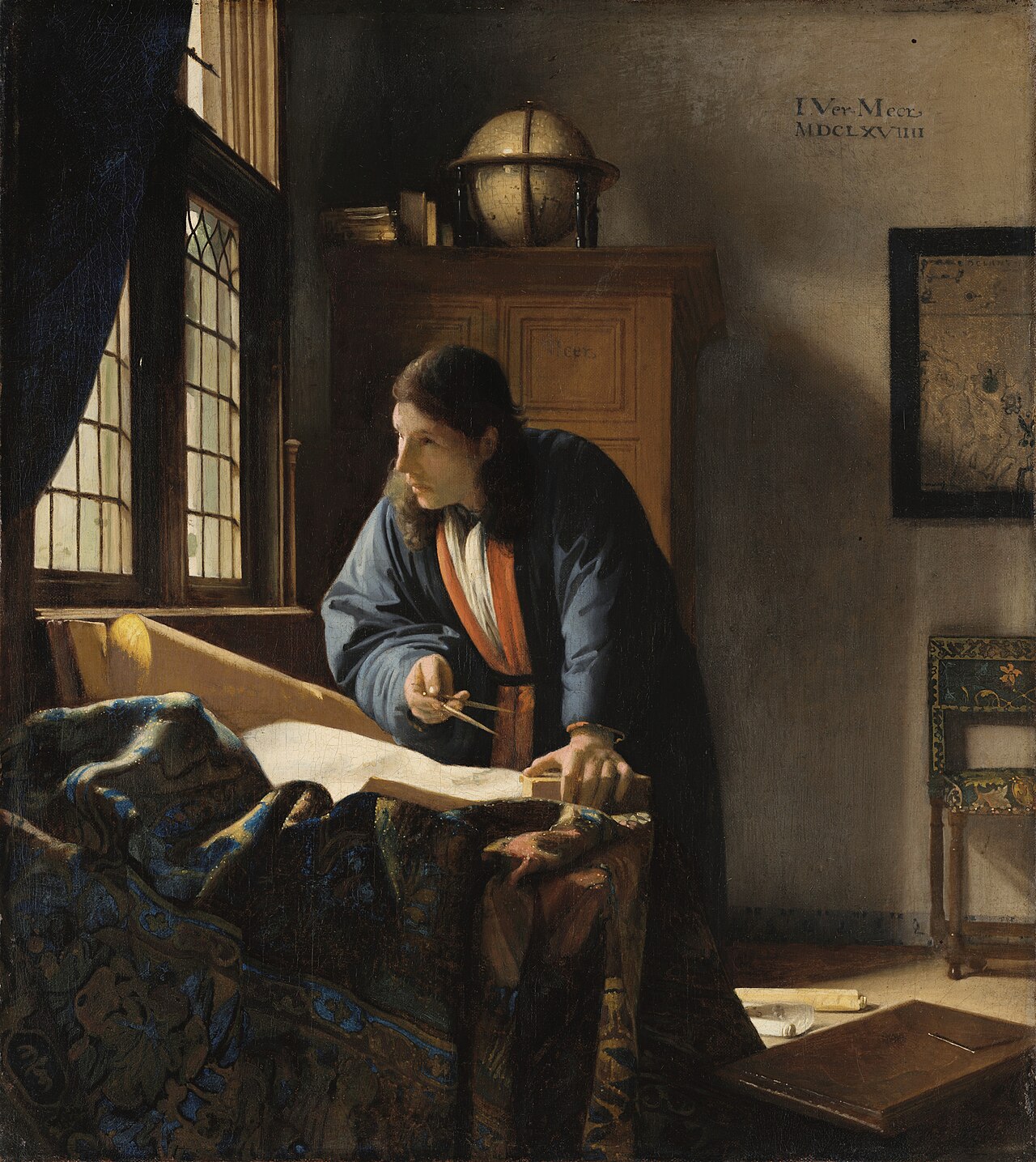
in these days of vertigo, when the world seems to go mad with every gunshot, and even open books are grasping mouths waiting for impure truths to be spoken through them, I return to Vermeer’s silent paintings: to the milkmaid pouring the white unhurriedly, imbued with grace; to the geographer who, through the panes of glass, discerns the inexact place of thought; to the girl reading the mysterious letter, in which she may be shown a certain love, not delicate like a poem, but in the hardness of verbs that do not hide in grammar and instead strip themselves bare in living gestures, difficult and unfeigned
There is only one dependable way to love life: to draw near to the limpidity that asks for patience, courage, sacrifice, and so often silence and self‑denial. And also for defeats, for the encounter with what contradicts us, for the labour of continual learning. Zbigniew Herbert, in a remarkable poem, writes, “I would like to describe the simplest emotion,” trading “all metaphors / for a term / torn from the chest like a rib / for a word / that fits / within the limits of my skin.”
With age we learn that nothing is quite as difficult as the limpidity of childhood—an equivocal yet precious gift. We learn that truth (like the sun) still casts its light and warmth, though it has shifted its place upon the horizon. The irony could hardly be sharper: as we grow older and confront physical short‑sightedness, we look more deeply into things, into the character of others (and of ourselves), into the perplexity of life, into the feeling stirred by little beings, into the pain dealt to us by ignorance and human savagery; we look more intently into the depths of the cosmos, of death, of the genuine happiness born in a poem; we look towards the comfort of friendly voices, towards the solemn wisdom of Vilhelm Hammershøi’s paintings, or the enchantment of the guitar chords of Isaac Albéniz or Joaquín Rodrigo. Life does not require wealth or genius to be worthy. It asks only for kindness and stillness. And with age we learn that nothing matters more than drawing close to our destiny, even if that destiny is a mirage. We recognise it by the confidence and quiet joy with which we open the door each morning. In the end, compassion is the reward of our discovery.
I write these words on a bright December morning, a cup of coffee warming my hands. I feel, far beyond myself, the harmony of space and the mind’s impetuous surge of effort. I might have taken up pencil and paper to write something entirely different. But I needed to set down this thought. Life chose us, as love chooses us, or as the gaze of someone seeking ours. I suppose that responding to such devotion is worth not only the effort, but above all the heart.
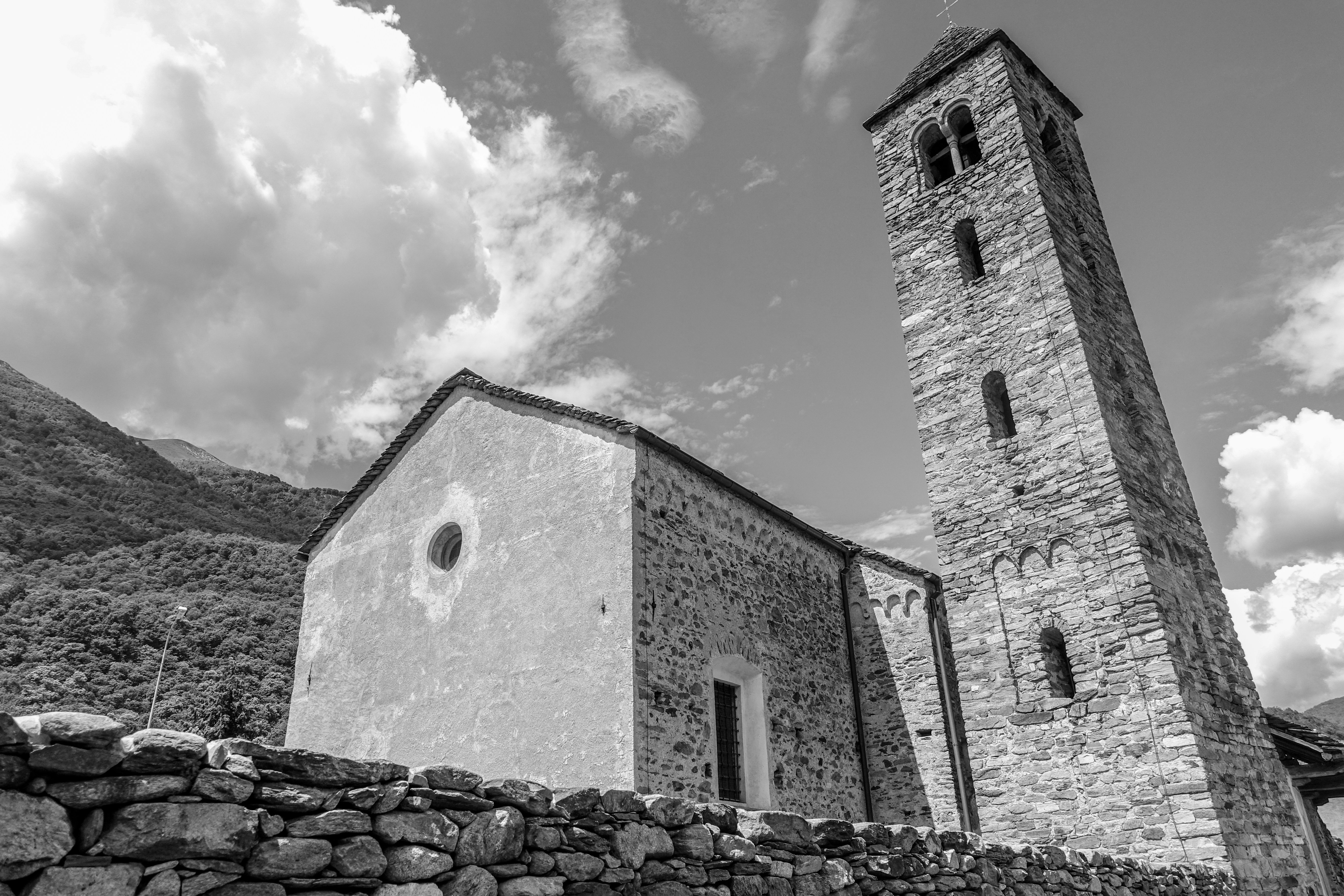
A cliff rose steeply, and on its summit ancient hermits had built, stone by stone, a small church. Seen from afar, it could scarcely be told apart from the granite mass itself. Up close, it looked more like an animal shelter, with a cross perched upon its roof.
Soeiro Ramires, falconer, or perhaps goldsmith, or tailor, or even royal furrier, depending on the version that has reached us, was afflicted with the dreadful disease of leprosy, and found in that rough and holy heap of stones his hiding place. Not only to die there, but because he was fleeing justice. His crime was to have maintained relations deemed against nature with another man. Leprosy and guilt pursued him without mercy.
It was in the time of the first kings of Portugal. Afonso, son of Sanches and grandson of Afonso, was himself dying as a leper. Other monarchs of Christendom had suffered, and would yet suffer, from the same affliction. He, Soeiro Ramires, was seized by a single thought: to climb, to climb as high as he could, before it was too late, to a solitary place where the mercy of Our Saviour might find him sooner than wretched human judgement, and there to await, if not the healing of the flesh, then the absolution of the soul.
At the top of the cliff, where the pinewoods hide themselves in the mist, he dismounted and settled as best he could. He lit a fire, wrapped himself in a thick blanket, ate bread and prayed.
“Love chooses us,” he thought. “With this great sin of loving I have offended the Creator, who has thus defiled my face, my hands, my arms and all my body.”
The cold spread its white cloak all around. Great falls of snow plunged from the sky and made the Beira mountains gleam, from their foothills to the sharp bones of their peaks. Shivering, the wretch gathered what firewood he could and set it alight.
One night, a great star streaked across the horizon from end to end, falling in luminous ash upon his head. Soeiro Ramires marvelled greatly. Not only did the trembling and itching of the flesh cease to torment him, but a profound peace, a sense of rebirth and inexplicable lightness, lifted him from the vileness of the world.
It is said that the disease left him as mysteriously as it had come. Ramires devoted himself to the religious life, becoming one of the first Franciscans to profess in the kingdom. A temple of considerable size was later built on the site of the primitive one: the Church of Saint Francis, Saint Sebastian and the Nativity.
Today, little frequented and almost abandoned, it remains a place to which desperate believers still make their way, in search of a miracle and of redemption.
There was a time in Torben Bjørnsen’s life when his deeds flowed easily and applause reached him from every side. Success seemed without limit and he carried it in his gestures and in his words, for he was a fine writer and an even finer orator. The initials TB gleamed on bookish placards and university periodicals, but above all on the flyers and posters set at the entrances of the packed lecture theatres where he appeared so often.
But that was another time.
With no explanation we might offer the reader, Torben Bjørnsen flung himself into a harsh flight of self-erasure: he refused interviews, turned down invitations, forgot patrons and admirers, and sealed himself in a troubling muteness and solitude, as though he had suddenly needed to transform the empathetic skin of his former self into an armour of scales and spikes. For almost two decades he has produced no new writings, not even the brief prose poems we cherished so much.
Celebrity was followed by resentment and vendetta.
A kind of hatred for the man has taken root in Denmark, a country which, like all others, accumulates both noble and rotten makers of public opinion. Some claim Torben fled the reach of justice, guilty of some offence drawn from the spectrum of social aberrations. Others explain his silence through a profound religious conversion, the sort one does not expect in days so stripped of spirituality as ours. There are those, too, who justify the change with a single word: weariness.
Ida Kjær, a mutual friend, told us recently that she meets him once a year.
Torben does not live in Greenland, in the Faroe Islands, nor on any of those islets on the way to Sweden. He lives where he has always lived, with his cat, with his collection of nativity scenes, with his endless notebooks where he scrawls emendations and runic symbols. “Only older, much older, and filled with that childlike glow that draws us, on this Saint Lucy’s Day, in a crowd to the lighted canals. Torben will be there, anonymous and content, sharing and receiving lussebullar. You’ll see!”
The old man gathered every matchstick he could find. At first they took him for one of those model builders of castles and ships. But no one ever saw him create anything, not a single piece, and so, in time, they began to see him as a madman.
The small, burnt sticks give a beautiful sense of what our life is and what our death is. Some lose their heads easily, others keep their full ashen heads and charred bodies. When joined with patience and calm, they form palisades, bridges, rafts between the realm of the living and the realm of the dead. They resemble poems written to last a miraculous instant and a forever tinged with sorrow. One must understand them.
In December, when the days fade earlier, just before Christmas, they found the old man dead at home. He lay stretched on the floor, inside a gigantic cage made of thousands and thousands of those enchanting fragments of burnt wood. It was a poor mausoleum.
Whether it sheltered him or held him captive, no one has ever managed to understand from what, or why.
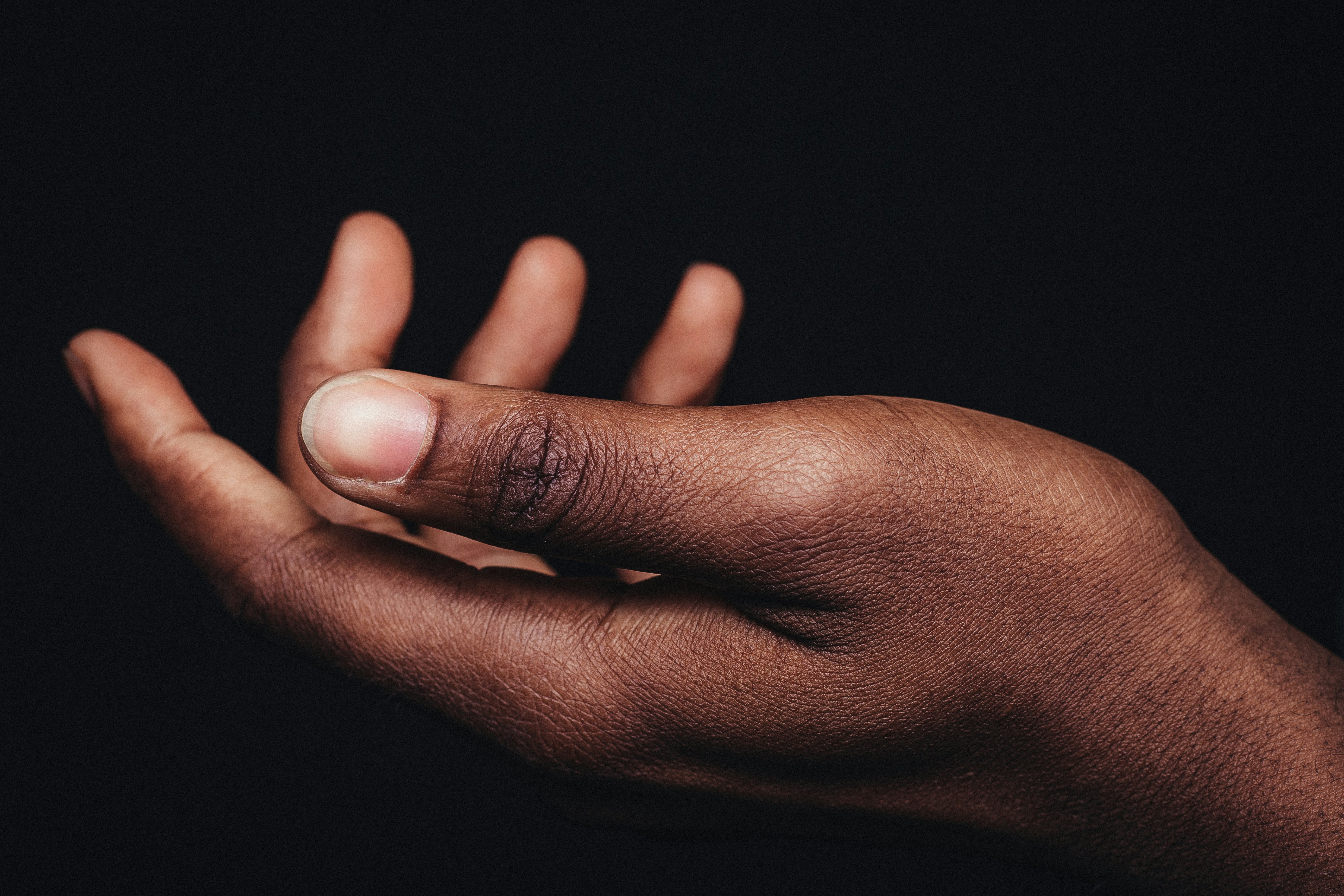
One of Herberto Helder’s most celebrated poems begins: “Amo devagar os amigos que são tristes com cinco dedos de cada lado” / “I love slowly the friends who are sad, with five fingers on each side” (“Aos Amigos,” Poemacto, 1961). Nothing gives itself to us—or gives us so deeply to others—as our hands do. The touch of hands trains our feelings, soothes the wretched, supports the powerless, opens places of refuge and hope to strangers and wanderers, draws in both the different and the familiar, seals pacts, builds bridges, and writes the essential words that the future will allow to take root.
On their skin, in the varied form of the fingers (as though the blessed difference of size and function made them inseparable creators of life), in the beauty of the nails, in the small blue threads of blood running to the tiniest venules and arterioles, in the lines where their phalanges bend and the full shell of their bones closes—there lies a science of fire.
By this science of fire I mean the gift we all possess (and so often refuse): the gift of loving, even in shadow, even in silence, on the humble scale of those who bring forth not injury but a poem, not hatred but friendship, not a hostile fist but an open and willing hand.
Herberto ends his poem with prophetic lines: “– Temos um talento doloroso e obscuro. / Construímos um lugar de silêncio. / De paixão.” / “– We have a painful and obscure talent. / We build a place of silence. / Of passion.” The world of men will only be saved when they understand what their hands are for—when they love the sad ones who keep them open, with five fingers on each side.
Suddenly I grasp the bestiality of humankind as I never had in nearly half a century of life. What is desecrated is the commonplace, the place of others, one’s own place. Each person becomes a latent enemy, a possible hatred, a quarrel, an insult, an act of aggression, a predatory gesture. I see how easily someone is wounded—without cause, without reason, without any concern for what each act is or signifies: a driver abandons his car to raise a violent arm against the one behind him; a ten-year-old hurls a death threat in class, at a fellow pupil or at the teacher; a patient dies on a hospital stretcher before the very eyes of the doctor meant to heal him; a president slanders and divides his people, scorning the oath sworn upon the Bible; a once-decimated nation commits mass murder, justifying force with the cowardly, hypocritical justice it claims to inherit. And suddenly I realize that the clear sun spilling across the windowsill and the blank page of my notebook is impure, unbearable.
I turn to Johann Sebastian Bach as a leper to his refuge. I turn to childhood, to the memory of good friends, of the idyllic walks to primary school, of the ancestral scent of herbs along the streams. I turn to the rigor of colors, the unequivocal weight of words, the care of nails, the truth in the eyes. Then, there was an immeasurable sense of hope. I learned to respect, to give thanks, to be gentle, to cultivate humor, to cherish the rare, beautiful objects given to me, to read books with delicate care, to press my spirit into the considered phrases I was asked to set down—one after another—in school compositions and in dialogue of subtlety. I turn to silence to remember all of this, to listen to the guitar suites, to step away from the noisy patina the days secrete.
The other day a student asked how I find inspiration. For an instant a banality hovered on my lips, a cliché, a ready-made reply. We were in a long room lined with state-of-the-art computers, breathing the air steeped in cables and devices. We were speaking of António Vieira, and of the courage to preach on the edge of the abyss. «I don’t know», «I never knew». That is the certainty. Inspiration—like opening one’s chest to the clean October air, brushing against dew, against the bright green of fennel and lemon verbena—I cannot explain it. Unless, perhaps, as a vast nostalgia, a melancholy urge to reinvent the days backwards, as when the pencil snapped along the nervous line and I thought «this is not the way». Suddenly humanity crumbles on the page, swollen with stupidity and perverse pride. And it is necessary that someone say «this is not the way».