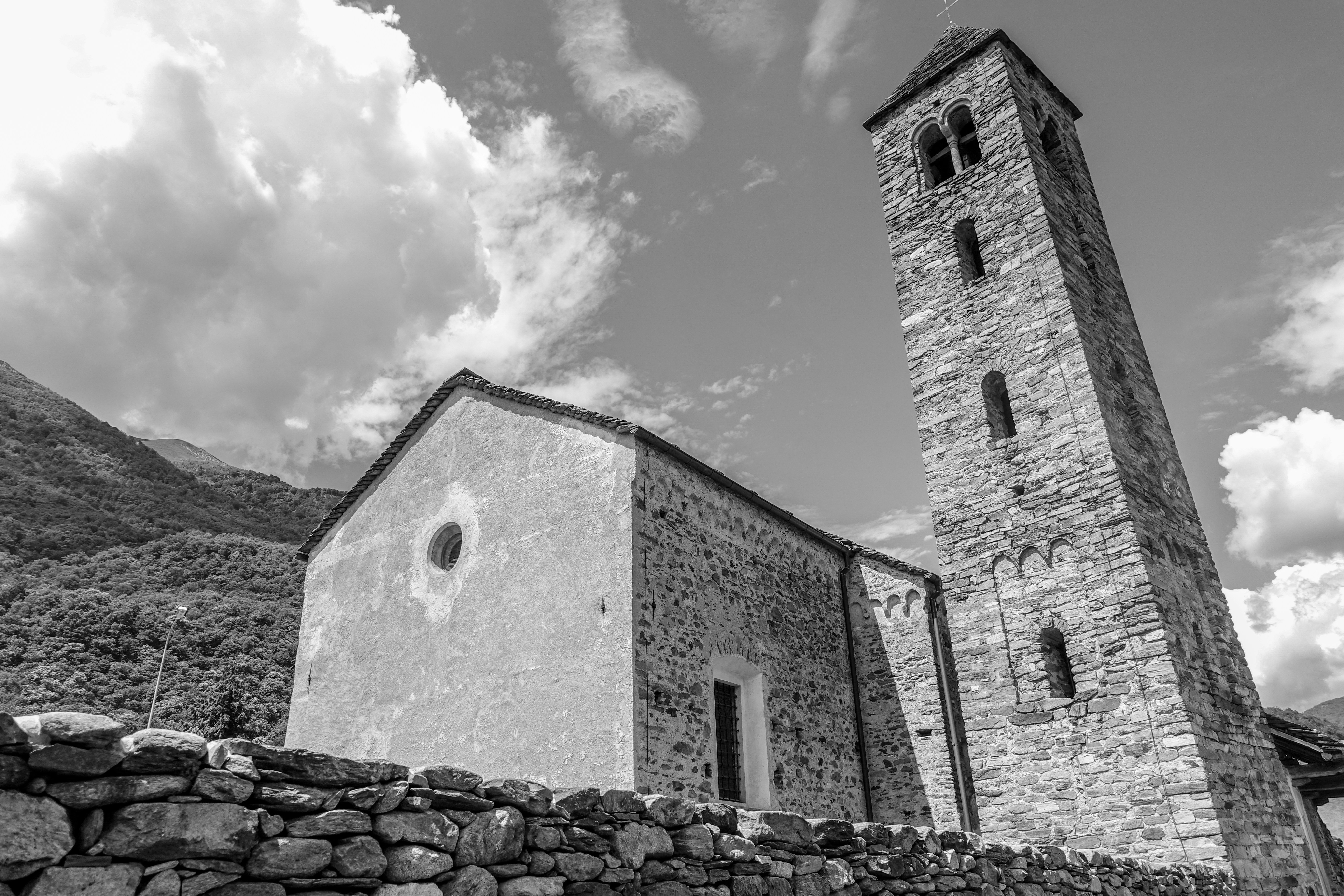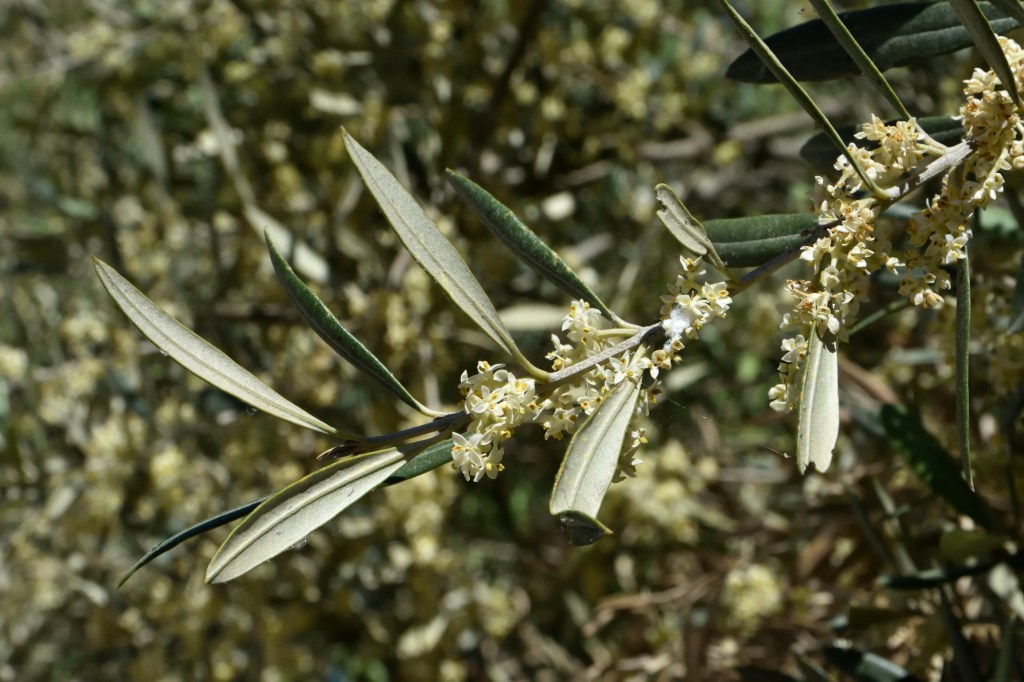
A pilgrim

Photo by Bertrand Borie

.
The man came to the holy place dry as a well.

For many days he wandered the same paths where innumerable pilgrims passed, praying, singing, or weeping. He did so without company, without words, without any final thought about anything whatsoever.

In those days the crooked stones of the pavements troubled him deeply, as did the shrines, the small oratories, and the overheated walls of all the labyrinths of that place. The great statues imploring the heavens disturbed him, the dusty ground, and the waterless fountains along the interminable sacred way.

He did not grasp the wearying office of remorse, nor the compulsion toward tears of which they sometimes spoke in strange tongues, languages whose idiom he knew, though not the meaning of their phrases.

His name was Stanislaus Jakubiak. He was a scientist. He called himself an agnostic.

On the seventh day, in one of the alleys that lead from the great square toward the outskirts of the sanctuary, still dazed by the reverberation of the heavy bells of the carillon, he beheld an olive tree.

It was a very ancient tree. Of the original trunk only a twisted, bowed remnant endured, as though lightning had once cleft it in two and only one half had survived the sacrifice of existing. Around it stood a low parapet of loosely set shale slats, and between them, the trunk, and the small green‑grey leaves, a thick layer of dust had gathered.

Stanislaus would have signed his name beneath a declaration calling it the finest metaphor of Christian faith.

Pausing a few instants, he saw a small bird with yellow feathers hop there and lift its beak. And he noticed that from the faded leaves of the branches an immaculately white flower sprang forth — alive, resilient. And he felt that from the harmonious breathing of the stones, the bird, and the tree, a silence was rising, the very silence we feel in lands lost from maps.

The Pole perceived that this fossil was a dwelling. Forms of love depended upon that ruin and proved that nothing in this world is so definitive and so fragile that it cannot take us unawares.

He recalled a poem by Zbigniew Herbert that says: “In dust they buried our soul, / in the wind they will uncover our bones still joined.”

He was not certain the poem belonged to Herbert. Nor that the verses said exactly that.

He felt only weary. He wiped his eyes. He saw things.
The Leper

Photo by Claudio Carrozzo

.

A cliff rose steeply, and on its summit ancient hermits had built, stone by stone, a small church. Seen from afar, it could scarcely be told apart from the granite mass itself. Up close, it looked more like an animal shelter, with a cross perched upon its roof.

Soeiro Ramires, falconer, or perhaps goldsmith, or tailor, or even royal furrier, depending on the version that has reached us, was afflicted with the dreadful disease of leprosy, and found in that rough and holy heap of stones his hiding place. Not only to die there, but because he was fleeing justice. His crime was to have maintained relations deemed against nature with another man. Leprosy and guilt pursued him without mercy.

It was in the time of the first kings of Portugal. Afonso, son of Sanches and grandson of Afonso, was himself dying as a leper. Other monarchs of Christendom had suffered, and would yet suffer, from the same affliction. He, Soeiro Ramires, was seized by a single thought: to climb, to climb as high as he could, before it was too late, to a solitary place where the mercy of Our Saviour might find him sooner than wretched human judgement, and there to await, if not the healing of the flesh, then the absolution of the soul.
At the top of the cliff, where the pinewoods hide themselves in the mist, he dismounted and settled as best he could. He lit a fire, wrapped himself in a thick blanket, ate bread and prayed.

“Love chooses us,” he thought. “With this great sin of loving I have offended the Creator, who has thus defiled my face, my hands, my arms and all my body.”

The cold spread its white cloak all around. Great falls of snow plunged from the sky and made the Beira mountains gleam, from their foothills to the sharp bones of their peaks. Shivering, the wretch gathered what firewood he could and set it alight.

One night, a great star streaked across the horizon from end to end, falling in luminous ash upon his head. Soeiro Ramires marvelled greatly. Not only did the trembling and itching of the flesh cease to torment him, but a profound peace, a sense of rebirth and inexplicable lightness, lifted him from the vileness of the world.

It is said that the disease left him as mysteriously as it had come. Ramires devoted himself to the religious life, becoming one of the first Franciscans to profess in the kingdom. A temple of considerable size was later built on the site of the primitive one: the Church of Saint Francis, Saint Sebastian and the Nativity.

Today, little frequented and almost abandoned, it remains a place to which desperate believers still make their way, in search of a miracle and of redemption.

.

João Ricardo Lopes is a contemporary Portuguese poet and writer.

More about:
https://joaoricardolopes.com/about/