Sette Visioni Minime: Poesie di João Ricardo Lopes

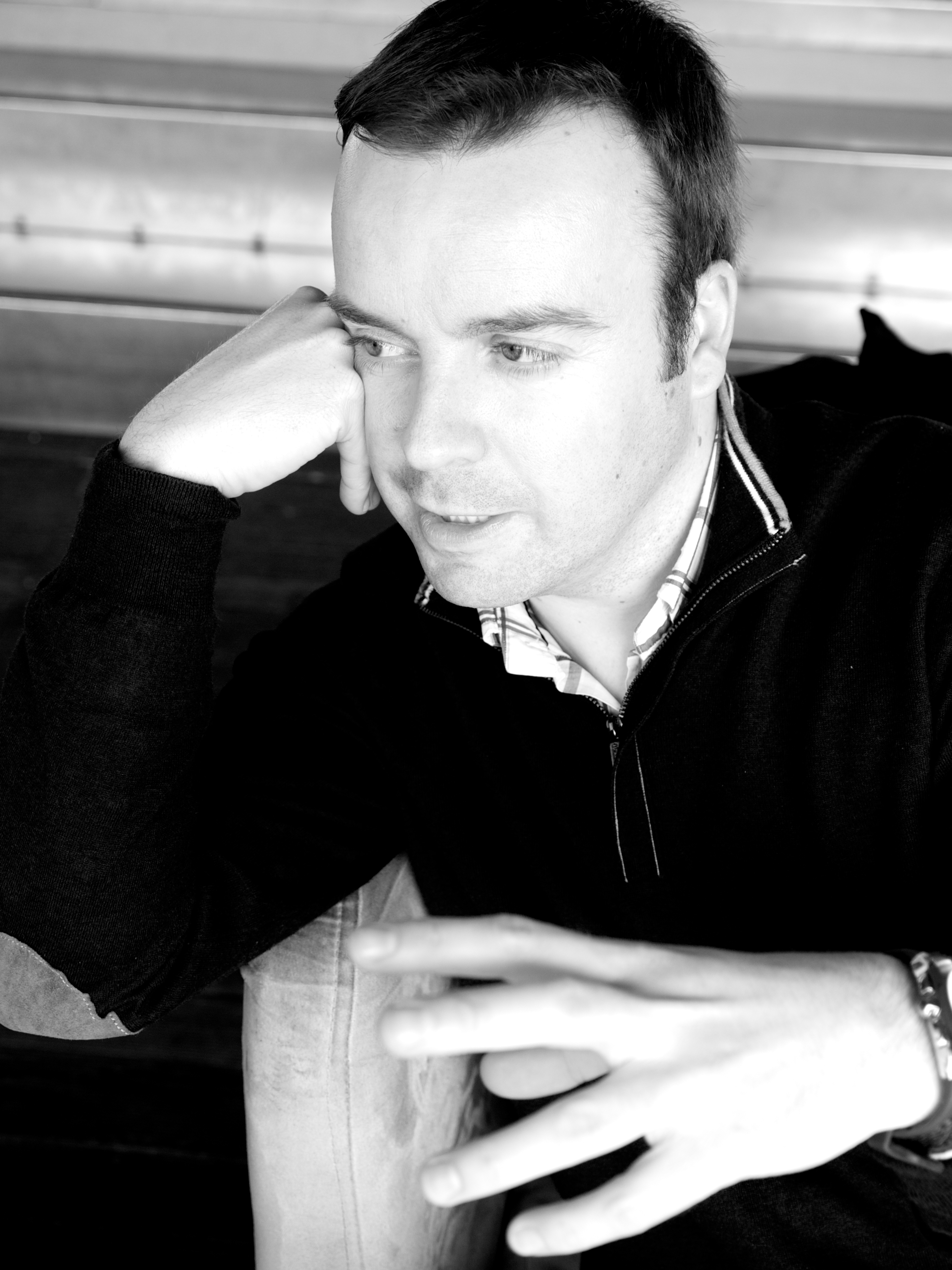
João Ricardo Lopes (Guimarães, 1977) è uno scrittore, poeta e docente portoghese. È autore di una vasta e coerente opera poetica, composta da sette volumi pubblicati, a que se aggiungono una raccolta di racconti e un'antologia di cronache letterarie. Il suo lavoro è stato riconosciuto con importanti premi nazionali e tradotto in diverse lingue, tra cui l’inglese, lo spagnolo, l’italiano e il francese.
Fotografia di Sónia Antunes

.

João Ricardo Lopes (Guimarães, 1977) è uno scrittore, poeta e docente portoghese. È autore di una vasta e coerente opera poetica, composta da sette volumi pubblicati, a que se aggiungono una raccolta di racconti e un’antologia di cronache letterarie. Il suo lavoro è stato riconosciuto con importanti premi nazionali e tradotto in diverse lingue, tra cui l’inglese, lo spagnolo, l’italiano e il francese.

La sua poesia si distingue per un tono meditativo e interrogativo, spesso centrato sulla ricerca del silenzio, della redenzione e dell’enigma della condizione umana. Lontana da ogni lirismo ornamentale, la sua scrittura si nutre di una tensione filosofica profonda, con richiami espliciti o sottili al pensiero di Schopenhauer, Sartre, Camus e Cioran.

Lopes coltiva inoltre un costante dialogo con altre forme artistiche, in particolare la musica e la pittura, che assumono un ruolo strutturante nella sua visione poetica. Tale inclinazione interdisciplinare si riflette anche nella sua attività critica e saggistica, spesso attenta alle intersezioni tra parola, immagine e suono.

Vive e lavora a Fafe, nel nord del Portogallo, dove insegna lingua e letteratura portoghese. Il suo impegno educativo accompagna da anni una riflessione etica ed estetica sulla funzione della poesia nel mondo contemporaneo.

IL FUOCO DEI GITANI

per Catarina

.

nel sud di Lanzarote, vicino a Playa Blanca,
in un luogo che chiamano Los Charcones,
ho visto ciò che più somiglia, sulla terra,
alla luna

il paesaggio è coperto di piroclasti, di cenere dura,
di polvere.
qui non sopravvive nulla, tranne l’euforbia strisciante
e qualche specie di lucertola

ma di notte questo deserto si riempie di fuochi,
di piccole fiamme sparse
tra muri e tende

dicono sia il fuoco dei gitani,
nessuno sa da dove vengano o dove vadano.
e io dico: siano benedetti, perché esistono

Poema tratto dal libro Em Nome da Luz (2022)

.

O LUME DOS CIGANOS

para a Catarina

.

no sul de Lanzarote, perto de Playa Blanca,
num lugar a que chamam Los Charcones,
vi o mais parecido que há na terra
com a lua

a paisagem cobre-se de piroclastos, de cinza dura,
de pó.
nada aqui sobrevive, exceto a rasteira eufórbia
e uma ou outra espécie de lagarto

mas à noite este deserto enche-se de fogueiras,
de pequenas labaredas dispersas
entre muros e tendas

explicam é o lume dos ciganos,
ninguém sabe de onde vêm ou para onde partem.
e eu digo abençoados sejam, porque existem

Testo originale in portoghese: dal libro Em Nome da Luz (2022)

.

SOLSTIZIO D’ESTATE, ROMA

tra le tende
il sole insiste ed entra. quel che di lui
ci scalda sul davanzale
è un riflesso velato
del paradiso.
la luce copre la pelle
e la spoglia,
ricuce,
l’addolcisce senza paura.
è questo il tempo: un misto
amaro e dolce, di brivido solitario
e di tenerezza

Poema tratto dal libro Em Nome da Luz (2022)

.

SOLSTÍCIO DE VERÃO, ROMA

por entre as cortinas
o sol insiste e entra. o que dele
no parapeito nos aquece
é um resquício velado
do paraíso.
a luz cobre a pele
e despe-a,
sutura,
amacia-a sem medo.
é isto o tempo: uma mescla
amarga e doce, de arrepio solitário
e desvelo

Testo originale in portoghese: dal libro Em Nome da Luz (2022)

.

MATTINE DI ASSISI

O que nos chama para dentro de nós mesmos
é uma vaga de luz, um pavio, uma sombra incerta.
Fiama Hasse Pais Brandão

.

la santità di questo luogo è la luce,
il bianco che si solleva dalle mura e non si lascia imprigionare
da nulla

di questa luce parlo in altri poemi, e a proposito di altre città

non sarà più che la chiarezza di una margherita,
o il bagliore del finocchio selvatico,
più che una finestra socchiusa sul nascondiglio
delle memorie,
più che un camminare di pietre dove si va a piedi

la luce, questa luce limpida di Assisi, è un silenzio

levita con il suo peso casto, e consola.
e non ci sono parole per lei, non ci sono

Poema tratto dal libro Em Nome da Luz (2022).

.

MANHÃS DE ASSIS

O que nos chama para dentro de nós mesmos
é uma vaga de luz, um pavio, uma sombra incerta.
Fiama Hasse Pais Brandão

.

a santidade deste lugar é a luz,
o branco que se eleva das muralhas e se não deixa prender
a nada

dessa luz falo noutros poemas e a propósito de outras cidades

não será mais do que a claridade de um malmequer,
ou o fulgor do morrião dos campos,
mais do que uma janela entreaberta para o esconderijo
das memórias,
mais do que um caminhar de pedras por onde se vai a pé

a luz, esta luz límpida de Assis, é um silêncio

levita com o seu peso casto e acalenta.
e não há palavras para ela, não há

Testo originale in portoghese: dal libro Em Nome da Luz (2022)

.

ROSSE ROSE, AGAPANTI BLU

niente ora è più bello
del rosso delle rose,
degli agapanti blu sopra la terra

niente è più sublime
della nebbia brevissima
che precede le cose e annuncia l’estate

quell’istante
in cui la luce cade più compatta e la strada gira
e le ringhiere sorreggono l’insopportabile piccolezza
del mondo

quell’istante
in cui gli occhi volano come sassi
e non sanno nemmeno
da che parte stanno volando

Poema tratto dal libro Eutrapelia (2021)

.

ROSAS VERMELHAS, AGAPANTOS AZUIS

nada mais belo agora
do que o vermelho das rosas,
do que os agapantos azuis sobre a terra

nada mais sublime
do que o nevoeiro brevíssimo
que antecede as coisas e anuncia o verão

esse instante
em que a luz cai mais junta e a estrada roda
e as grades amparam a insuportável pequenez
do mundo

esse instante
em que os olhos voam como pedradas
e não sabem sequer
para que lado voam

Testo originale in portoghese: dal libro Em Nome da Luz (2022)

.

AGOSTO

su frágil armazón de inseguros instantes
José Luis García Martín

.

dovrei parlarti della madreperla,
di quanto splendano i corpi iridescenti,
senza scordare la chitina dello scarabeo,
o la macchia iridescente dell’olio

dovrei dirti quanto mi affascinano
le forme segrete del quarzo,
del sale, delle biglie

o questo verde azzurrato del mare
che mi punge come crisocolla tra le dita,
questo blu dove gli occhi si addormentano
e incerti gelano nel silenzio

questo punto preciso
dove l’infimo e l’infinito stillano l’attimo
e si fanno vetro

Poema tratto dal libro Eutrapelia (2021)

.

AGOSTO

su frágil armazón de inseguros instantes
José Luis García Martín

.

deveria falar-te do nácar,
de como são belos todos os corpos iridescentes,
sem esquecer a quitina do escaravelho,
ou a mancha de combustível

deveria contar-te o quanto me intrigam
as formas interiores do quartzo,
do sal, dos berlindes

ou este verde azul do mar
ferindo-me como crisocola entre os dedos,
este azul onde os olhos adormecem
e indecisos gelam em silêncio

este ponto exato
em que o ínfimo e o infinito segregam o instante
e em vidro solidificam

Testo originale in portoghese: dal libro Eutrapelia (2021)

.

IN NOME DELLA LUCE

perdona, perdona tutto.
in nome dei mattini freschi,
dei giorni caldi, in nome delle erbe
che sono solo erbe, ma valgono
il tuo poema, in nome delle voci pristine
degli uccelli che si impadroniscono della terra,
in nome della luce

perdona. perdona tutto

Poema tratto dal libro Em Nome da Luz (2022)

.

EM NOME DA LUZ

perdoa, perdoa tudo.
em nome das manhãs frescas
dos dias quentes, em nome das ervas
que são ervas, mas valem
o teu poema, em nome das prístinas vozes
dos pássaros que se assenhoreiam da terra,
em nome da luz

perdoa. perdoa tudo

Testo originale in portoghese: dal libro Em Nome da Luz (2022)

.

UN GIORNO CONCRETO

chiesero a Ludwig Wittgenstein se quello fosse un giorno concreto

cos’è un giorno concreto?
che cazzo è, un giorno concreto?

non ho mai saputo quale fu la risposta dell’austro-inglese

un giorno concreto.
concreto come un campo di zizzania o di cicuta davanti a noi.
concreto come Tōru Takemitsu in Nostalghia.
concreto come l’odore della serratella, della cipolla o della gomma da masticare nella tua bocca.
concreto come un bicchiere d’acqua sul tavolo

un giorno concreto come restare svegli davanti a un grande orologio da parete.
come incrociare lo sguardo che ci osserva dallo specchio

un giorno concreto come il bruciore alla vescica.
come far rotolare una pietra tra le dita

un giorno concreto come tossire senza grazia per via della polvere.
come scrivere su un foglio infinito la sequenza di Fibonacci
come toccare un sedere.
come sentire il soffritto che prende fuoco

un giorno passato tra il maestrale gelido e la luce che brucia.
un giorno concreto.
ad ascoltare i grilli o a pulirsi le cispe dagli occhi.
concreto come preparare un’insalata con scarola, rucola o lattuga.
come leggere in piedi Bernardo Atxaga o Philip Levine.
o fumare una brutta copia di un Cohiba.
come sbraitare al telefono con qualcuno per le spese del condominio

un giorno concreto.
concreto come tutti i giorni concreti, pieni di fretta e lentezza,
con le mani in tasca, nei guanti, sulla pelle,
pronte a stringere il quaderno e storpiare un’altra poesia

un giorno concreto come amare Le Quattro Stagioni di Vivaldi
e non avere altro da aggiungere.
concreto come avere la barba lunga e nessuna lametta o sapone in casa,
né voglia di radersi quel volto stanco, quasi di nuovo bambino.
concreto come l’autocommiserazione.
come ascoltare alla radio la Quarta di Brahms diretta da Bernstein.
concreto come una mela, al contrario: obclava, svanita.
come il gemito succubo nel coltello che la taglia in due, in quattro.
concreto come prendere un pugno o un paio di corna,
e camminare per settimane con le ossa dolenti.
concreto come i sacchi di tela sulle spalle di uno straccivendolo.
come il tanfo di un animale in decomposizione sull’asfalto.
concreto come il riflesso della pioggia e il peso di un bacio sulle guance

torniamo dunque all’inizio:
chiesero a Wittgenstein, credo sia stato Bertrand Russell,
mentre succhiava la pipa:

cosa significa per lei un giorno concreto?

uno pensava all’ipotetico ippopotamo nascosto tra i mobili del salotto.
l’altro rifletteva su materia e antimateria, sulla lettera che avrebbe scritto
a Niels Bohr

cosa significa per lei un giorno concreto?

era una chiacchierata da filosofi.
e, come si può facilmente sospettare, non arrivarono a nessuna conclusione

Poesia inedita
.
.

UM DIA CONCRETO

perguntaram a Ludwig Wittgenstein se aquele era um dia concreto

o que é um dia concreto?
o que é a porra de um dia concreto?

nunca soube a resposta que deu o austro-inglês

um dia concreto.
concreto como um campo de cizânia ou de cicuta à nossa frente.
concreto como Tōru Takemitsu em Nostalghia.
concreto como o cheiro da serralha ou de uma cebola ou do chewing gum na tua boca.
concreto como um copo de água sobre a mesa

um dia concreto como estar acordado diante de um grande relógio de parede.
como olhar nos olhos os olhos que nos olham ao espelho

um dia concreto como sentir ardor na bexiga.
como ter uma pedra a rolar entre os dedos

um dia concreto como tossir sem blandícia por causa do pó.
como escrever numa folha interminável a sequência de Fibonacci.
como apalpar um traseiro.
como sentir o estrugido a queimar

um dia passado entre o frio mistral do vento e o abrasador da luz.
um dia concreto.
a escutar grilos ou a limpar ramelas.
concreto como fazer uma salada com escarolas ou rúcula ou alface.
como ler de pé Bernardo Atxaga ou Philip Levine.
ou fumar uma imitação barata de um Cohiba.
como vilipendiar alguém ao telefone por causa do condomínio

um dia concreto.
concreto como todos os dias concretos, cheios de pressa e de vagar,
mãos nos bolsos, nas luvas, na pele,
prontas a segurar o caderno e a estropiar mais um poema

um dia concreto como amar as Quatro Estações de Vivaldi
e não ter mais que dizer.
concreto como ter a barba crescida e nenhuma lâmina ou sabão em casa,
nem vontade para escanhoar o atordoado rosto, quase de novo infantil.
concreto como a autocomiseração.
como ouvir na rádio a Quarta de Brahms conduzida por Bernstein.
concreto como uma maçã, ao contrário, obclávea, tonta.
como o gemido súcubo dentro da faca que a corta em dois e em quatro.
concreto como levar um murro ou um par de cornos
e andar semanas, magoadamente, a cair sobre os ossos.
concreto como sacos de lona às costas de um farrapeiro.
como o fedor de um animal em decomposição sobre o asfalto.
concreto como o reflexo da chuva e o peso de um beijo sobre as faces

voltemos, portanto, ao começo:
perguntaram a Wittgenstein, creio que foi Russell quem o fez,
enquanto alambazava o cachimbo

o que é para si um dia concreto?

um indagava no putativo hipopótamo escondido entre os móveis da sala.
o outro meditava em matéria e antimatéria, na carta que haveria de escrever
a Niels Bohr

o que é para si um dia concreto?

era uma conversa fiada, de filósofos.
a nenhuma conclusão chegaram, como é fácil, aliás, de suspeitar

Testo originale (inedito) in portoghese

.

Biografia dell’autore, selezione dei testi e traduzione di Fabrizio Poli.

.

A Photograph

Photograph by Thorsten von Overgaard

.

On the night of June 23rd that year, the only lamp still lit in the university residence was mine. From the third floor, I could take in the sky ablaze above the city and the festivities. In Porto, it’s mandatory to enjoy oneself on the eve of St. John’s Day. Patios, stairways, alleys, passageways, squares, and avenues fill with noise, colored paper streamers, and the glint of sardine scales. It is compulsory to go out, to mingle, to raise a racket, to drink with abandon, to brandish leeks and press them against the insincerely naïve noses of young women. Tradition has it that this is the solstice night. Even if it’s not the shortest night of the year, it is certainly the longest. Every reveler knows that.

As for me, I stubbornly shut myself in to study Linguistics. From outside, the world burst in—loud, full of life—like a stab to the heart. Through the windowpane I could see the rooftops and church towers where the trailing fire of paper lanterns climbed skyward, the scattered light from crowded balconies, from grills and barbecues burning bright, and the lagging groups running about with their plastic hammers. I could swear the dozens of students’ rooms were empty. Since mid-afternoon, I hadn’t seen a soul in the hallways, nor heard a single voice inside the building.

Martinet’s notes struck me as monstrously tedious. I underlined them with a fluorescent marker and recited the glosses aloud from my notebook. I was alone.

It was in that solitude that I noticed the sky sinking into ever darker shades of green-black, eerily like chromium oxide, suffocating the horizon. The first lightning bolt and thunderclap I mistook for part of the celebration. But then came more. The storm wasted no time shaking the windows and unleashing the most vengeful rain I had ever witnessed.

In an instant, cries of confusion multiplied—hysterical, terrified. Sheets of rain hammered mercilessly against the long tables on the terraces. The grills were dragged under awnings however best they could. Old and young alike huddled together in kiosks and under doorways. The scene of the commotion struck me as so amusing, so full of warmth, that I opened a drawer and took out my Leica.

Despite the fogged glass and saturated air, the landscape had changed. It seemed beautiful now—human, sheltering, inviting.

Far away, the floodlights of the churches lit the storm. Closer, the streetlights revealed the damage. I went down to see it better. As soon as I opened the door, I came face to face with one of those poor souls so common in our cities.

— Didn’t mean to scare you, son. Forgive me!

— You didn’t. Don’t worry!

I hesitated for a moment, unsure whether to step out or invite him in. There was a mix of smoke and vapor rising from the asphalt. My camera was ready.

— This rain. Who could have guessed!

The man said nothing. He only shrugged. In one hand he held an apple, in the other a nylon sack. That downpour, it seemed, was nothing unusual to him.

— You’ll be soaked through… Come in, take shelter!

Without a word, the man obeyed.

I looked at the street: a box of peppers on the ground, abandoned beers, cats under cars, smoke. St. John, it seemed, had proven himself indecent. I couldn’t bring myself to fire the flash. Then the man said:

— In any case, what you’re feeling now is déjà vu.

And it was true: the whole scene felt familiar, as if some link in my memory had sparked the impression I had lived that moment before. The man—though I’d never seen him—was, I could swear, oddly familiar.

— You’re not going to take a single shot with that camera. The objects don’t interest you. Only the subject in front of you is worth noting. Isn’t that right?

His tone, nearly arrogant, sounded like a reproach. He went on:

— Right now, you’re thinking about how to get out of this mess. The street no longer seems the strangest place in the world—this little space here does, doesn’t it? You’re thinking how that box of peppers, those abandoned beers, those screams, those cats hiding under the cars, that smoke—none of it compares to the chaos reigning in your head.

— And how can you possibly know all this?

— Martinet’s Elements of General Linguistics upstairs is proof enough that we’ve both sunk into the same wretched solitude.

— Who are you?

— You always choose the side door, never the corridor straight ahead… You’re still thinking in mazes. And yet, since the moment we saw each other just now, you’ve known—we are the same person!

— We’re the same person?

— The same character, yes!

— The same character?

— Don’t look so surprised. Borges—whom you’ve yet to meet—does the same in the first story of The Book of Sand. Dickens—whom you’ve already forgotten—does it with Ebenezer Scrooge. Dante—whom you’re about to discover—dreams of his own soul transmigrating through the circles of Hell, Purgatory, and Paradise.

— And you’ve come to show me the future, is that it? To prove something? That I—we—are wretched? That I need to change so we can both be redeemed?

— I haven’t come to prove anything at all…

My other self bit into the apple, slung his bundle over his shoulder, and stepped back out into the night, unafraid of the deluge, swallowed by the dirty reflection of a thousand shattered lights.

With the Leica off in my hands, I watched him go, unable to add a single word.

Truth be told, there was nothing left to say.

.

From the book O Moscardo e Outras Histórias (The Horsefly and Other Stories, 2018, pp. 255–259)

A Quest

Photograph by Colin Watts

.

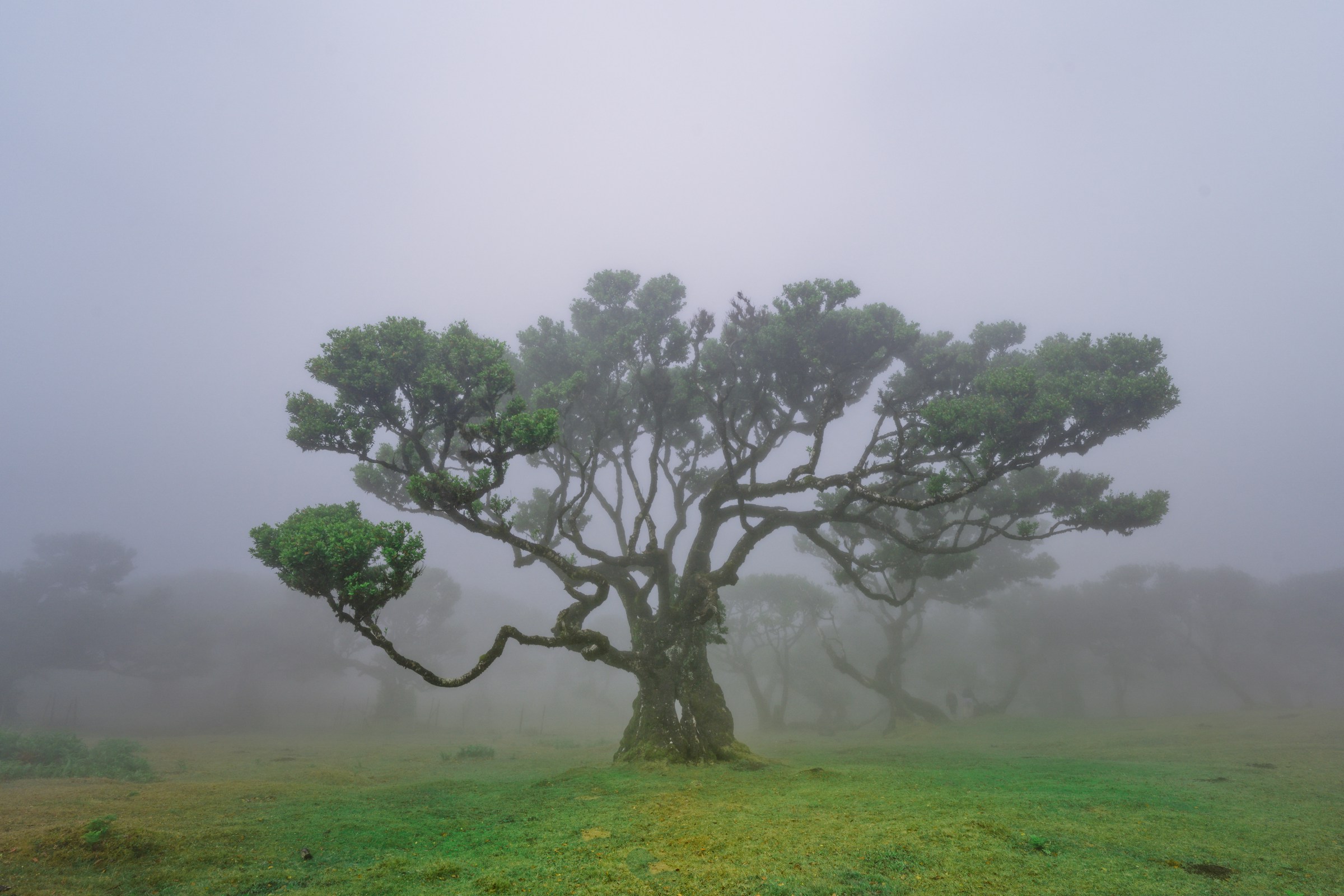
Weary of the errors of his age, of the injustices of his people, and of the brazen lies by which one fed the other— weary of the vileness with which both had cast aside the primacy of kindness among men— Kazuya turned his back on the city and walked toward nothingness for as many days as his sandals would carry him.

In a certain misty place, he came upon a curious tree, which seemed as lost as he was. There, beside it, he began to draw from within himself the words he had long kept buried—words that rattled in his mind like water boiling in a pot.He said many things: first in whispers, then in cries, and at last in deep regret.

Then he felt a great cold. An immense, devastating solitude. An uncontrollable urge to weep. And weep he did, as much as his eyes could bear. Afterward, he embraced the tree, thanked it, and continued his journey into the green-gray horizon. Nothing more was known of him than this.

The last person to see him was an old spinner of thread.

She marveled that such a ragged vagabond could seem happier than a lit lamp— and that he had asked her for nothing, not even a good day.

The Blessed One

Photo by Leroy Skalstad

.

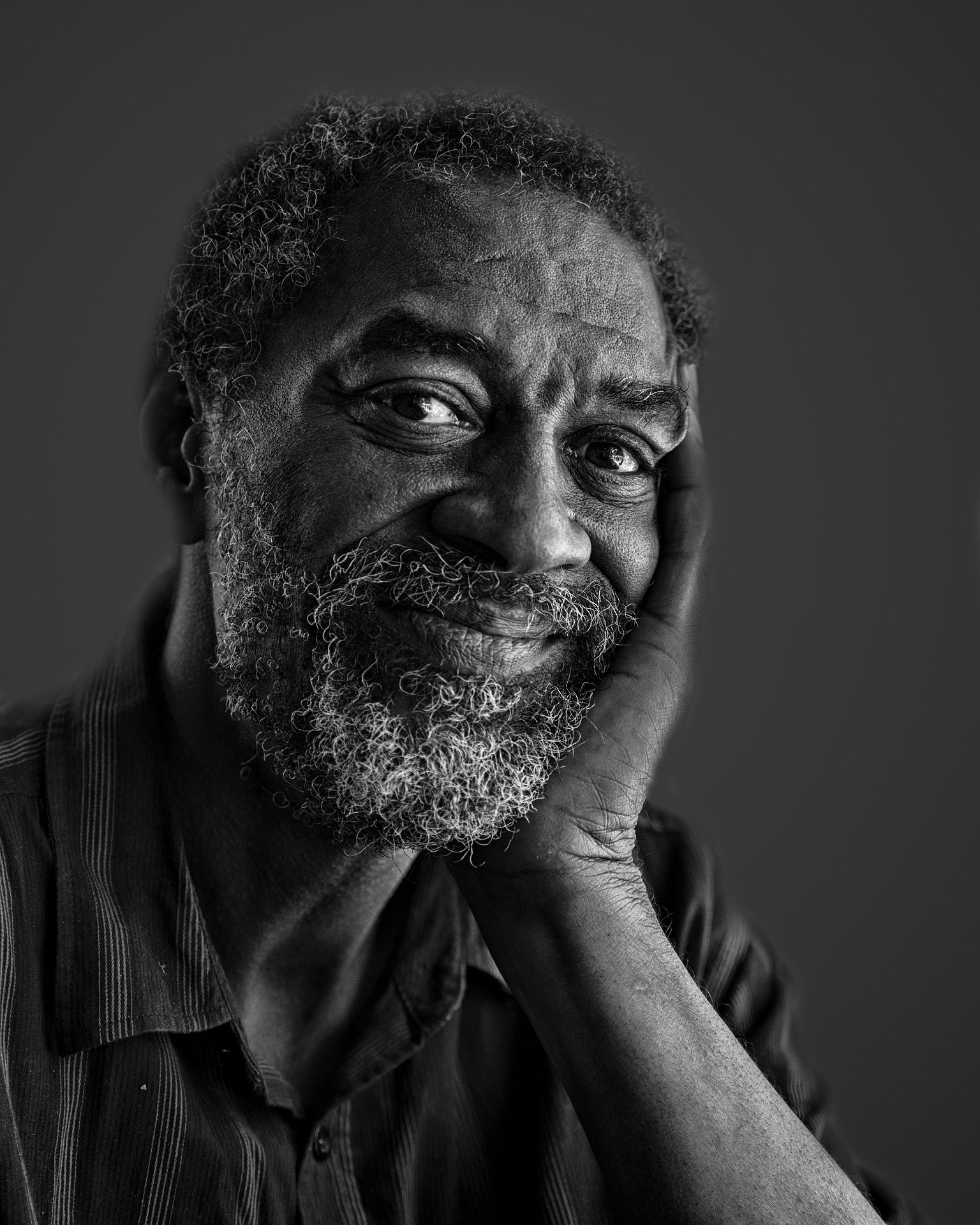
They brought him ivory, and he carved it with the most refined patience of which the human kind is capable. The objects that came from his hands were among those most ravenously coveted by foreigners in Brazzaville, in Djambala, in Sibiti, in Mandigou, and throughout the Congo. They called him “The Blessed One,” though his real name was Isidor Nkobanjira. As he grew old, he boasted of having no fewer than seventy children.

Near the end, he began to cut and pierce and carve deep grooves into an elephant tusk. First, he etched the winding course of a river, then the rise of a mountain, then a flurry of perfectly hemispheric stars. With care, he added water and fish, earth and impalas, sky and vultures. He filled the ivory with every creature he could remember, omitting neither silence, nor death, nor fear.

“The whole universe fits here,” Nkobanjira thought.

But in truth — he noticed with a look of dissatisfaction — after all was done, a bit of space still remained.

Is It Wrong to Write Too Often About Someone You Love?

Photo by Nancy Borowick

.

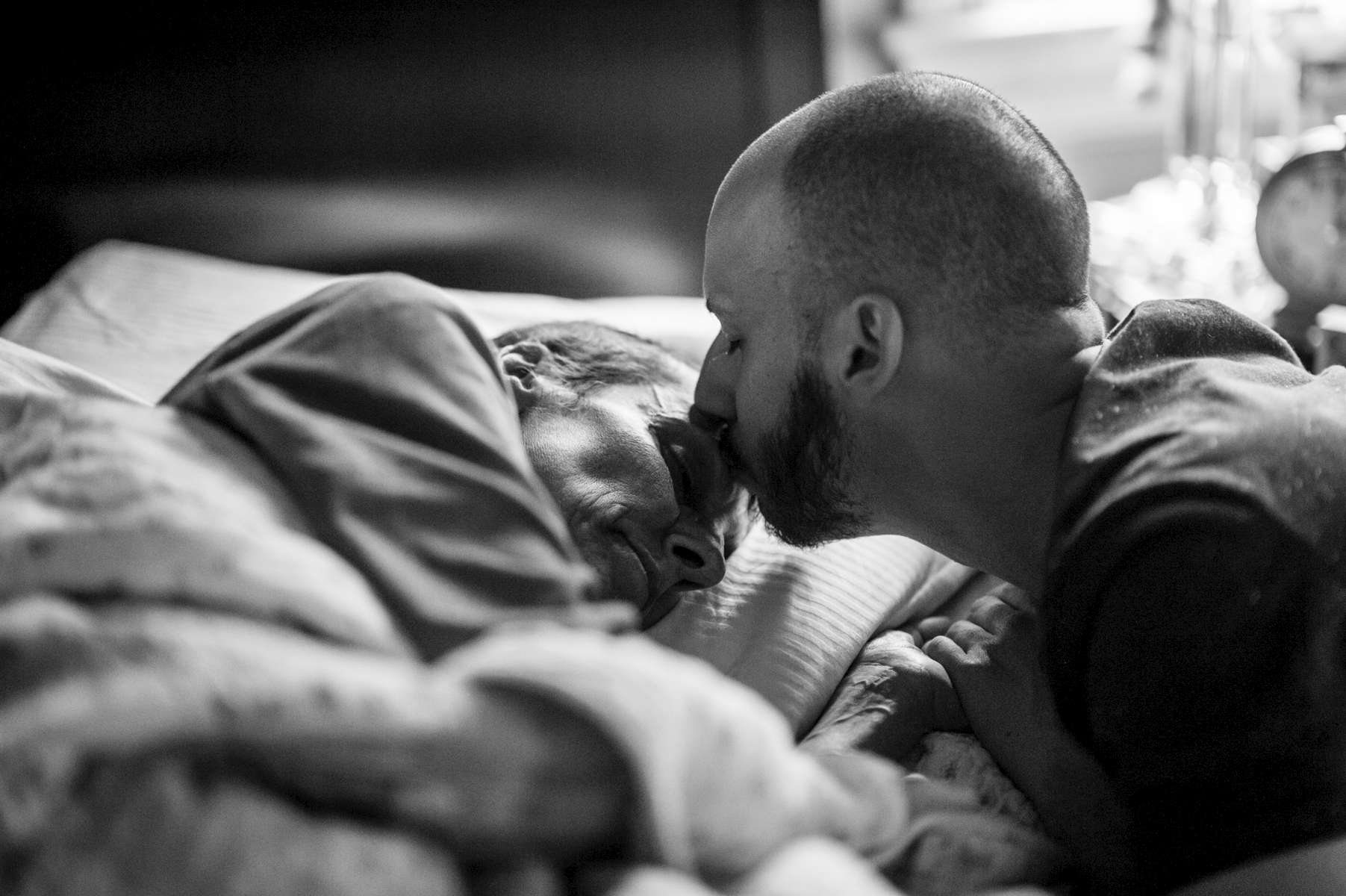
For Maria Alice Pereira Costa, my mother (08-06-1956 – 21-09-2024), in memoriam

.

A light always burns beside the Holy Family. I made a promise, one I keep without fail. That is where the light must stay—there, in that place where even the night becomes beautiful. It’s like in Caravaggio’s paintings: shadows nestle close to candles, to lanterns, to flaming eyes, to the deep colors of robes, and fall asleep. When you left, I swore there would always be light to soften the darkness at home, even if only a single match lit, a phrase whispered from the soul to the depths, even just a hello, mother.

Dates are terrible. I always say the same thing, but I haven’t found another way to put it. It was November first—dreadful, heavy, numbing. Christmas was a sharp blow: the Nativity scene and the tree were here—Catarina insisted—but the little village of Bethlehem felt farther than the edge of the universe from which the jubilant star once burst. Then there was Mother’s Day, and I couldn’t write a single line. And now, your birthday. The first one. And I’m lost in this house, tossed about by memories, adrift in sentences, in your laughter, in the subtleties of your voice, calling back those strands of mischief you would weave around the table at night while the soup simmered in iron pots by the hearth and we prayed the rosary, recited aloud by Rádio Renascença from the Chapel of the Apparitions. Your life was full and hard, mother. My soul is in tatters. And yes, dates are cruel.

You turn 69 today. And yet, how can I say this—you don’t. To have a birthday is to be here, and you are here, but you don’t have one. A son (and we are four) stumbles over words: not long ago you declared, prophesied, with that irritating certainty:

This is the last time you’ll sing me happy birthday.

And already that day—so near, so distant now—cracks open the walls of reason.

Don’t say that, mother.

And then your silence, your opaque eyes without light or phosphenes, your weariness swelling until it spilled from your nose with the start of a sigh.

God will know.

You were like someone who hears the train before everyone else does—rumbling, whistling, approaching in the hush of night, drawing near the light like Caravaggio’s shadows, pretending that everything being fine is a lovely thing.

Don’t say that, mother.

You were right. Everything happened suddenly, so quickly, everything so slow and yet dizzying, all of it soaked in awe and pain, everything inside me unraveling with every memory that tosses my soul into disarray: you holding me in your lap, you lying in the hospital bed, you bent over the looms, you raising a finger in suspicion, you caring for grandma, you kneading bread and putting it in the oven, you saying goodbye, intubated, covered in bruises, you radiant with joy, you in the coffin—cold as paper—when I kissed you one last time.

Next year, God knows!

Don’t say that, mother.

And I, all four of us, the five of us (for father belongs here too, of course), hallucinating, murmuring over lunch that today you would have turned 69, if you were alive. And I, we five, hating those verbs in the conditional, the subjunctive, as if you weren’t alive, as if you weren’t here, among us, listening with your mocking smile to “Happy Birthday to you, on this special day,” as if you’d fail us on a date so important, so unforgettable, so vividly awakened by morning’s small candle flickering beside the wooden box with the Virgin, Saint Joseph, and the Child.

Cancer intruded. I’ve always loathed my cowardice toward illness. I see you still, your lungs working in a terrible struggle, your fist pressed to your chest:

This son of a bitch won’t stop.

And us, eyes fogged over, noses dripping with sorrow, voices breaking in our throats:

Oh, mother of mine.

I swore—on the eve of your passing—that as long as I remain a person in this world, there would always be a light shining from the Holy Family, spreading through the cracks in the house, boldly pushing back the shadows, bringing in the friendly fire of a candle your steadiness, your sense, your resourcefulness, your sayings, your leadership, your way of telling stories with humor and no malice. I swore I would explain myself this way when the longing sometimes chokes me and punches me hard. The place for light is within metaphors. Light should say mother with the same solemn gentleness with which a flame says love.

Is it wrong to write too often about someone you love?

Herberto Helder once wrote in A Colher na Boca, 1961, what I believe is the purest justification for that love: “Mothers are the highest things / their children create, because they place themselves / in the combustion of their children, because / children stand like invading dandelions / in the fields of their mothers.” No verse could fit this chronicle more rightly or more luminously.

This won’t be the last time we sing you happy birthday, mother.

Don’t say that, children. Live your little lives.

And that’s why the light seems so delicate, so soft, so cathartic now that the night falls and the shadows—yes, I must say it again—arrive almost, as in Caravaggio, to be beautiful.

Children’s Day

Photo by Kant Smith

.

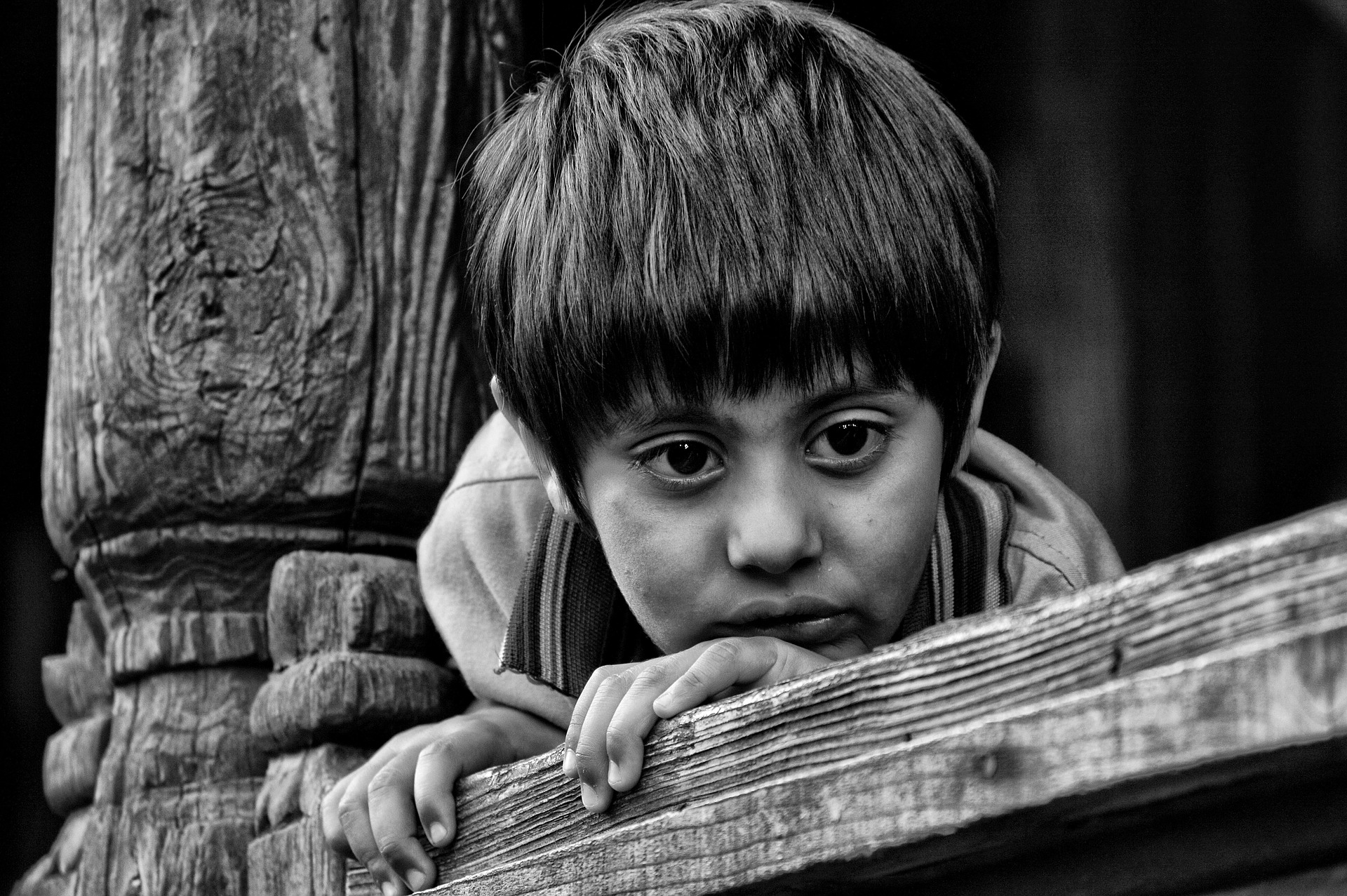
The world exasperates. A latent brutality thrums within it, undoing the stubborn innocence of things, and making ever murkier the divination of times that shall outlive us. We know History swings, endlessly, between seasons of peace and seasons of war, between ages of brilliance and ages of barbarity, between hours of human grandeur and hours of atrocious pillage. If we return to the 1980s, we recall the searing images of Biafra, of Ethiopia—the solidarity campaigns that gathered the world against hunger. We recall the fall of the Berlin Wall, the dawn of democracy in countries once shackled by Soviet rule. We recall Mandela’s release, the silencing of guns in Northern Ireland. A time, perhaps, when free thought was loosening its chains, when democracy and the rights of the unheard began, however briefly, to hold.

But the world is once again turned inside out by the same old forces—those who forever gnaw after wealth, after power, after dominion. One wave of hope gives way to another of grim despair. I think of the children in Gaza, in Ukraine, in that half of the world left wrinkled and worn, enslaved by the relentless sprawl of multinationals. It is hard to believe that a handful of words could matter—and that, too, exasperates.

And still, in these places seemingly abandoned by God—long since forsaken by humanity—there remains a force, faint but unyielding, that drives us to persist. A kind of breath of truth threads its way through the sulphur and phosphorus of falling bombs, compelling us to resist. Resistance itself exasperates. As though some hidden covenant between the last flickers of moral conscience and justice, poetry and the sheer passion for life, shame and a whisper of prayer were urging us to rise—to face the impious cries of tyrants, and the colluding silence of nations that call themselves free. I think of the children of Gaza, starving. The children stolen from Ukraine. The children of Yemen, Sudan, Venezuela. The ones who drown off Lampedusa and Tenerife. The ones who toil from dawn till dark in Bangladesh, in India, in countless places lost to maps. The ones ruled by the Taliban, by mafias, by the degenerate hands of men who harm them. I know that words do not console. Nor do donations (for ten years now I’ve given one to UNICEF on this day). Both are drops in the sea. But I must not forget. I need, as Pedro-Daniel Névio once wrote, to “place a blue thistle in the space left by the stolen heart.”

Perhaps that is the invisible, stubborn force—the one that, beneath the fingernails of the few (and of many more), moves mountains.

The Seer

Photo by Leon Pauleikhoff

.

In the heart of Africa, in a Zambian village stirred by the glaucous waters of a tributary of Lake Tanganyika, lives a man of prodigious nature. He has been blind since birth, yet sees all things around him with striking clarity and depth. He is called “father,” “old one,” but also “bat” and “sorcerer.” People come to him for counsel, to bless their dealings, guide their marriages, or cure the fevers born of the bush.

The man is ancient. He has dwelled in the same adobe-and-thatch hut for over seventy years. If a serpent slithers silently toward him, he crushes its head with a precise blow from the gnarled staff that serves him as both cane and scepter. All revere him. If he says, “Seek your vundu yonder, where the great baobab roots rise,” the fishermen will find it there. If he says, “Your chicken you shall find where the ant roads cross and the kudu leap,” the farmer will find it—sometimes pecking at tadpole larvae along the lake’s alluvial slopes, sometimes no more than a bare carcass, nearly dust.

A British missionary has recently arrived in the village, coming from Rwanda. His name is Paul Montague. He has quickly won the villagers’ easy affection. He brings teachings as alien to this soil as those others who once came sowing lessons before him. When he visited the hut of the old man so often spoken of, he was startled by the torrent of curses the blind elder hurled at him in the local tongue, a daughter of the Bantu speech. The villagers merely shrug. Those who speak some broken English explain that the man is prophesying ruin. In three days, they say, a deadly rain will descend from the heavens and famine will follow.

The missionary calms the gathered crowd, proudly displaying a magical object that emits both voices and images, assuring them that modern science predicts the weather with certainty. There will be no rain in the coming days. The Seer is mistaken. But the Seer spits in disgust, drives them out, and foretells calamities without end.

Three days later, a dense, roaring, buzzing, devouring cloud descends, smothering every house, every tree, every living creature clustered there. It is a horde of locusts. They fall upon the crops, the acacias, the savanna, the conical rooftops—and seem ready even to consume the villagers themselves, barely awakened from their nightmare.

Inside his hut, the old man sits in absolute silence. They did not heed his warning, and so he weeps. In over seventy years, he has never known such scorn. From his sightless eyes burst terrible visions. That cloud of locusts is nothing compared to what is coming. It is only the beginning.