.
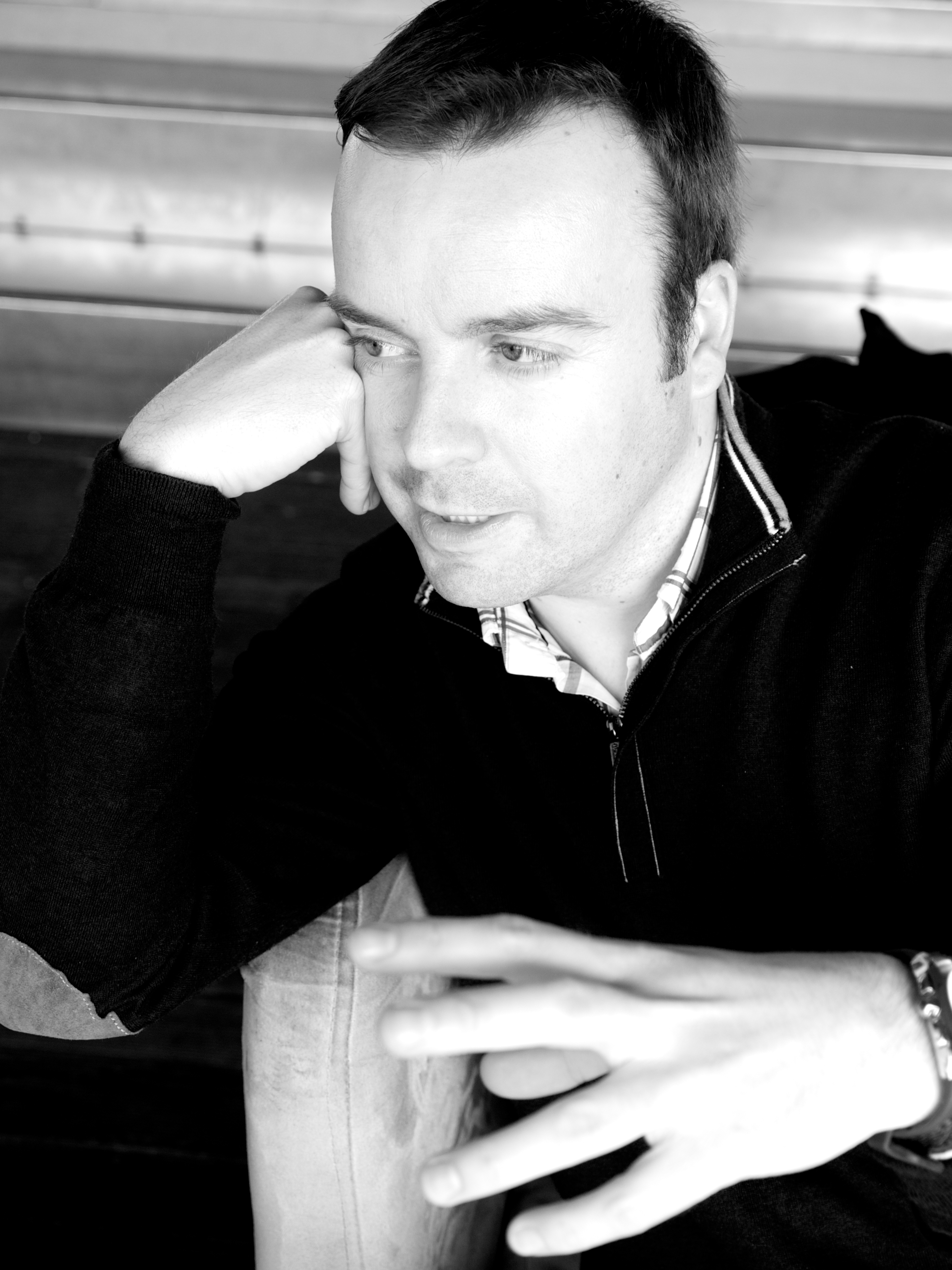
João Ricardo Lopes (Guimarães, 1977) è uno scrittore, poeta e docente portoghese. È autore di una vasta e coerente opera poetica, composta da sette volumi pubblicati, a que se aggiungono una raccolta di racconti e un’antologia di cronache letterarie. Il suo lavoro è stato riconosciuto con importanti premi nazionali e tradotto in diverse lingue, tra cui l’inglese, lo spagnolo, l’italiano e il francese.
La sua poesia si distingue per un tono meditativo e interrogativo, spesso centrato sulla ricerca del silenzio, della redenzione e dell’enigma della condizione umana. Lontana da ogni lirismo ornamentale, la sua scrittura si nutre di una tensione filosofica profonda, con richiami espliciti o sottili al pensiero di Schopenhauer, Sartre, Camus e Cioran.
Lopes coltiva inoltre un costante dialogo con altre forme artistiche, in particolare la musica e la pittura, che assumono un ruolo strutturante nella sua visione poetica. Tale inclinazione interdisciplinare si riflette anche nella sua attività critica e saggistica, spesso attenta alle intersezioni tra parola, immagine e suono.
Vive e lavora a Fafe, nel nord del Portogallo, dove insegna lingua e letteratura portoghese. Il suo impegno educativo accompagna da anni una riflessione etica ed estetica sulla funzione della poesia nel mondo contemporaneo.
•
IL FUOCO DEI GITANI
per Catarina
.
nel sud di Lanzarote, vicino a Playa Blanca,
in un luogo che chiamano Los Charcones,
ho visto ciò che più somiglia, sulla terra,
alla luna
il paesaggio è coperto di piroclasti, di cenere dura,
di polvere.
qui non sopravvive nulla, tranne l’euforbia strisciante
e qualche specie di lucertola
ma di notte questo deserto si riempie di fuochi,
di piccole fiamme sparse
tra muri e tende
dicono sia il fuoco dei gitani,
nessuno sa da dove vengano o dove vadano.
e io dico: siano benedetti, perché esistono
Poema tratto dal libro Em Nome da Luz (2022)
.
O LUME DOS CIGANOS
para a Catarina
.
no sul de Lanzarote, perto de Playa Blanca,
num lugar a que chamam Los Charcones,
vi o mais parecido que há na terra
com a lua
a paisagem cobre-se de piroclastos, de cinza dura,
de pó.
nada aqui sobrevive, exceto a rasteira eufórbia
e uma ou outra espécie de lagarto
mas à noite este deserto enche-se de fogueiras,
de pequenas labaredas dispersas
entre muros e tendas
explicam é o lume dos ciganos,
ninguém sabe de onde vêm ou para onde partem.
e eu digo abençoados sejam, porque existem
Testo originale in portoghese: dal libro Em Nome da Luz (2022)
.
•
SOLSTIZIO D’ESTATE, ROMA
tra le tende
il sole insiste ed entra. quel che di lui
ci scalda sul davanzale
è un riflesso velato
del paradiso.
la luce copre la pelle
e la spoglia,
ricuce,
l’addolcisce senza paura.
è questo il tempo: un misto
amaro e dolce, di brivido solitario
e di tenerezza
Poema tratto dal libro Em Nome da Luz (2022)
.
SOLSTÍCIO DE VERÃO, ROMA
por entre as cortinas
o sol insiste e entra. o que dele
no parapeito nos aquece
é um resquício velado
do paraíso.
a luz cobre a pele
e despe-a,
sutura,
amacia-a sem medo.
é isto o tempo: uma mescla
amarga e doce, de arrepio solitário
e desvelo
Testo originale in portoghese: dal libro Em Nome da Luz (2022)
.
•
MATTINE DI ASSISI
O que nos chama para dentro de nós mesmos
é uma vaga de luz, um pavio, uma sombra incerta.
Fiama Hasse Pais Brandão
.
la santità di questo luogo è la luce,
il bianco che si solleva dalle mura e non si lascia imprigionare
da nulla
di questa luce parlo in altri poemi, e a proposito di altre città
non sarà più che la chiarezza di una margherita,
o il bagliore del finocchio selvatico,
più che una finestra socchiusa sul nascondiglio
delle memorie,
più che un camminare di pietre dove si va a piedi
la luce, questa luce limpida di Assisi, è un silenzio
levita con il suo peso casto, e consola.
e non ci sono parole per lei, non ci sono
Poema tratto dal libro Em Nome da Luz (2022).
.
MANHÃS DE ASSIS
O que nos chama para dentro de nós mesmos
é uma vaga de luz, um pavio, uma sombra incerta.
Fiama Hasse Pais Brandão
.
a santidade deste lugar é a luz,
o branco que se eleva das muralhas e se não deixa prender
a nada
dessa luz falo noutros poemas e a propósito de outras cidades
não será mais do que a claridade de um malmequer,
ou o fulgor do morrião dos campos,
mais do que uma janela entreaberta para o esconderijo
das memórias,
mais do que um caminhar de pedras por onde se vai a pé
a luz, esta luz límpida de Assis, é um silêncio
levita com o seu peso casto e acalenta.
e não há palavras para ela, não há
Testo originale in portoghese: dal libro Em Nome da Luz (2022)
.
•
ROSSE ROSE, AGAPANTI BLU
niente ora è più bello
del rosso delle rose,
degli agapanti blu sopra la terra
niente è più sublime
della nebbia brevissima
che precede le cose e annuncia l’estate
quell’istante
in cui la luce cade più compatta e la strada gira
e le ringhiere sorreggono l’insopportabile piccolezza
del mondo
quell’istante
in cui gli occhi volano come sassi
e non sanno nemmeno
da che parte stanno volando
Poema tratto dal libro Eutrapelia (2021)
.
ROSAS VERMELHAS, AGAPANTOS AZUIS
nada mais belo agora
do que o vermelho das rosas,
do que os agapantos azuis sobre a terra
nada mais sublime
do que o nevoeiro brevíssimo
que antecede as coisas e anuncia o verão
esse instante
em que a luz cai mais junta e a estrada roda
e as grades amparam a insuportável pequenez
do mundo
esse instante
em que os olhos voam como pedradas
e não sabem sequer
para que lado voam
Testo originale in portoghese: dal libro Em Nome da Luz (2022)
.
•
AGOSTO
su frágil armazón de inseguros instantes
José Luis García Martín
.
dovrei parlarti della madreperla,
di quanto splendano i corpi iridescenti,
senza scordare la chitina dello scarabeo,
o la macchia iridescente dell’olio
dovrei dirti quanto mi affascinano
le forme segrete del quarzo,
del sale, delle biglie
o questo verde azzurrato del mare
che mi punge come crisocolla tra le dita,
questo blu dove gli occhi si addormentano
e incerti gelano nel silenzio
questo punto preciso
dove l’infimo e l’infinito stillano l’attimo
e si fanno vetro
Poema tratto dal libro Eutrapelia (2021)
.
AGOSTO
su frágil armazón de inseguros instantes
José Luis García Martín
.
deveria falar-te do nácar,
de como são belos todos os corpos iridescentes,
sem esquecer a quitina do escaravelho,
ou a mancha de combustível
deveria contar-te o quanto me intrigam
as formas interiores do quartzo,
do sal, dos berlindes
ou este verde azul do mar
ferindo-me como crisocola entre os dedos,
este azul onde os olhos adormecem
e indecisos gelam em silêncio
este ponto exato
em que o ínfimo e o infinito segregam o instante
e em vidro solidificam
Testo originale in portoghese: dal libro Eutrapelia (2021)
.
•
IN NOME DELLA LUCE
perdona, perdona tutto.
in nome dei mattini freschi,
dei giorni caldi, in nome delle erbe
che sono solo erbe, ma valgono
il tuo poema, in nome delle voci pristine
degli uccelli che si impadroniscono della terra,
in nome della luce
perdona. perdona tutto
Poema tratto dal libro Em Nome da Luz (2022)
.
EM NOME DA LUZ
perdoa, perdoa tudo.
em nome das manhãs frescas
dos dias quentes, em nome das ervas
que são ervas, mas valem
o teu poema, em nome das prístinas vozes
dos pássaros que se assenhoreiam da terra,
em nome da luz
perdoa. perdoa tudo
Testo originale in portoghese: dal libro Em Nome da Luz (2022)
.
•
UN GIORNO CONCRETO
chiesero a Ludwig Wittgenstein se quello fosse un giorno concreto
cos’è un giorno concreto?
che cazzo è, un giorno concreto?
non ho mai saputo quale fu la risposta dell’austro-inglese
un giorno concreto.
concreto come un campo di zizzania o di cicuta davanti a noi.
concreto come Tōru Takemitsu in Nostalghia.
concreto come l’odore della serratella, della cipolla o della gomma da masticare nella tua bocca.
concreto come un bicchiere d’acqua sul tavolo
un giorno concreto come restare svegli davanti a un grande orologio da parete.
come incrociare lo sguardo che ci osserva dallo specchio
un giorno concreto come il bruciore alla vescica.
come far rotolare una pietra tra le dita
un giorno concreto come tossire senza grazia per via della polvere.
come scrivere su un foglio infinito la sequenza di Fibonacci
come toccare un sedere.
come sentire il soffritto che prende fuoco
un giorno passato tra il maestrale gelido e la luce che brucia.
un giorno concreto.
ad ascoltare i grilli o a pulirsi le cispe dagli occhi.
concreto come preparare un’insalata con scarola, rucola o lattuga.
come leggere in piedi Bernardo Atxaga o Philip Levine.
o fumare una brutta copia di un Cohiba.
come sbraitare al telefono con qualcuno per le spese del condominio
un giorno concreto.
concreto come tutti i giorni concreti, pieni di fretta e lentezza,
con le mani in tasca, nei guanti, sulla pelle,
pronte a stringere il quaderno e storpiare un’altra poesia
un giorno concreto come amare Le Quattro Stagioni di Vivaldi
e non avere altro da aggiungere.
concreto come avere la barba lunga e nessuna lametta o sapone in casa,
né voglia di radersi quel volto stanco, quasi di nuovo bambino.
concreto come l’autocommiserazione.
come ascoltare alla radio la Quarta di Brahms diretta da Bernstein.
concreto come una mela, al contrario: obclava, svanita.
come il gemito succubo nel coltello che la taglia in due, in quattro.
concreto come prendere un pugno o un paio di corna,
e camminare per settimane con le ossa dolenti.
concreto come i sacchi di tela sulle spalle di uno straccivendolo.
come il tanfo di un animale in decomposizione sull’asfalto.
concreto come il riflesso della pioggia e il peso di un bacio sulle guance
torniamo dunque all’inizio:
chiesero a Wittgenstein, credo sia stato Bertrand Russell,
mentre succhiava la pipa:
cosa significa per lei un giorno concreto?
uno pensava all’ipotetico ippopotamo nascosto tra i mobili del salotto.
l’altro rifletteva su materia e antimateria, sulla lettera che avrebbe scritto
a Niels Bohr
cosa significa per lei un giorno concreto?
era una chiacchierata da filosofi.
e, come si può facilmente sospettare, non arrivarono a nessuna conclusione
Poesia inedita
.
.
UM DIA CONCRETO
perguntaram a Ludwig Wittgenstein se aquele era um dia concreto
o que é um dia concreto?
o que é a porra de um dia concreto?
nunca soube a resposta que deu o austro-inglês
um dia concreto.
concreto como um campo de cizânia ou de cicuta à nossa frente.
concreto como Tōru Takemitsu em Nostalghia.
concreto como o cheiro da serralha ou de uma cebola ou do chewing gum na tua boca.
concreto como um copo de água sobre a mesa
um dia concreto como estar acordado diante de um grande relógio de parede.
como olhar nos olhos os olhos que nos olham ao espelho
um dia concreto como sentir ardor na bexiga.
como ter uma pedra a rolar entre os dedos
um dia concreto como tossir sem blandícia por causa do pó.
como escrever numa folha interminável a sequência de Fibonacci.
como apalpar um traseiro.
como sentir o estrugido a queimar
um dia passado entre o frio mistral do vento e o abrasador da luz.
um dia concreto.
a escutar grilos ou a limpar ramelas.
concreto como fazer uma salada com escarolas ou rúcula ou alface.
como ler de pé Bernardo Atxaga ou Philip Levine.
ou fumar uma imitação barata de um Cohiba.
como vilipendiar alguém ao telefone por causa do condomínio
um dia concreto.
concreto como todos os dias concretos, cheios de pressa e de vagar,
mãos nos bolsos, nas luvas, na pele,
prontas a segurar o caderno e a estropiar mais um poema
um dia concreto como amar as Quatro Estações de Vivaldi
e não ter mais que dizer.
concreto como ter a barba crescida e nenhuma lâmina ou sabão em casa,
nem vontade para escanhoar o atordoado rosto, quase de novo infantil.
concreto como a autocomiseração.
como ouvir na rádio a Quarta de Brahms conduzida por Bernstein.
concreto como uma maçã, ao contrário, obclávea, tonta.
como o gemido súcubo dentro da faca que a corta em dois e em quatro.
concreto como levar um murro ou um par de cornos
e andar semanas, magoadamente, a cair sobre os ossos.
concreto como sacos de lona às costas de um farrapeiro.
como o fedor de um animal em decomposição sobre o asfalto.
concreto como o reflexo da chuva e o peso de um beijo sobre as faces
voltemos, portanto, ao começo:
perguntaram a Wittgenstein, creio que foi Russell quem o fez,
enquanto alambazava o cachimbo
o que é para si um dia concreto?
um indagava no putativo hipopótamo escondido entre os móveis da sala.
o outro meditava em matéria e antimatéria, na carta que haveria de escrever
a Niels Bohr
o que é para si um dia concreto?
era uma conversa fiada, de filósofos.
a nenhuma conclusão chegaram, como é fácil, aliás, de suspeitar
Testo originale (inedito) in portoghese
.
•
Biografia dell’autore, selezione dei testi e traduzione di Fabrizio Poli.
.