
Torben Bjørnsen

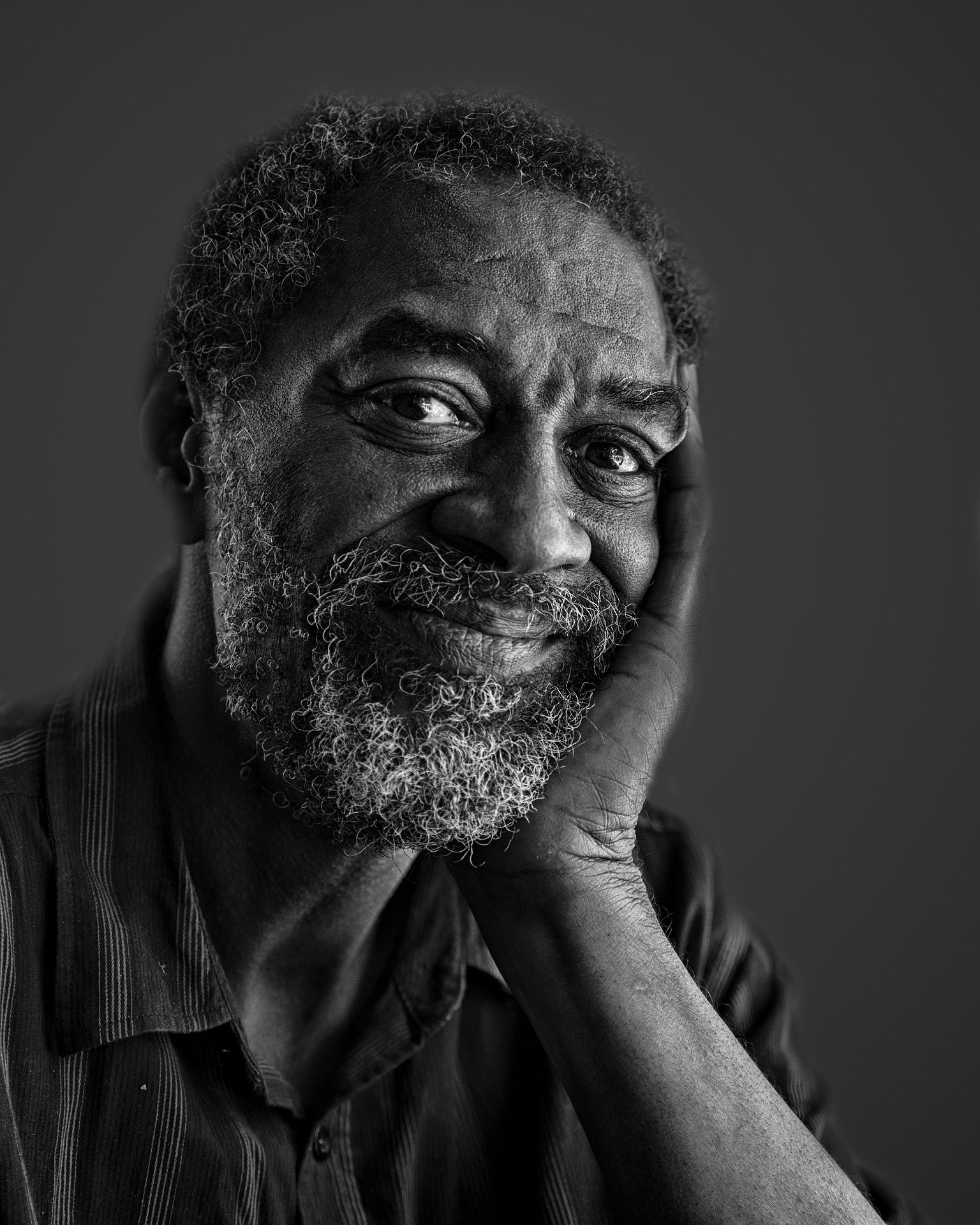
Photo by Annie Spratt

.

There was a time in Torben Bjørnsen’s life when his deeds flowed easily and applause reached him from every side. Success seemed without limit and he carried it in his gestures and in his words, for he was a fine writer and an even finer orator. The initials TB gleamed on bookish placards and university periodicals, but above all on the flyers and posters set at the entrances of the packed lecture theatres where he appeared so often.

But that was another time.

With no explanation we might offer the reader, Torben Bjørnsen flung himself into a harsh flight of self-erasure: he refused interviews, turned down invitations, forgot patrons and admirers, and sealed himself in a troubling muteness and solitude, as though he had suddenly needed to transform the empathetic skin of his former self into an armour of scales and spikes. For almost two decades he has produced no new writings, not even the brief prose poems we cherished so much.

Celebrity was followed by resentment and vendetta.

A kind of hatred for the man has taken root in Denmark, a country which, like all others, accumulates both noble and rotten makers of public opinion. Some claim Torben fled the reach of justice, guilty of some offence drawn from the spectrum of social aberrations. Others explain his silence through a profound religious conversion, the sort one does not expect in days so stripped of spirituality as ours. There are those, too, who justify the change with a single word: weariness.

Ida Kjær, a mutual friend, told us recently that she meets him once a year.

Torben does not live in Greenland, in the Faroe Islands, nor on any of those islets on the way to Sweden. He lives where he has always lived, with his cat, with his collection of nativity scenes, with his endless notebooks where he scrawls emendations and runic symbols. “Only older, much older, and filled with that childlike glow that draws us, on this Saint Lucy’s Day, in a crowd to the lighted canals. Torben will be there, anonymous and content, sharing and receiving lussebullar. You’ll see!”

.

The Blessed One

Photo by Leroy Skalstad

.

They brought him ivory, and he carved it with the most refined patience of which the human kind is capable. The objects that came from his hands were among those most ravenously coveted by foreigners in Brazzaville, in Djambala, in Sibiti, in Mandigou, and throughout the Congo. They called him “The Blessed One,” though his real name was Isidor Nkobanjira. As he grew old, he boasted of having no fewer than seventy children.

Near the end, he began to cut and pierce and carve deep grooves into an elephant tusk. First, he etched the winding course of a river, then the rise of a mountain, then a flurry of perfectly hemispheric stars. With care, he added water and fish, earth and impalas, sky and vultures. He filled the ivory with every creature he could remember, omitting neither silence, nor death, nor fear.

“The whole universe fits here,” Nkobanjira thought.

But in truth — he noticed with a look of dissatisfaction — after all was done, a bit of space still remained.

The Seer

Photo by Leon Pauleikhoff

.

In the heart of Africa, in a Zambian village stirred by the glaucous waters of a tributary of Lake Tanganyika, lives a man of prodigious nature. He has been blind since birth, yet sees all things around him with striking clarity and depth. He is called “father,” “old one,” but also “bat” and “sorcerer.” People come to him for counsel, to bless their dealings, guide their marriages, or cure the fevers born of the bush.

The man is ancient. He has dwelled in the same adobe-and-thatch hut for over seventy years. If a serpent slithers silently toward him, he crushes its head with a precise blow from the gnarled staff that serves him as both cane and scepter. All revere him. If he says, “Seek your vundu yonder, where the great baobab roots rise,” the fishermen will find it there. If he says, “Your chicken you shall find where the ant roads cross and the kudu leap,” the farmer will find it—sometimes pecking at tadpole larvae along the lake’s alluvial slopes, sometimes no more than a bare carcass, nearly dust.

A British missionary has recently arrived in the village, coming from Rwanda. His name is Paul Montague. He has quickly won the villagers’ easy affection. He brings teachings as alien to this soil as those others who once came sowing lessons before him. When he visited the hut of the old man so often spoken of, he was startled by the torrent of curses the blind elder hurled at him in the local tongue, a daughter of the Bantu speech. The villagers merely shrug. Those who speak some broken English explain that the man is prophesying ruin. In three days, they say, a deadly rain will descend from the heavens and famine will follow.

The missionary calms the gathered crowd, proudly displaying a magical object that emits both voices and images, assuring them that modern science predicts the weather with certainty. There will be no rain in the coming days. The Seer is mistaken. But the Seer spits in disgust, drives them out, and foretells calamities without end.

Three days later, a dense, roaring, buzzing, devouring cloud descends, smothering every house, every tree, every living creature clustered there. It is a horde of locusts. They fall upon the crops, the acacias, the savanna, the conical rooftops—and seem ready even to consume the villagers themselves, barely awakened from their nightmare.

Inside his hut, the old man sits in absolute silence. They did not heed his warning, and so he weeps. In over seventy years, he has never known such scorn. From his sightless eyes burst terrible visions. That cloud of locusts is nothing compared to what is coming. It is only the beginning.

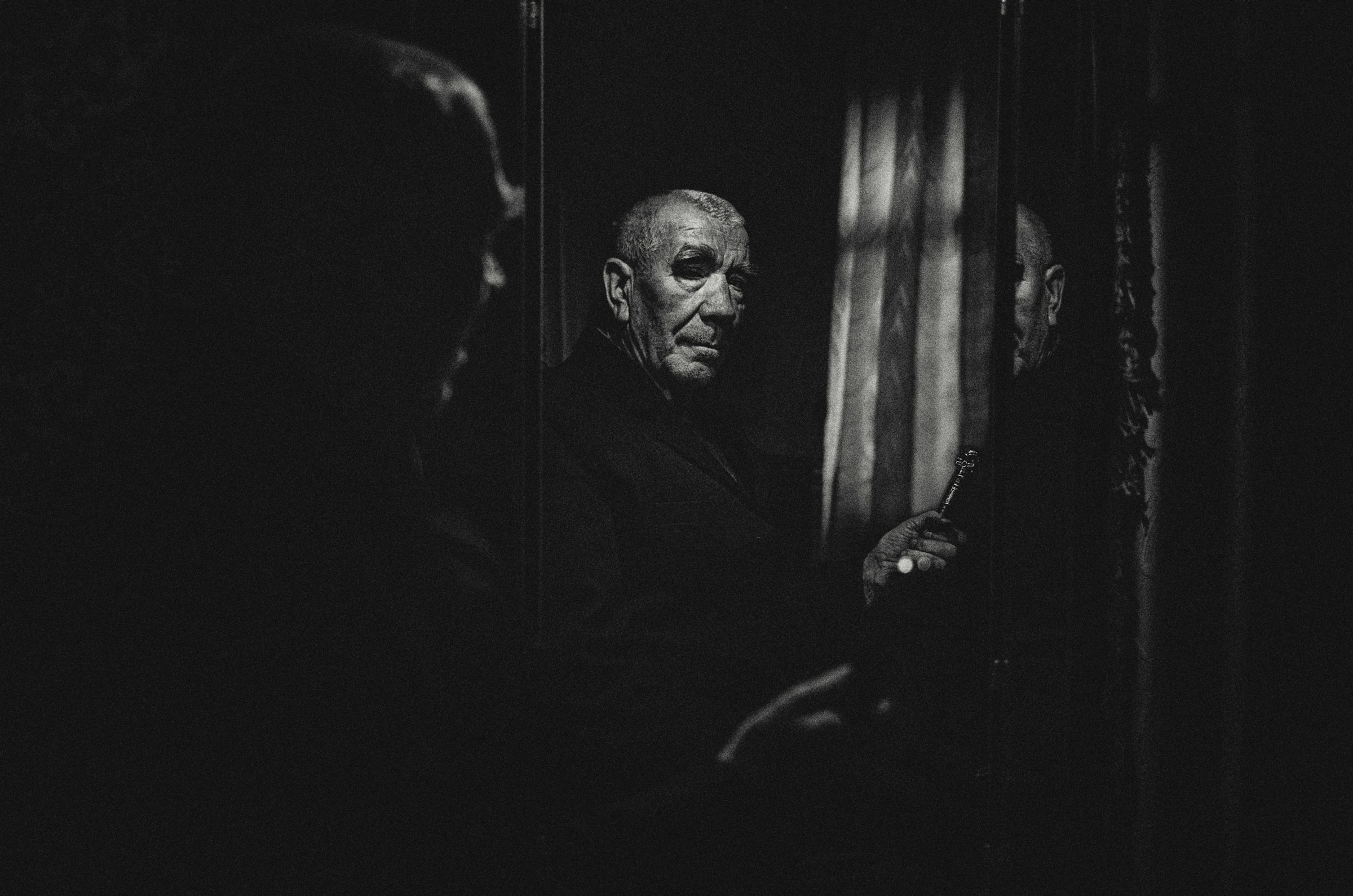
The Actor Looks at Himself in the Mirror

Photo by Vitaliy Shevchenko

.

THE ACTOR LOOKS AT HIMSELF IN THE MIRROR

do not wait so long for me
I have no future
as past I did not have.
handsome I may be
however crude
no less than statue
nor better than sand.
like every creature
what I am I am no longer.
my hands burn with the cold
and I may already be dead
or too far.
do not wait so long for me
you do not know who you wait for

Translated by Bernarda Esteves

.

O ACTOR OLHA-SE AO ESPELHO

não esperes tanto por mim
não tenho futuro
como passado não tive.
belo talvez seja
porém cru
não menos que estátua
nem melhor do que areia.
como toda a criatura
o que sou não sou.

as mãos ardem-me de frio
e talvez esteja já tão morto
ou longe de mais.
não esperes tanto por mim
não sabes quem esperas.

Original version in Portuguese, from the book Reflexões à Boca de Cena / Onstage Reflections by João Ricardo Lopes
.

Read by Catarina Lopes

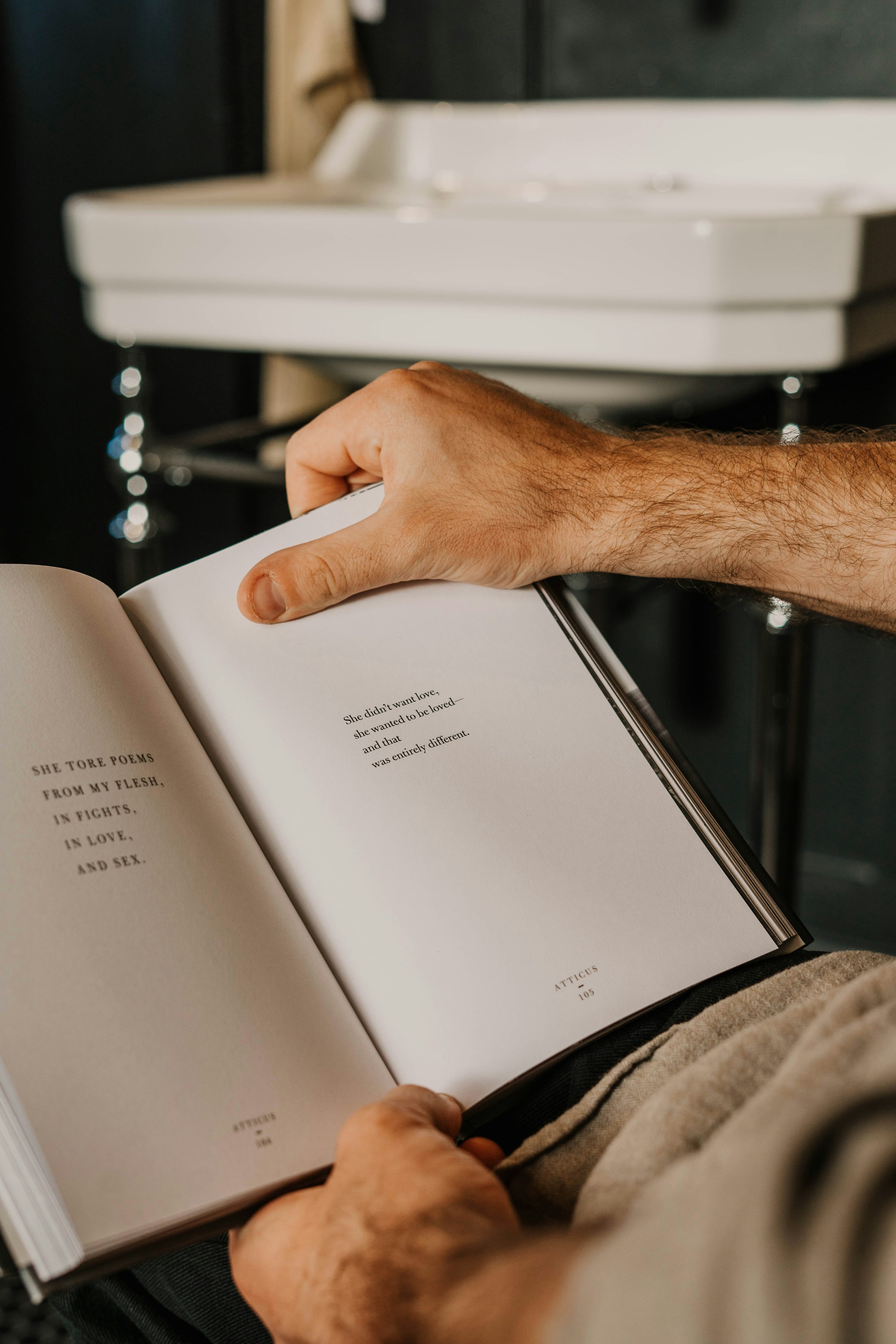
Poetry

Photo by Toa Eftiba

.

I have long read, written, collected, and loved poetry. My bookshelves cradle a considerable number of volumes dedicated to this art the ancient Greeks believed was consecrated to Euterpe—an art whose hold on me deepens with time, as I come to grasp the astonishing power of freedom contained in this ποιείν (poiein): the freedom to think, to feel, to speak.

These days, in my classes, it is rare to find a student who chooses a book of poems for their own quiet, autonomous reading. Rarer still the one who brings to their peers a collection by Sophia, José Régio, Miguel Torga, Antero, Pessanha—or even by Florbela Espanca or Eugénio de Andrade (who, despite these “hard times for lyricism,” as Bertolt Brecht once wrote, still manage to glean some measure of admiration). Rarest of all is the one who admits to loving, or even intuitively grasping, this literary form.

Perhaps this is why—saddened by yet another crisis, this slow dwindling of love—I find myself thinking, more and more obsessively, about how to preserve Homer and Hesiod, Virgil and François Villon, Whitman and Emily Dickinson, Federico García Lorca and Anna Akhmatova. How to help them survive the great catastrophe of forgetting, and above all, the cataclysm of indifference. For time has taught me that the noblest battles for the life of the spirit are almost fated to fail in a society brutalised and brutal, prosaic and stained in its sentiments by the cement blocks we trample in the streets.

Poetry must be cared for—urgently. As with the great seed vault of Svalbard, we must shelter the most extraordinary force ever forged by the human mind, heart, and courage, working in concert. Only, in place of seeds, we must seal verses within.

Bucolic

Photo by Milad Fakurian

.

At the top of the hill lies the center of the world. From there, you can see everything: the village nestled on the slopes, the medieval church, the river below with its little Roman bridge, the hay carts and the flocks passing slowly, just like the hay carts and flocks from a thousand years ago.

There, sheltered beneath the branches of an old ash tree thick with saplings and roots, we hear the following dialogue:

– My life was cowardly, weak, miserably lived…

– Why do you say such things?

– Because I’ve always been a coward, a weak man, a miserable one…

– Don’t say such ugly things…

– But you, my child, you can have a different fate!

– What do you mean, Grandpa?

– You can look into my eyes and see what you don’t want for yourself, glimpse yourself now in a future time…

– But Grandpa, how can you believe what you just said? You’ve always been kind to everyone.

– I killed all my dreams, turned away from every woman for fear they would turn away from me, ignored the warnings, dismissed good advice, believed myself old at every stage of my life…

In the end, I wasn’t even able to put an end to the terrible remorse that eats me alive!

– What do you mean by that?

– You know… Ending everything…

– Grandpa!

– But you are different, my child! I’m telling you, a different fate awaits you. I’m telling you to go! Go while the shadow of your own feet is not yet heavy enough to drag you down, nor strong enough to turn your head back… Go, and never look behind you!

The clouds drift up above. The hill is gentle, like the curve of a fruit. All who love a good story know how vain words can be—and how fond they are of a fine pastoral setting.

“Never look behind you!”

Indeed, when walking forward, one must never turn back. It is a universal truth.

An unpublished piece

"In this brief metatextual fiction, João Ricardo Lopes conceives a short story by Robert Walser, meticulously recreating his characteristic style and thematic concerns, as well as fabricating the circumstance of such a previously unknown text having been published in the journal Der Spiegel."
Photo by Dalphine Devos

.

The online edition of Der Spiegel recently reported the discovery, in an antique shop in the small town of Vauffelin, of a notebook (modest in size, A6 format) containing previously unpublished writings by Robert Walser, known to us through the edition of Ash, Needle, Pencil, and Match, a delightful anthology of short prose pieces, which the author composed during his (somewhat enigmatic and extremely discreet) passage through this world.

The following text is part of the manuscript now surrendered to the eager hands that will dissect it. For better or worse, the translation is ours. We share it, moved.

If you are keeping vigil over someone ill and he sleeps, if the crackling of firewood makes the silence of the house all the more vivid, if the afternoon — like all cold and shadowed January afternoons — lends itself to meditation, and perhaps even to introspection, then perhaps you might grant yourself a few moments in which it still seems worthwhile to put to use a stubby pencil and a scrap of paper.

There is nothing quite like the poignant peace of one who waits. Most of the time, the clock finds a way to burrow into us and leave us restless and aching, perhaps even hollow. But that is not the case now: the flicker of the fire and the faint, drowsy light cast on the walls quiet our gestures.

The presence of someone sick, in need of our care, inspires a kind of concern akin to that which one feels for the stub of a candle: at any moment the wick might expire, and the tiny flame bid farewell in a thin, pale thread of final smoke. But while it burns, that tiny remnant of wax is marvellous, touching — a reason to revere the present.

Much the same could be said of a taut rope, across which our shirts hang, and whose frayed strands already foretell that painful peak at which the two ends will part forever, never to meet again. The breaking of matter is a puncture. But a sisal rope dies when it must die. The feeling of duty fulfilled requires no explanation, nor should it be prolonged.

I end here, grateful, reader, for your time. Time is precious — I might even say, deeply beautiful. A text, when read through someone else’s eyes, is nearly a miracle. You cannot imagine how much so, dear friend. Nor how profoundly.