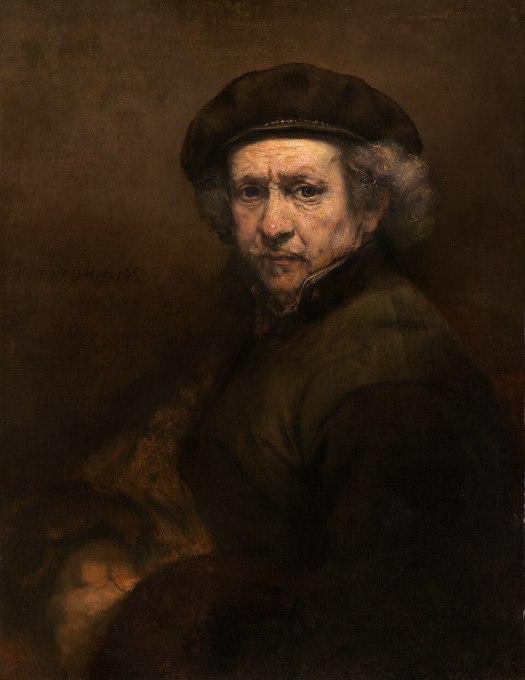
Rembrand, Self-Portrait with Beret and Turned-Up Collar, 1659
.
REMBRANDT’S SADNESS
the question was always this: can someone’s sadness, at any time, in any place, ever find a way to be satisfied?
we have our doubts about the matter
sadness shares with water the sin of avarice. first it skips about, then it digs itself in, and a little further on it hollows out sombre lights through the hills, one day it cuts across our path
“you shall not pass,” it writes under its breath, “you shall not pass”
let us consider the case of Rembrandt Harmenszoon van Rijn
his pain seems limitless, growing from portrait to portrait, like a river that knows itself unstoppable in its predatory course
looking into his eyes as they look into the mirror, we see Saskia and the promissory notes, old age imprinted in the swellings and the cracks of the skin
what is the size or the depth of his grief?
we have an idea about the matter, water is a good term of comparison
one day it makes us sink into a delirium of silver‑gelatin paper. but not even there, not even then, does it show itself fully sated. sadness will not abide the earth’s crust, its kingdom lies in the deepest hells, or even beyond them.
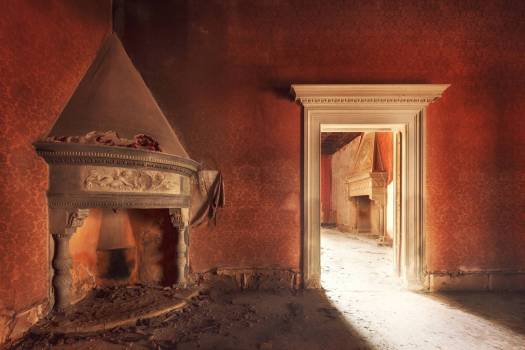
you will often return to yourself as one enters places where hearths once burned and where the smell of smoke lingers melancholic and invisible
an autumnal or wintry mustiness grips your startled hands and wants to sink them into the earth
so take the necessary precautions
when the tangle of days on your shoulder blade feels like cement or hatred in its pure state, leave the house, breathe the grasses, bite their stems hard
He had acquired the habit of meticulously washing his hands and trimming his nails before delivering a speech. He ran his palms and the backs of his fingers under the water, lathered them with Clarim, then held them again beneath the stream flowing from the tap, almost scalding hot. It was a ritual.
Then, before leaving his office, he read the text one last time and corrected it with a cheap pencil, crossing out more words than he put back onto the page. He disliked coming up against formulas, clichés, sentences that sounded like a great deal and yet said nothing.
Finally, he looked at himself in the mirror.
He did so in silence, trying to glimpse in the face before him the slightest traces of childhood. He searched there for the boy in clogs, with a torn sweater and an ugly little moustache, whose courage in the hard work of those earlier days he seemed to value more than the prestige he had gained over the years. That boy was his inspiration.
He remained in near-total silence for a long time, an immeasurable stretch, an hour, a minute, an eternity, until an aide knocked at the door.
They were waiting for him.
This was the moment. Millions of viewers had their televisions tuned to the channel through which his words would echo, measured, carefully chosen, perhaps a little rough, competent, in a steep dive toward the very core of the problems.
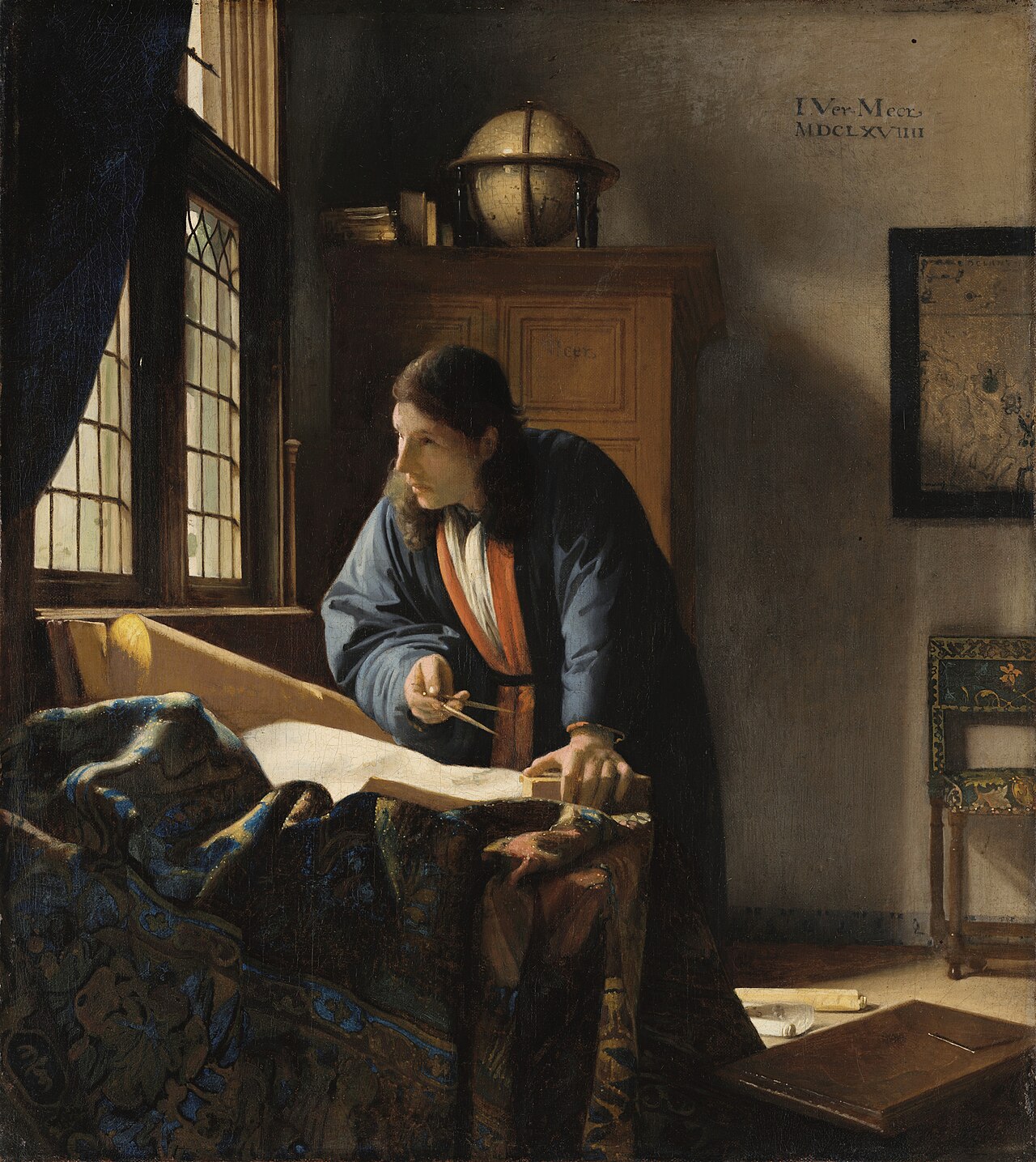
in these days of vertigo, when the world seems to go mad with every gunshot, and even open books are grasping mouths waiting for impure truths to be spoken through them, I return to Vermeer’s silent paintings: to the milkmaid pouring the white unhurriedly, imbued with grace; to the geographer who, through the panes of glass, discerns the inexact place of thought; to the girl reading the mysterious letter, in which she may be shown a certain love, not delicate like a poem, but in the hardness of verbs that do not hide in grammar and instead strip themselves bare in living gestures, difficult and unfeigned
There is only one dependable way to love life: to draw near to the limpidity that asks for patience, courage, sacrifice, and so often silence and self‑denial. And also for defeats, for the encounter with what contradicts us, for the labour of continual learning. Zbigniew Herbert, in a remarkable poem, writes, “I would like to describe the simplest emotion,” trading “all metaphors / for a term / torn from the chest like a rib / for a word / that fits / within the limits of my skin.”
With age we learn that nothing is quite as difficult as the limpidity of childhood—an equivocal yet precious gift. We learn that truth (like the sun) still casts its light and warmth, though it has shifted its place upon the horizon. The irony could hardly be sharper: as we grow older and confront physical short‑sightedness, we look more deeply into things, into the character of others (and of ourselves), into the perplexity of life, into the feeling stirred by little beings, into the pain dealt to us by ignorance and human savagery; we look more intently into the depths of the cosmos, of death, of the genuine happiness born in a poem; we look towards the comfort of friendly voices, towards the solemn wisdom of Vilhelm Hammershøi’s paintings, or the enchantment of the guitar chords of Isaac Albéniz or Joaquín Rodrigo. Life does not require wealth or genius to be worthy. It asks only for kindness and stillness. And with age we learn that nothing matters more than drawing close to our destiny, even if that destiny is a mirage. We recognise it by the confidence and quiet joy with which we open the door each morning. In the end, compassion is the reward of our discovery.
I write these words on a bright December morning, a cup of coffee warming my hands. I feel, far beyond myself, the harmony of space and the mind’s impetuous surge of effort. I might have taken up pencil and paper to write something entirely different. But I needed to set down this thought. Life chose us, as love chooses us, or as the gaze of someone seeking ours. I suppose that responding to such devotion is worth not only the effort, but above all the heart.
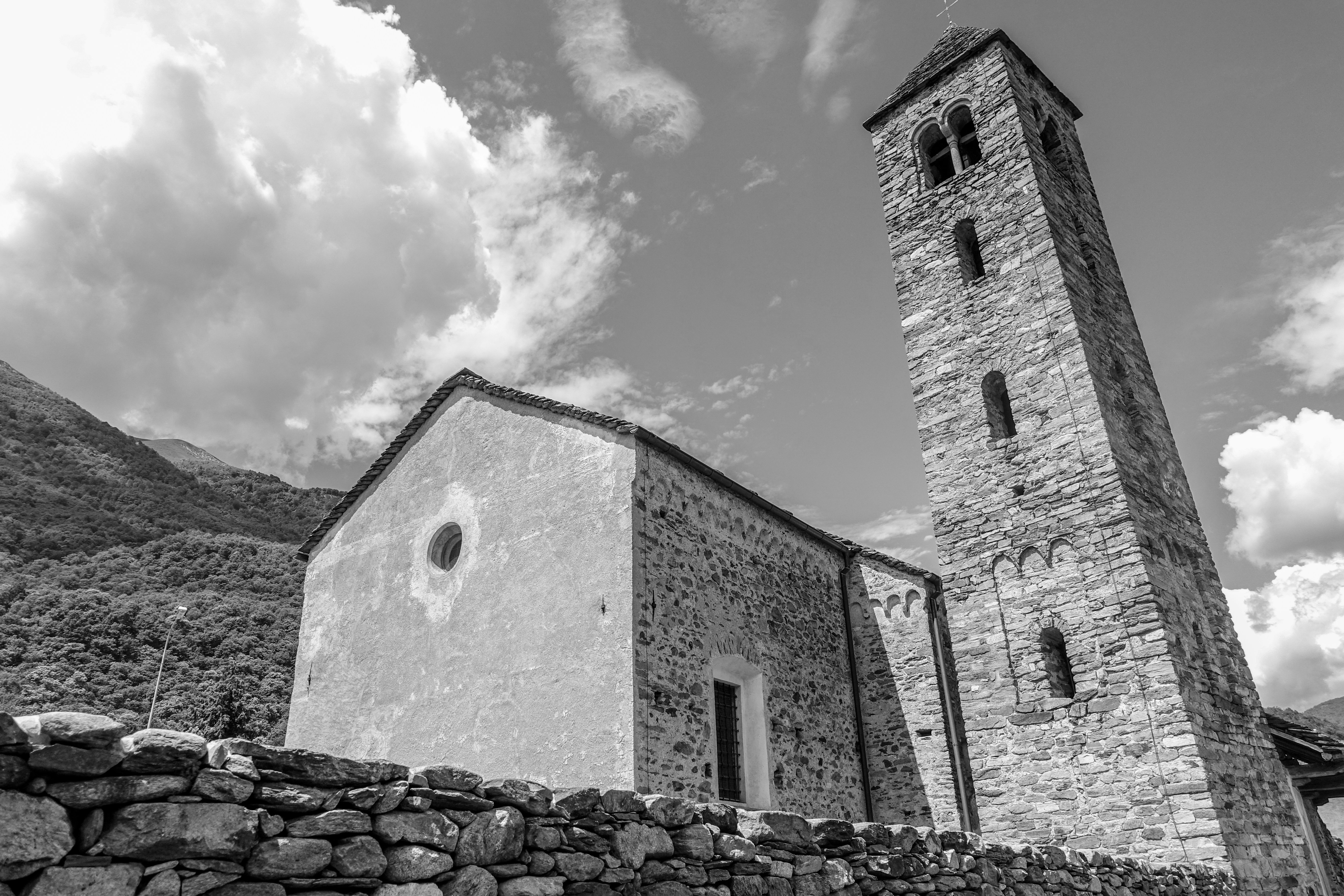
A cliff rose steeply, and on its summit ancient hermits had built, stone by stone, a small church. Seen from afar, it could scarcely be told apart from the granite mass itself. Up close, it looked more like an animal shelter, with a cross perched upon its roof.
Soeiro Ramires, falconer, or perhaps goldsmith, or tailor, or even royal furrier, depending on the version that has reached us, was afflicted with the dreadful disease of leprosy, and found in that rough and holy heap of stones his hiding place. Not only to die there, but because he was fleeing justice. His crime was to have maintained relations deemed against nature with another man. Leprosy and guilt pursued him without mercy.
It was in the time of the first kings of Portugal. Afonso, son of Sanches and grandson of Afonso, was himself dying as a leper. Other monarchs of Christendom had suffered, and would yet suffer, from the same affliction. He, Soeiro Ramires, was seized by a single thought: to climb, to climb as high as he could, before it was too late, to a solitary place where the mercy of Our Saviour might find him sooner than wretched human judgement, and there to await, if not the healing of the flesh, then the absolution of the soul.
At the top of the cliff, where the pinewoods hide themselves in the mist, he dismounted and settled as best he could. He lit a fire, wrapped himself in a thick blanket, ate bread and prayed.
“Love chooses us,” he thought. “With this great sin of loving I have offended the Creator, who has thus defiled my face, my hands, my arms and all my body.”
The cold spread its white cloak all around. Great falls of snow plunged from the sky and made the Beira mountains gleam, from their foothills to the sharp bones of their peaks. Shivering, the wretch gathered what firewood he could and set it alight.
One night, a great star streaked across the horizon from end to end, falling in luminous ash upon his head. Soeiro Ramires marvelled greatly. Not only did the trembling and itching of the flesh cease to torment him, but a profound peace, a sense of rebirth and inexplicable lightness, lifted him from the vileness of the world.
It is said that the disease left him as mysteriously as it had come. Ramires devoted himself to the religious life, becoming one of the first Franciscans to profess in the kingdom. A temple of considerable size was later built on the site of the primitive one: the Church of Saint Francis, Saint Sebastian and the Nativity.
Today, little frequented and almost abandoned, it remains a place to which desperate believers still make their way, in search of a miracle and of redemption.
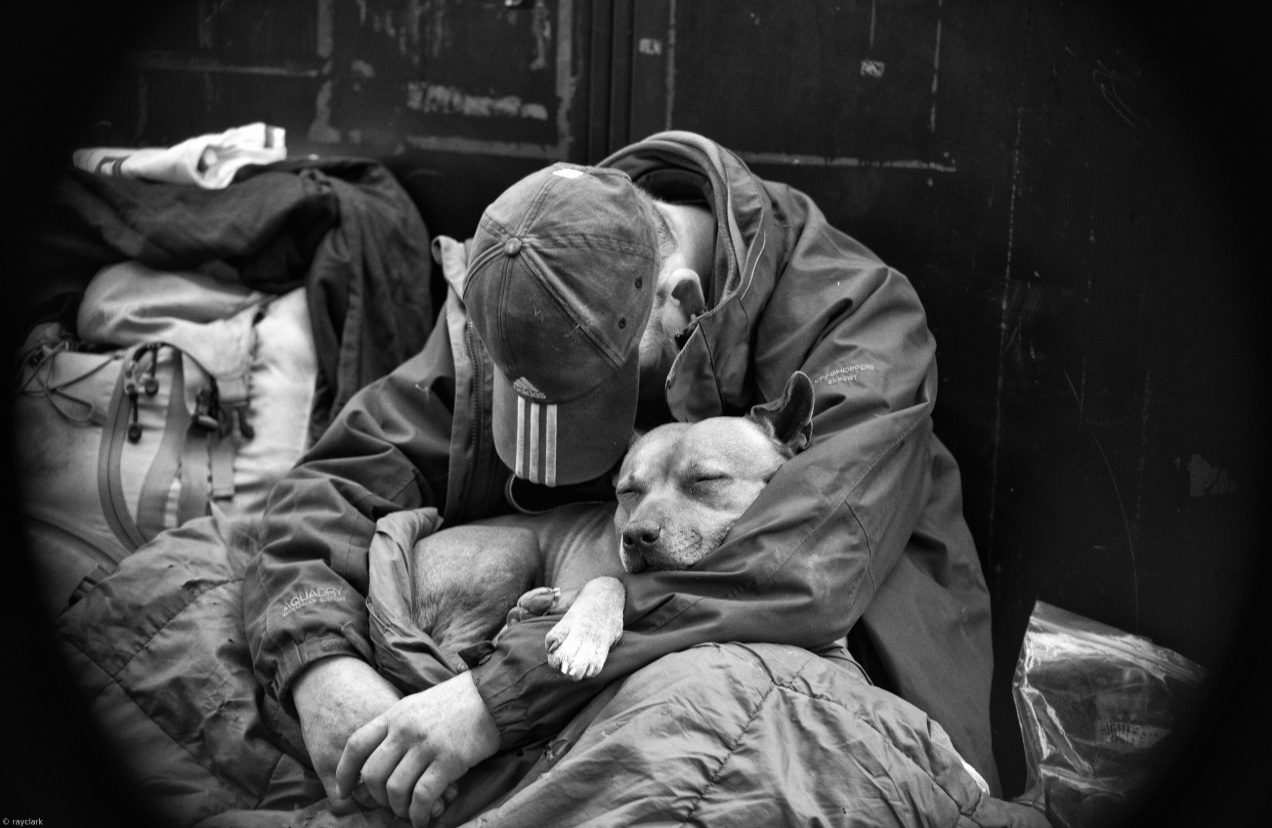
Certain phrases sound like the cold gleam of churches, Ricardo Navajo thought, as he stroked, lost to himself, the small dog at his side.
In this corner of the city, alms are, in a way, less miserly but far noisier. A man pressed to the ground hears everything, including words articulated with rote wisdom.
“We should feel grateful for what He has set aside for us and recognise that a crust of bread is as important as the beauty of the saxifrage.”
Whoever said it did so with a calm assurance that was at once the outward expression of a frantic search of the soul. Then, turning to his listeners in a kind of improvised sermon, he also said,
“Behold: there is a depth towards which the body weighs, and a whole sky towards which we must raise the soul. Beneath us the earth to cover us; above us the galaxies that shall guide our spirit for evermore.”
Ricardo Navajo scratched his chin with frozen fingers and long nails. Then he scratched his belly, unsettled by hunger. Next, he began to massage the nape of his mongrel companion, forgetting the plastic bowl where a few cents slept in peace.
At this corner of the city, people almost always walk in haste and almost never with pity. The conversations flung into the air are very much like fireworks: brief flares that glitter without warming.
The speaker has just gone into the Seminary with his disciples; cars blare their horns with steady ferocity; traffic lights open and close with the indifference of ancient gods.
Navajo has the habit of brooding on what others leave hanging as they pass by. Human thought, if there is any left, is organised like a structure of scaffolding. Each man sees the world in the way that suits him, supposing it to be unique and universal from the height, or the depth, of his own vantage point.
That there are beautiful flowers and stars around us, the beggar did not doubt. But a crust of bread and money so that the earth may receive our bones with dignity are another matter altogether.
Just now Navajo received the firm clink made by a one-euro coin. The Christmas season is a good harvest, he would reply, if anyone wished to know how life is going. He thanks it with a studied bow, while the palm of his hand runs along Riquinho’s back. That is the name of his best friend.