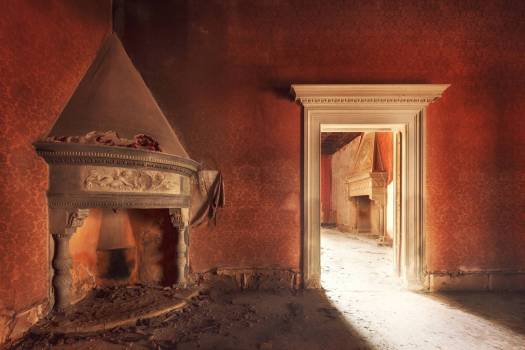
you will often return to yourself as one enters places where hearths once burned and where the smell of smoke lingers melancholic and invisible
an autumnal or wintry mustiness grips your startled hands and wants to sink them into the earth
so take the necessary precautions
when the tangle of days on your shoulder blade feels like cement or hatred in its pure state, leave the house, breathe the grasses, bite their stems hard
He had acquired the habit of meticulously washing his hands and trimming his nails before delivering a speech. He ran his palms and the backs of his fingers under the water, lathered them with Clarim, then held them again beneath the stream flowing from the tap, almost scalding hot. It was a ritual.
Then, before leaving his office, he read the text one last time and corrected it with a cheap pencil, crossing out more words than he put back onto the page. He disliked coming up against formulas, clichés, sentences that sounded like a great deal and yet said nothing.
Finally, he looked at himself in the mirror.
He did so in silence, trying to glimpse in the face before him the slightest traces of childhood. He searched there for the boy in clogs, with a torn sweater and an ugly little moustache, whose courage in the hard work of those earlier days he seemed to value more than the prestige he had gained over the years. That boy was his inspiration.
He remained in near-total silence for a long time, an immeasurable stretch, an hour, a minute, an eternity, until an aide knocked at the door.
They were waiting for him.
This was the moment. Millions of viewers had their televisions tuned to the channel through which his words would echo, measured, carefully chosen, perhaps a little rough, competent, in a steep dive toward the very core of the problems.
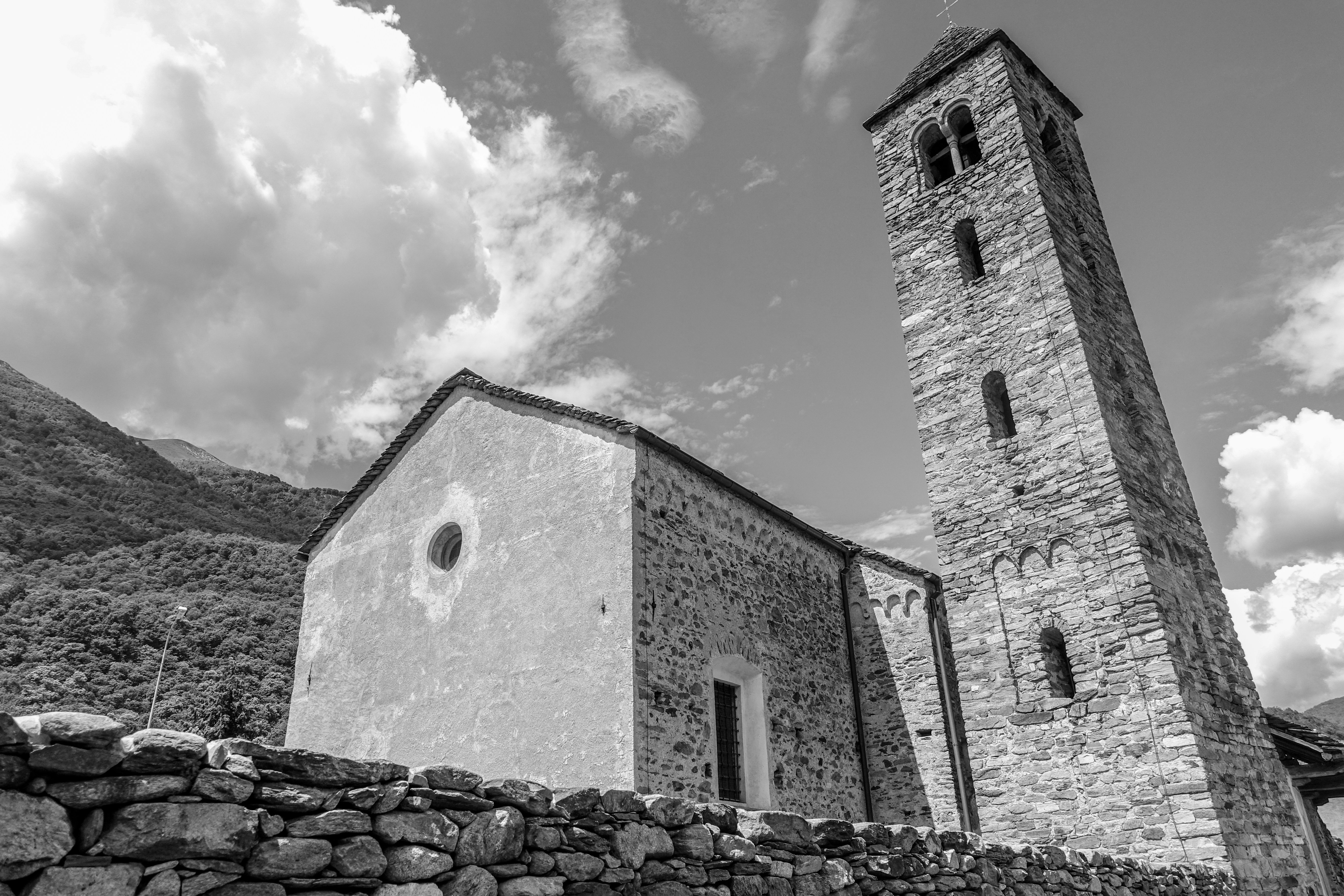
A cliff rose steeply, and on its summit ancient hermits had built, stone by stone, a small church. Seen from afar, it could scarcely be told apart from the granite mass itself. Up close, it looked more like an animal shelter, with a cross perched upon its roof.
Soeiro Ramires, falconer, or perhaps goldsmith, or tailor, or even royal furrier, depending on the version that has reached us, was afflicted with the dreadful disease of leprosy, and found in that rough and holy heap of stones his hiding place. Not only to die there, but because he was fleeing justice. His crime was to have maintained relations deemed against nature with another man. Leprosy and guilt pursued him without mercy.
It was in the time of the first kings of Portugal. Afonso, son of Sanches and grandson of Afonso, was himself dying as a leper. Other monarchs of Christendom had suffered, and would yet suffer, from the same affliction. He, Soeiro Ramires, was seized by a single thought: to climb, to climb as high as he could, before it was too late, to a solitary place where the mercy of Our Saviour might find him sooner than wretched human judgement, and there to await, if not the healing of the flesh, then the absolution of the soul.
At the top of the cliff, where the pinewoods hide themselves in the mist, he dismounted and settled as best he could. He lit a fire, wrapped himself in a thick blanket, ate bread and prayed.
“Love chooses us,” he thought. “With this great sin of loving I have offended the Creator, who has thus defiled my face, my hands, my arms and all my body.”
The cold spread its white cloak all around. Great falls of snow plunged from the sky and made the Beira mountains gleam, from their foothills to the sharp bones of their peaks. Shivering, the wretch gathered what firewood he could and set it alight.
One night, a great star streaked across the horizon from end to end, falling in luminous ash upon his head. Soeiro Ramires marvelled greatly. Not only did the trembling and itching of the flesh cease to torment him, but a profound peace, a sense of rebirth and inexplicable lightness, lifted him from the vileness of the world.
It is said that the disease left him as mysteriously as it had come. Ramires devoted himself to the religious life, becoming one of the first Franciscans to profess in the kingdom. A temple of considerable size was later built on the site of the primitive one: the Church of Saint Francis, Saint Sebastian and the Nativity.
Today, little frequented and almost abandoned, it remains a place to which desperate believers still make their way, in search of a miracle and of redemption.