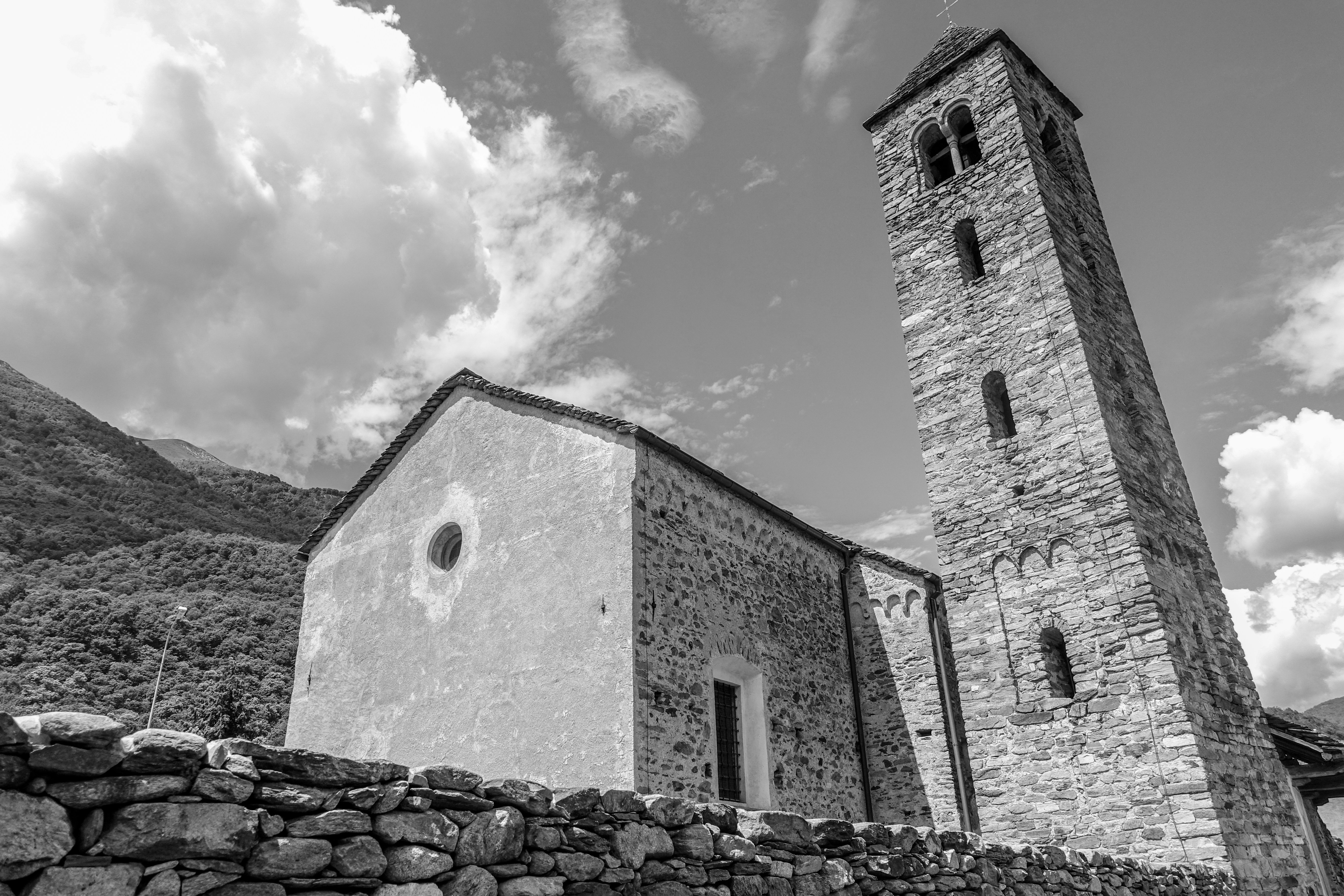
A cliff rose steeply, and on its summit ancient hermits had built, stone by stone, a small church. Seen from afar, it could scarcely be told apart from the granite mass itself. Up close, it looked more like an animal shelter, with a cross perched upon its roof.
Soeiro Ramires, falconer, or perhaps goldsmith, or tailor, or even royal furrier, depending on the version that has reached us, was afflicted with the dreadful disease of leprosy, and found in that rough and holy heap of stones his hiding place. Not only to die there, but because he was fleeing justice. His crime was to have maintained relations deemed against nature with another man. Leprosy and guilt pursued him without mercy.
It was in the time of the first kings of Portugal. Afonso, son of Sanches and grandson of Afonso, was himself dying as a leper. Other monarchs of Christendom had suffered, and would yet suffer, from the same affliction. He, Soeiro Ramires, was seized by a single thought: to climb, to climb as high as he could, before it was too late, to a solitary place where the mercy of Our Saviour might find him sooner than wretched human judgement, and there to await, if not the healing of the flesh, then the absolution of the soul.
At the top of the cliff, where the pinewoods hide themselves in the mist, he dismounted and settled as best he could. He lit a fire, wrapped himself in a thick blanket, ate bread and prayed.
“Love chooses us,” he thought. “With this great sin of loving I have offended the Creator, who has thus defiled my face, my hands, my arms and all my body.”
The cold spread its white cloak all around. Great falls of snow plunged from the sky and made the Beira mountains gleam, from their foothills to the sharp bones of their peaks. Shivering, the wretch gathered what firewood he could and set it alight.
One night, a great star streaked across the horizon from end to end, falling in luminous ash upon his head. Soeiro Ramires marvelled greatly. Not only did the trembling and itching of the flesh cease to torment him, but a profound peace, a sense of rebirth and inexplicable lightness, lifted him from the vileness of the world.
It is said that the disease left him as mysteriously as it had come. Ramires devoted himself to the religious life, becoming one of the first Franciscans to profess in the kingdom. A temple of considerable size was later built on the site of the primitive one: the Church of Saint Francis, Saint Sebastian and the Nativity.
Today, little frequented and almost abandoned, it remains a place to which desperate believers still make their way, in search of a miracle and of redemption.
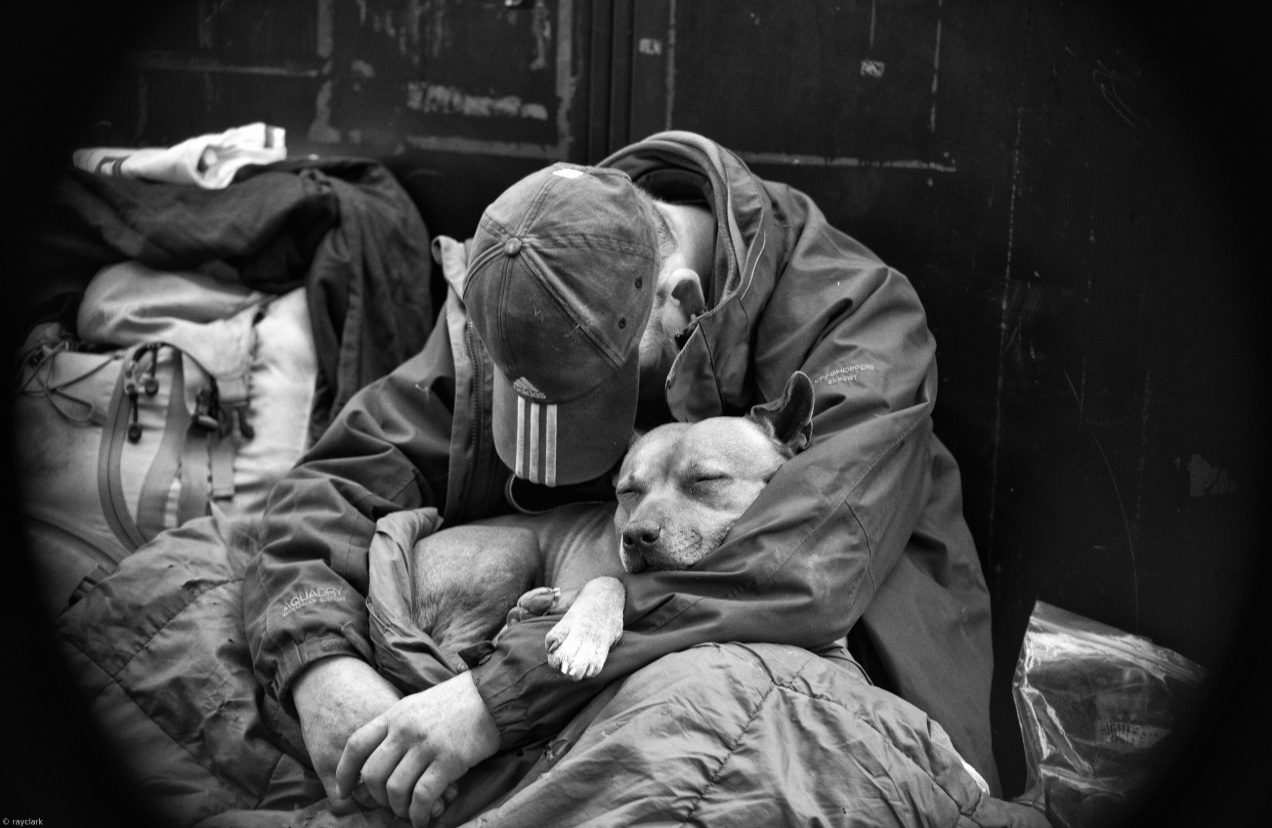
Certain phrases sound like the cold gleam of churches, Ricardo Navajo thought, as he stroked, lost to himself, the small dog at his side.
In this corner of the city, alms are, in a way, less miserly but far noisier. A man pressed to the ground hears everything, including words articulated with rote wisdom.
“We should feel grateful for what He has set aside for us and recognise that a crust of bread is as important as the beauty of the saxifrage.”
Whoever said it did so with a calm assurance that was at once the outward expression of a frantic search of the soul. Then, turning to his listeners in a kind of improvised sermon, he also said,
“Behold: there is a depth towards which the body weighs, and a whole sky towards which we must raise the soul. Beneath us the earth to cover us; above us the galaxies that shall guide our spirit for evermore.”
Ricardo Navajo scratched his chin with frozen fingers and long nails. Then he scratched his belly, unsettled by hunger. Next, he began to massage the nape of his mongrel companion, forgetting the plastic bowl where a few cents slept in peace.
At this corner of the city, people almost always walk in haste and almost never with pity. The conversations flung into the air are very much like fireworks: brief flares that glitter without warming.
The speaker has just gone into the Seminary with his disciples; cars blare their horns with steady ferocity; traffic lights open and close with the indifference of ancient gods.
Navajo has the habit of brooding on what others leave hanging as they pass by. Human thought, if there is any left, is organised like a structure of scaffolding. Each man sees the world in the way that suits him, supposing it to be unique and universal from the height, or the depth, of his own vantage point.
That there are beautiful flowers and stars around us, the beggar did not doubt. But a crust of bread and money so that the earth may receive our bones with dignity are another matter altogether.
Just now Navajo received the firm clink made by a one-euro coin. The Christmas season is a good harvest, he would reply, if anyone wished to know how life is going. He thanks it with a studied bow, while the palm of his hand runs along Riquinho’s back. That is the name of his best friend.
There was a time in Torben Bjørnsen’s life when his deeds flowed easily and applause reached him from every side. Success seemed without limit and he carried it in his gestures and in his words, for he was a fine writer and an even finer orator. The initials TB gleamed on bookish placards and university periodicals, but above all on the flyers and posters set at the entrances of the packed lecture theatres where he appeared so often.
But that was another time.
With no explanation we might offer the reader, Torben Bjørnsen flung himself into a harsh flight of self-erasure: he refused interviews, turned down invitations, forgot patrons and admirers, and sealed himself in a troubling muteness and solitude, as though he had suddenly needed to transform the empathetic skin of his former self into an armour of scales and spikes. For almost two decades he has produced no new writings, not even the brief prose poems we cherished so much.
Celebrity was followed by resentment and vendetta.
A kind of hatred for the man has taken root in Denmark, a country which, like all others, accumulates both noble and rotten makers of public opinion. Some claim Torben fled the reach of justice, guilty of some offence drawn from the spectrum of social aberrations. Others explain his silence through a profound religious conversion, the sort one does not expect in days so stripped of spirituality as ours. There are those, too, who justify the change with a single word: weariness.
Ida Kjær, a mutual friend, told us recently that she meets him once a year.
Torben does not live in Greenland, in the Faroe Islands, nor on any of those islets on the way to Sweden. He lives where he has always lived, with his cat, with his collection of nativity scenes, with his endless notebooks where he scrawls emendations and runic symbols. “Only older, much older, and filled with that childlike glow that draws us, on this Saint Lucy’s Day, in a crowd to the lighted canals. Torben will be there, anonymous and content, sharing and receiving lussebullar. You’ll see!”
On the night of June 23rd that year, the only lamp still lit in the university residence was mine. From the third floor, I could take in the sky ablaze above the city and the festivities. In Porto, it’s mandatory to enjoy oneself on the eve of St. John’s Day. Patios, stairways, alleys, passageways, squares, and avenues fill with noise, colored paper streamers, and the glint of sardine scales. It is compulsory to go out, to mingle, to raise a racket, to drink with abandon, to brandish leeks and press them against the insincerely naïve noses of young women. Tradition has it that this is the solstice night. Even if it’s not the shortest night of the year, it is certainly the longest. Every reveler knows that.
As for me, I stubbornly shut myself in to study Linguistics. From outside, the world burst in—loud, full of life—like a stab to the heart. Through the windowpane I could see the rooftops and church towers where the trailing fire of paper lanterns climbed skyward, the scattered light from crowded balconies, from grills and barbecues burning bright, and the lagging groups running about with their plastic hammers. I could swear the dozens of students’ rooms were empty. Since mid-afternoon, I hadn’t seen a soul in the hallways, nor heard a single voice inside the building.
Martinet’s notes struck me as monstrously tedious. I underlined them with a fluorescent marker and recited the glosses aloud from my notebook. I was alone.
It was in that solitude that I noticed the sky sinking into ever darker shades of green-black, eerily like chromium oxide, suffocating the horizon. The first lightning bolt and thunderclap I mistook for part of the celebration. But then came more. The storm wasted no time shaking the windows and unleashing the most vengeful rain I had ever witnessed.
In an instant, cries of confusion multiplied—hysterical, terrified. Sheets of rain hammered mercilessly against the long tables on the terraces. The grills were dragged under awnings however best they could. Old and young alike huddled together in kiosks and under doorways. The scene of the commotion struck me as so amusing, so full of warmth, that I opened a drawer and took out my Leica.
Despite the fogged glass and saturated air, the landscape had changed. It seemed beautiful now—human, sheltering, inviting.
Far away, the floodlights of the churches lit the storm. Closer, the streetlights revealed the damage. I went down to see it better. As soon as I opened the door, I came face to face with one of those poor souls so common in our cities.
— Didn’t mean to scare you, son. Forgive me!
— You didn’t. Don’t worry!
I hesitated for a moment, unsure whether to step out or invite him in. There was a mix of smoke and vapor rising from the asphalt. My camera was ready.
— This rain. Who could have guessed!
The man said nothing. He only shrugged. In one hand he held an apple, in the other a nylon sack. That downpour, it seemed, was nothing unusual to him.
— You’ll be soaked through… Come in, take shelter!
Without a word, the man obeyed.
I looked at the street: a box of peppers on the ground, abandoned beers, cats under cars, smoke. St. John, it seemed, had proven himself indecent. I couldn’t bring myself to fire the flash. Then the man said:
— In any case, what you’re feeling now is déjà vu.
And it was true: the whole scene felt familiar, as if some link in my memory had sparked the impression I had lived that moment before. The man—though I’d never seen him—was, I could swear, oddly familiar.
— You’re not going to take a single shot with that camera. The objects don’t interest you. Only the subject in front of you is worth noting. Isn’t that right?
His tone, nearly arrogant, sounded like a reproach. He went on:
— Right now, you’re thinking about how to get out of this mess. The street no longer seems the strangest place in the world—this little space here does, doesn’t it? You’re thinking how that box of peppers, those abandoned beers, those screams, those cats hiding under the cars, that smoke—none of it compares to the chaos reigning in your head.
— And how can you possibly know all this?
— Martinet’s Elements of General Linguistics upstairs is proof enough that we’ve both sunk into the same wretched solitude.
— Who are you?
— You always choose the side door, never the corridor straight ahead… You’re still thinking in mazes. And yet, since the moment we saw each other just now, you’ve known—we are the same person!
— We’re the same person?
— The same character, yes!
— The same character?
— Don’t look so surprised. Borges—whom you’ve yet to meet—does the same in the first story of The Book of Sand. Dickens—whom you’ve already forgotten—does it with Ebenezer Scrooge. Dante—whom you’re about to discover—dreams of his own soul transmigrating through the circles of Hell, Purgatory, and Paradise.
— And you’ve come to show me the future, is that it? To prove something? That I—we—are wretched? That I need to change so we can both be redeemed?
— I haven’t come to prove anything at all…
My other self bit into the apple, slung his bundle over his shoulder, and stepped back out into the night, unafraid of the deluge, swallowed by the dirty reflection of a thousand shattered lights.
With the Leica off in my hands, I watched him go, unable to add a single word.
Truth be told, there was nothing left to say.
.
From the book O Moscardo e Outras Histórias (The Horsefly and Other Stories, 2018, pp. 255–259)
Weary of the errors of his age, of the injustices of his people, and of the brazen lies by which one fed the other— weary of the vileness with which both had cast aside the primacy of kindness among men— Kazuya turned his back on the city and walked toward nothingness for as many days as his sandals would carry him.
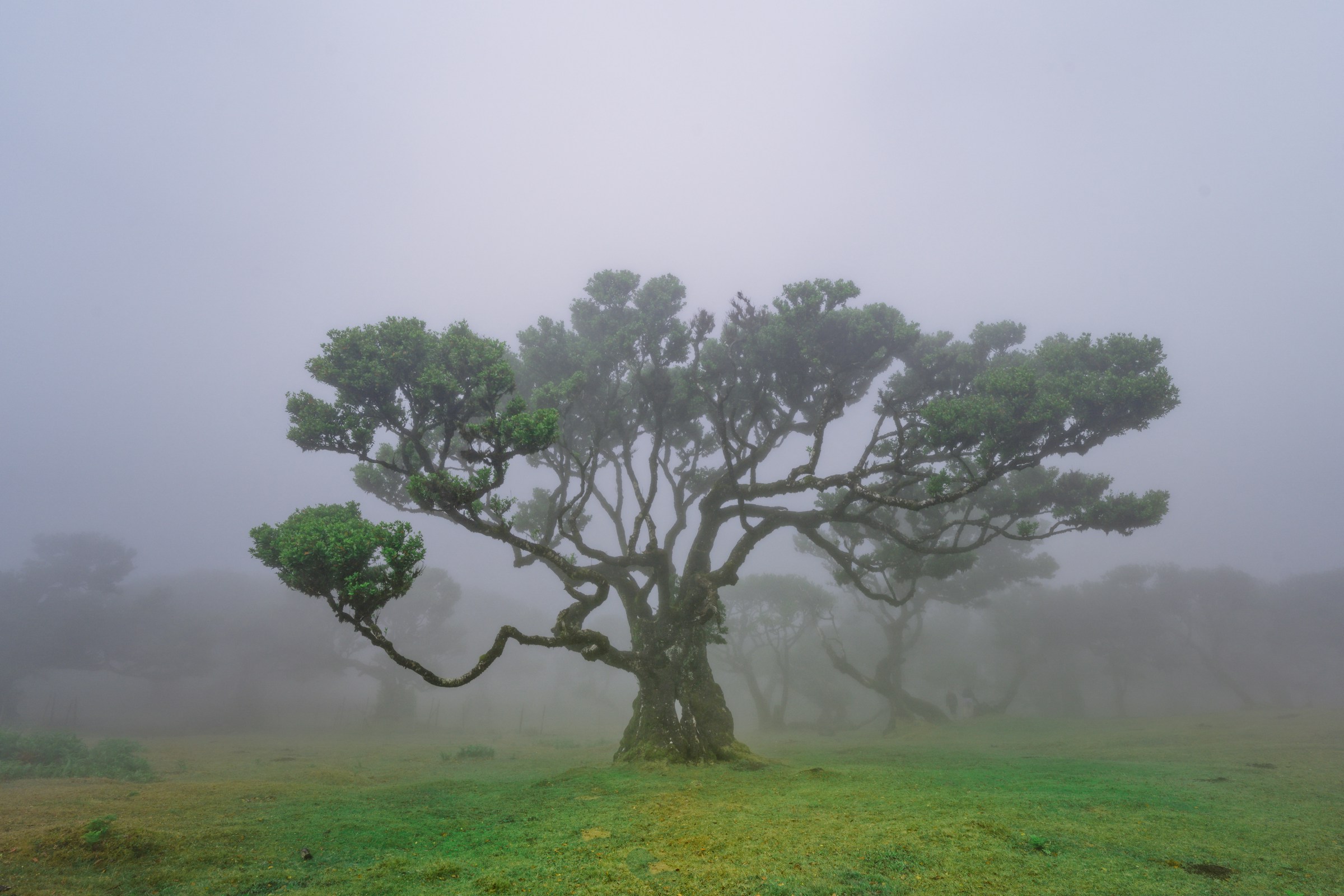
In a certain misty place, he came upon a curious tree, which seemed as lost as he was. There, beside it, he began to draw from within himself the words he had long kept buried—words that rattled in his mind like water boiling in a pot.He said many things: first in whispers, then in cries, and at last in deep regret.
Then he felt a great cold. An immense, devastating solitude. An uncontrollable urge to weep. And weep he did, as much as his eyes could bear. Afterward, he embraced the tree, thanked it, and continued his journey into the green-gray horizon. Nothing more was known of him than this.
The last person to see him was an old spinner of thread.
She marveled that such a ragged vagabond could seem happier than a lit lamp— and that he had asked her for nothing, not even a good day.