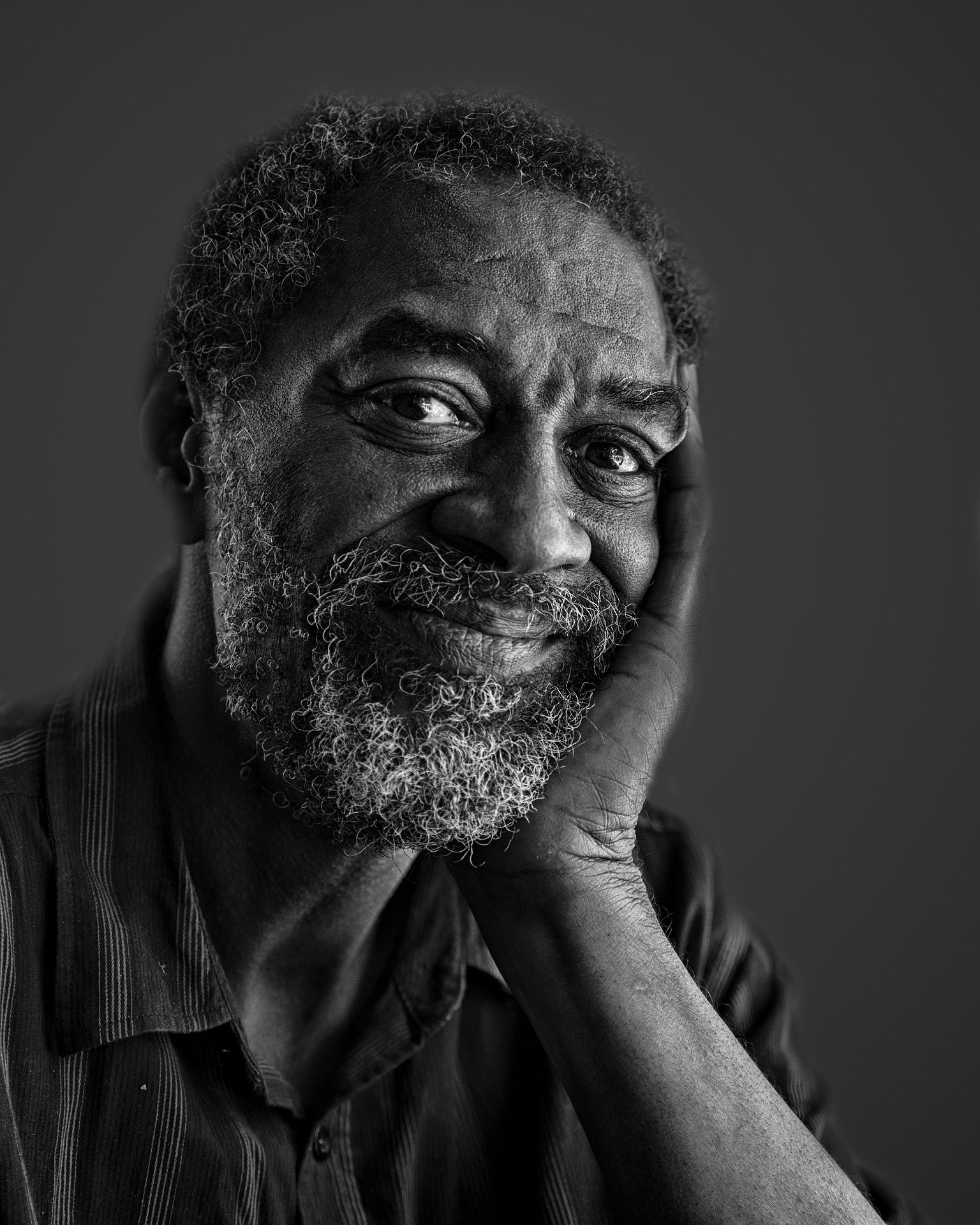
The Blessed One

Photo by Leroy Skalstad

.

They brought him ivory, and he carved it with the most refined patience of which the human kind is capable. The objects that came from his hands were among those most ravenously coveted by foreigners in Brazzaville, in Djambala, in Sibiti, in Mandigou, and throughout the Congo. They called him “The Blessed One,” though his real name was Isidor Nkobanjira. As he grew old, he boasted of having no fewer than seventy children.

Near the end, he began to cut and pierce and carve deep grooves into an elephant tusk. First, he etched the winding course of a river, then the rise of a mountain, then a flurry of perfectly hemispheric stars. With care, he added water and fish, earth and impalas, sky and vultures. He filled the ivory with every creature he could remember, omitting neither silence, nor death, nor fear.

“The whole universe fits here,” Nkobanjira thought.

But in truth — he noticed with a look of dissatisfaction — after all was done, a bit of space still remained.

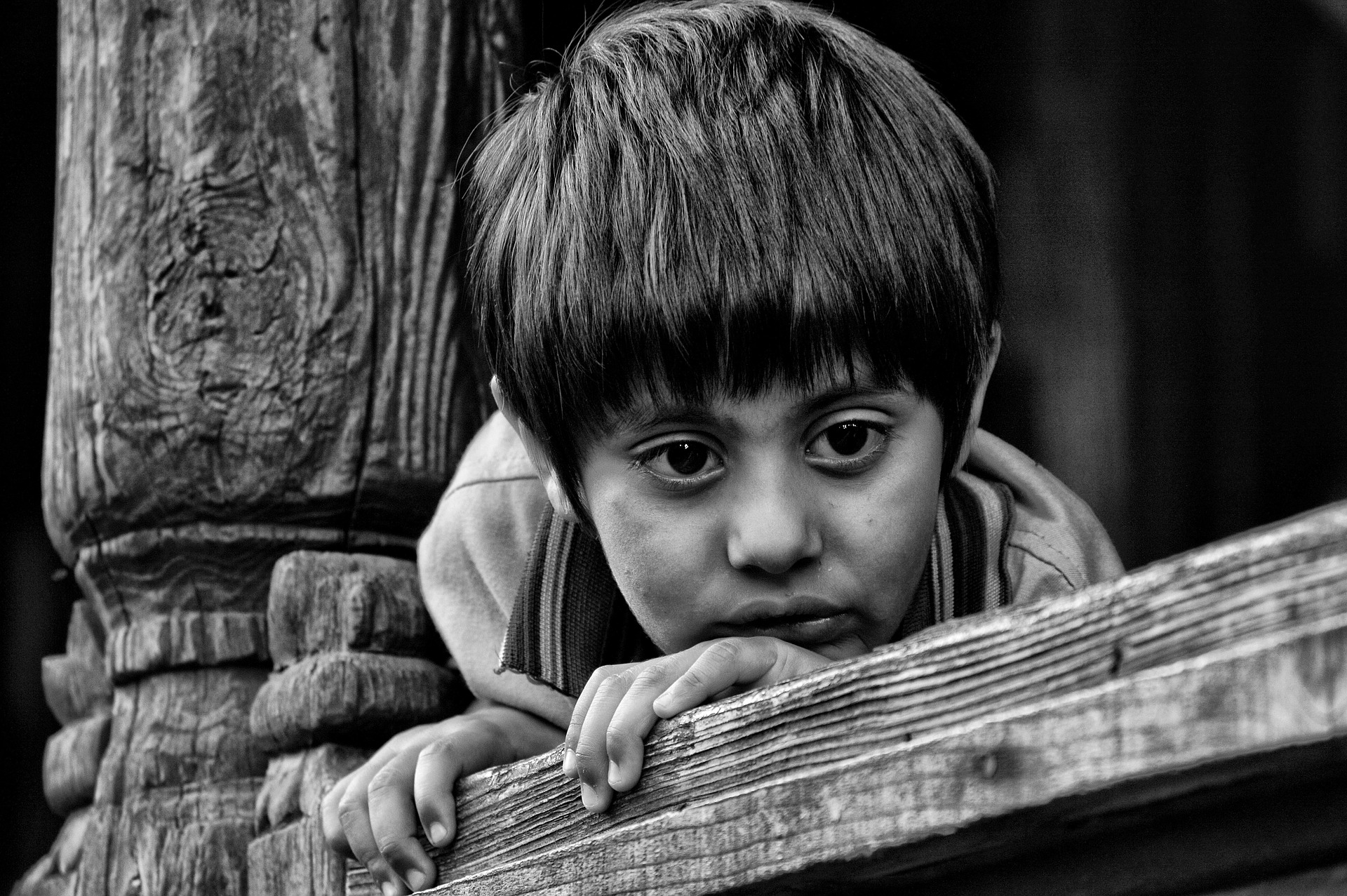
Children’s Day

Photo by Kant Smith

.

The world exasperates. A latent brutality thrums within it, undoing the stubborn innocence of things, and making ever murkier the divination of times that shall outlive us. We know History swings, endlessly, between seasons of peace and seasons of war, between ages of brilliance and ages of barbarity, between hours of human grandeur and hours of atrocious pillage. If we return to the 1980s, we recall the searing images of Biafra, of Ethiopia—the solidarity campaigns that gathered the world against hunger. We recall the fall of the Berlin Wall, the dawn of democracy in countries once shackled by Soviet rule. We recall Mandela’s release, the silencing of guns in Northern Ireland. A time, perhaps, when free thought was loosening its chains, when democracy and the rights of the unheard began, however briefly, to hold.

But the world is once again turned inside out by the same old forces—those who forever gnaw after wealth, after power, after dominion. One wave of hope gives way to another of grim despair. I think of the children in Gaza, in Ukraine, in that half of the world left wrinkled and worn, enslaved by the relentless sprawl of multinationals. It is hard to believe that a handful of words could matter—and that, too, exasperates.

And still, in these places seemingly abandoned by God—long since forsaken by humanity—there remains a force, faint but unyielding, that drives us to persist. A kind of breath of truth threads its way through the sulphur and phosphorus of falling bombs, compelling us to resist. Resistance itself exasperates. As though some hidden covenant between the last flickers of moral conscience and justice, poetry and the sheer passion for life, shame and a whisper of prayer were urging us to rise—to face the impious cries of tyrants, and the colluding silence of nations that call themselves free. I think of the children of Gaza, starving. The children stolen from Ukraine. The children of Yemen, Sudan, Venezuela. The ones who drown off Lampedusa and Tenerife. The ones who toil from dawn till dark in Bangladesh, in India, in countless places lost to maps. The ones ruled by the Taliban, by mafias, by the degenerate hands of men who harm them. I know that words do not console. Nor do donations (for ten years now I’ve given one to UNICEF on this day). Both are drops in the sea. But I must not forget. I need, as Pedro-Daniel Névio once wrote, to “place a blue thistle in the space left by the stolen heart.”

Perhaps that is the invisible, stubborn force—the one that, beneath the fingernails of the few (and of many more), moves mountains.

The Seer

Photo by Leon Pauleikhoff

.

In the heart of Africa, in a Zambian village stirred by the glaucous waters of a tributary of Lake Tanganyika, lives a man of prodigious nature. He has been blind since birth, yet sees all things around him with striking clarity and depth. He is called “father,” “old one,” but also “bat” and “sorcerer.” People come to him for counsel, to bless their dealings, guide their marriages, or cure the fevers born of the bush.

The man is ancient. He has dwelled in the same adobe-and-thatch hut for over seventy years. If a serpent slithers silently toward him, he crushes its head with a precise blow from the gnarled staff that serves him as both cane and scepter. All revere him. If he says, “Seek your vundu yonder, where the great baobab roots rise,” the fishermen will find it there. If he says, “Your chicken you shall find where the ant roads cross and the kudu leap,” the farmer will find it—sometimes pecking at tadpole larvae along the lake’s alluvial slopes, sometimes no more than a bare carcass, nearly dust.

A British missionary has recently arrived in the village, coming from Rwanda. His name is Paul Montague. He has quickly won the villagers’ easy affection. He brings teachings as alien to this soil as those others who once came sowing lessons before him. When he visited the hut of the old man so often spoken of, he was startled by the torrent of curses the blind elder hurled at him in the local tongue, a daughter of the Bantu speech. The villagers merely shrug. Those who speak some broken English explain that the man is prophesying ruin. In three days, they say, a deadly rain will descend from the heavens and famine will follow.

The missionary calms the gathered crowd, proudly displaying a magical object that emits both voices and images, assuring them that modern science predicts the weather with certainty. There will be no rain in the coming days. The Seer is mistaken. But the Seer spits in disgust, drives them out, and foretells calamities without end.

Three days later, a dense, roaring, buzzing, devouring cloud descends, smothering every house, every tree, every living creature clustered there. It is a horde of locusts. They fall upon the crops, the acacias, the savanna, the conical rooftops—and seem ready even to consume the villagers themselves, barely awakened from their nightmare.

Inside his hut, the old man sits in absolute silence. They did not heed his warning, and so he weeps. In over seventy years, he has never known such scorn. From his sightless eyes burst terrible visions. That cloud of locusts is nothing compared to what is coming. It is only the beginning.

To dear friends

Photo by Cristina Gottardy

.

When Jesus saw her weeping, and the Jews who had come along with her also weeping, he was deeply moved in spirit and troubled.
John, 11:33

.

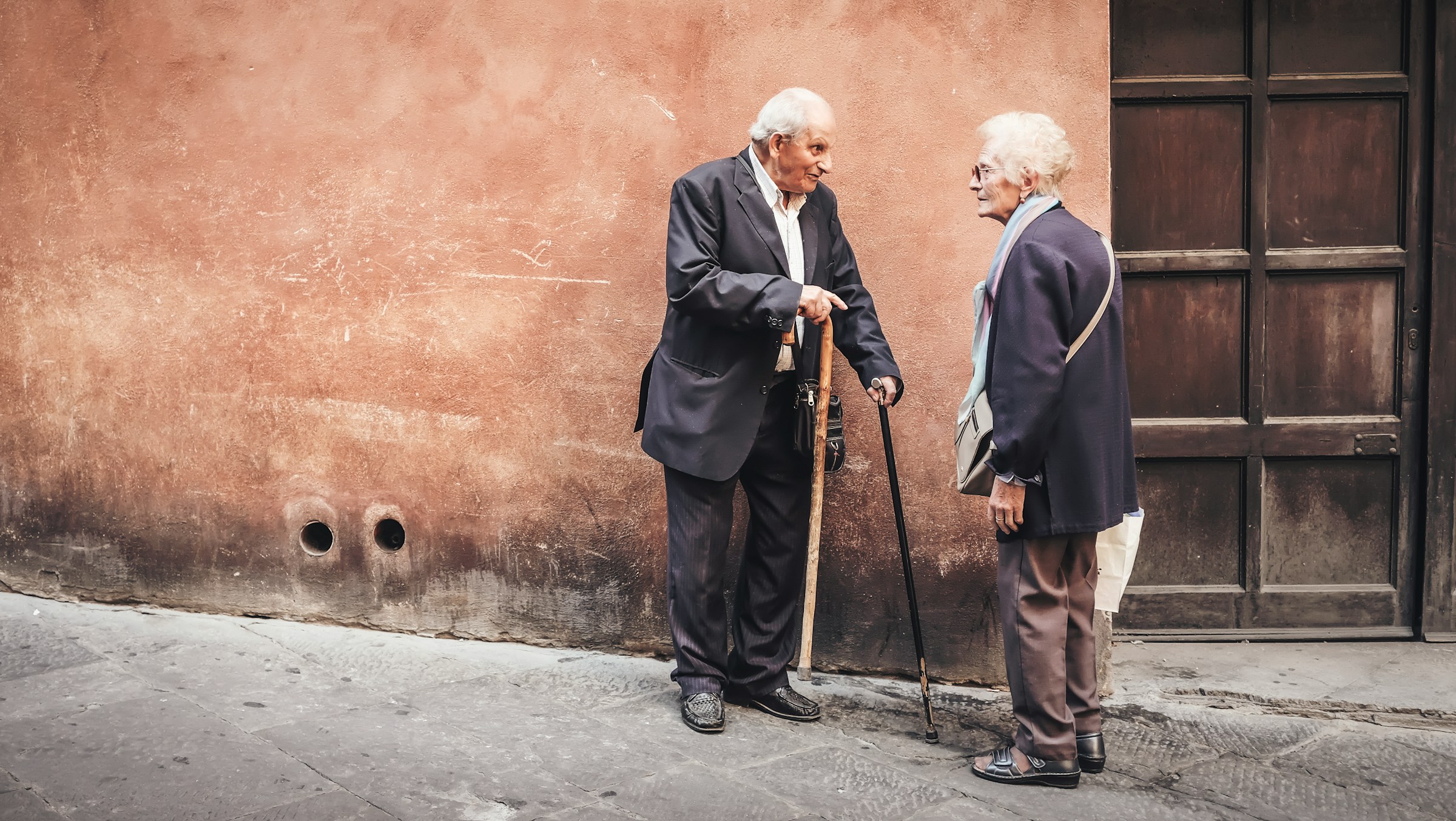
One of the tenderest landscapes from which we should never stray is that of one shoulder offered to another — and both, together, upholding the dignity of being human. A few days ago, while crossing a lattice of narrow streets with Céu on our way to the São João National Theatre, I caught sight, on a steep stretch of pavement, of an old man supporting another. It was both curious and deeply moving to see how the first, steadying himself with a cane, guided the second — whose small, bewildered eyes seemed on the verge of being swallowed by the noise and the frenzied rhythm of passing legs. Hand in hand, as we always are, Céu and I paused for a moment, watching the first gently draw the second forward, trading slow, whispered words, the two walking on like actors offstage, or like shy survivors adrift in a time and place that no longer seems to (re)cognise them.

There is little point in listing — or even hinting at — the many vile examples of selfishness, meanness or cruelty offered by society. The world is a cradle of serpents, and society the swamp where they slither round the simple and the meek.

Yet it is worth remembering José Mattoso, in a magnificent passage from Levantar o Céu – Os Labirintos da Sabedoria: “We are, without doubt, living through a dramatic moment in human history. But as long as there is life on this planet, and the sun returns in the east each morning, as long as men and women love one another, and children are born and play, there remains a trace of hope.” Watching — with the woman I love beside me — those two elders nurturing each other in that sliver of encouragement and light, I could not help but feel a deep stirring, and recall the strength of that line by Herberto Helder: “I slowly love the friends who are sad, with five fingers on each side.” So long as there is a friend who cares for us, we are not lost in darkness. Nor has the meaning of life vanished. Friendship is, by far, the finest tonic for these cursed times — and, perhaps, the only path toward their resurrection.

Bucolic

Photo by Milad Fakurian

.

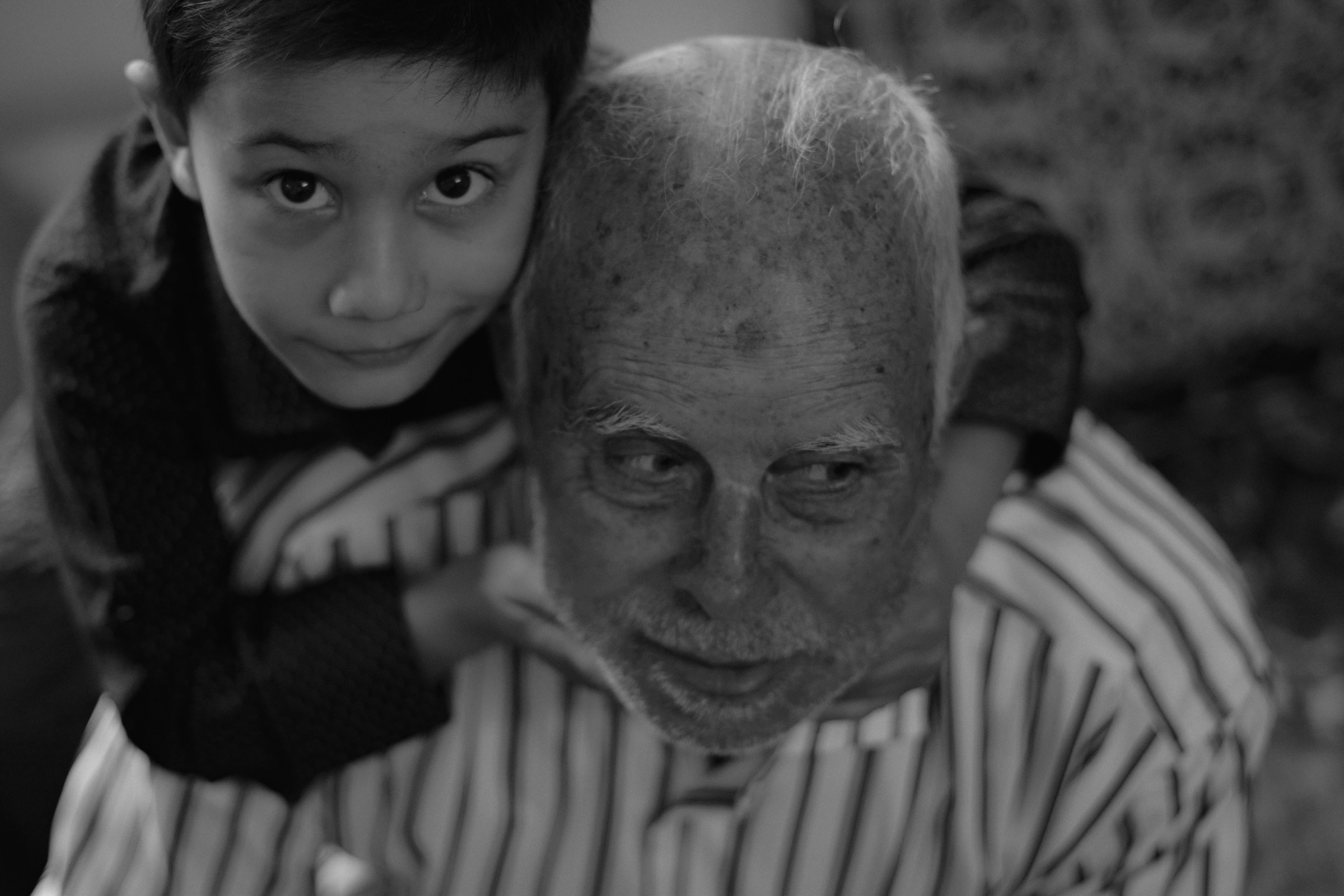
At the top of the hill lies the center of the world. From there, you can see everything: the village nestled on the slopes, the medieval church, the river below with its little Roman bridge, the hay carts and the flocks passing slowly, just like the hay carts and flocks from a thousand years ago.

There, sheltered beneath the branches of an old ash tree thick with saplings and roots, we hear the following dialogue:

– My life was cowardly, weak, miserably lived…

– Why do you say such things?

– Because I’ve always been a coward, a weak man, a miserable one…

– Don’t say such ugly things…

– But you, my child, you can have a different fate!

– What do you mean, Grandpa?

– You can look into my eyes and see what you don’t want for yourself, glimpse yourself now in a future time…

– But Grandpa, how can you believe what you just said? You’ve always been kind to everyone.

– I killed all my dreams, turned away from every woman for fear they would turn away from me, ignored the warnings, dismissed good advice, believed myself old at every stage of my life…

In the end, I wasn’t even able to put an end to the terrible remorse that eats me alive!

– What do you mean by that?

– You know… Ending everything…

– Grandpa!

– But you are different, my child! I’m telling you, a different fate awaits you. I’m telling you to go! Go while the shadow of your own feet is not yet heavy enough to drag you down, nor strong enough to turn your head back… Go, and never look behind you!

The clouds drift up above. The hill is gentle, like the curve of a fruit. All who love a good story know how vain words can be—and how fond they are of a fine pastoral setting.

“Never look behind you!”

Indeed, when walking forward, one must never turn back. It is a universal truth.

An unpublished piece

"In this brief metatextual fiction, João Ricardo Lopes conceives a short story by Robert Walser, meticulously recreating his characteristic style and thematic concerns, as well as fabricating the circumstance of such a previously unknown text having been published in the journal Der Spiegel."
Photo by Dalphine Devos

.

The online edition of Der Spiegel recently reported the discovery, in an antique shop in the small town of Vauffelin, of a notebook (modest in size, A6 format) containing previously unpublished writings by Robert Walser, known to us through the edition of Ash, Needle, Pencil, and Match, a delightful anthology of short prose pieces, which the author composed during his (somewhat enigmatic and extremely discreet) passage through this world.

The following text is part of the manuscript now surrendered to the eager hands that will dissect it. For better or worse, the translation is ours. We share it, moved.

If you are keeping vigil over someone ill and he sleeps, if the crackling of firewood makes the silence of the house all the more vivid, if the afternoon — like all cold and shadowed January afternoons — lends itself to meditation, and perhaps even to introspection, then perhaps you might grant yourself a few moments in which it still seems worthwhile to put to use a stubby pencil and a scrap of paper.

There is nothing quite like the poignant peace of one who waits. Most of the time, the clock finds a way to burrow into us and leave us restless and aching, perhaps even hollow. But that is not the case now: the flicker of the fire and the faint, drowsy light cast on the walls quiet our gestures.

The presence of someone sick, in need of our care, inspires a kind of concern akin to that which one feels for the stub of a candle: at any moment the wick might expire, and the tiny flame bid farewell in a thin, pale thread of final smoke. But while it burns, that tiny remnant of wax is marvellous, touching — a reason to revere the present.

Much the same could be said of a taut rope, across which our shirts hang, and whose frayed strands already foretell that painful peak at which the two ends will part forever, never to meet again. The breaking of matter is a puncture. But a sisal rope dies when it must die. The feeling of duty fulfilled requires no explanation, nor should it be prolonged.

I end here, grateful, reader, for your time. Time is precious — I might even say, deeply beautiful. A text, when read through someone else’s eyes, is nearly a miracle. You cannot imagine how much so, dear friend. Nor how profoundly.

The Great Wave

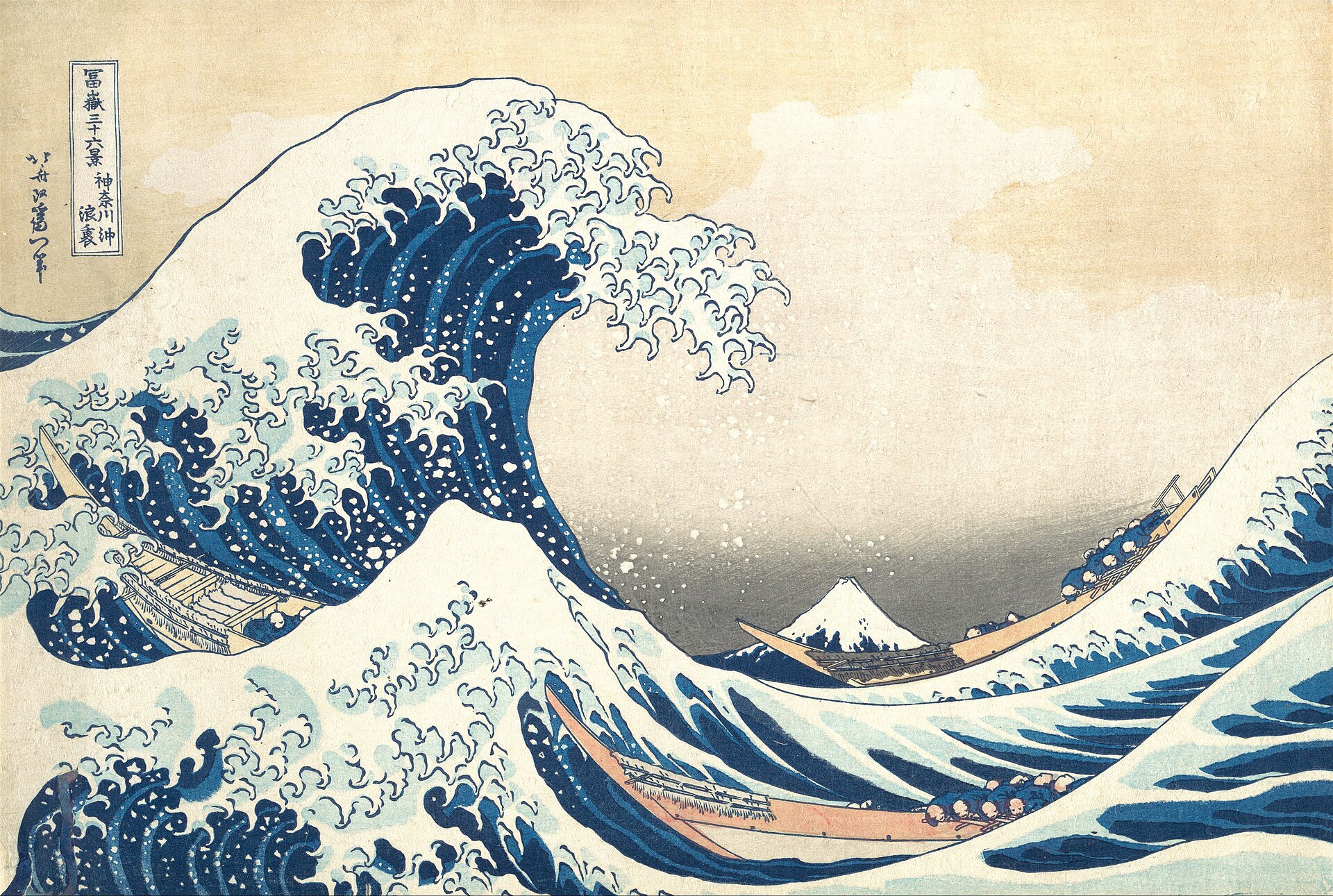
The Great Wave. Hokusai, 1831

.

There are times when we are overtaken by a kind of fatigue that scatters everything we cherish, as though it were cutting down at the root the very trunk of our emotions. We feel ourselves swaying inwardly, intoxicated by an unrelenting paralysis, sleepwalking through a temporary death, felled by what the elders call ennui, what the poets name acedia, what psychiatrists term slackness — or, more commonly, indistinctly, sorrow, depression, boredom.

When we are swallowed by this wave — and it is impossible not to recall the one Hokusai painted, devouring the poor fishing boats off Kanagawa — there is very little left to us, almost nothing, as though we lingered in an existence of ashes and silence.

And yet, along the great voyage of days and years, a few scraps of miracle remain. After the fatigue, the torpor, the stillness, there always follows a season of radiant openings of the soul. In it, as a flame rekindles among half-extinguished embers in the hearth, the meaning of existence is lit again — the thread of words, the glint of joy. It is the most wondrous time in our lives: the moment when the Self and Faith are rediscovered.