
Limpidity

Photo Sixteen Miles

.

There is only one dependable way to love life: to draw near to the limpidity that asks for patience, courage, sacrifice, and so often silence and self‑denial. And also for defeats, for the encounter with what contradicts us, for the labour of continual learning. Zbigniew Herbert, in a remarkable poem, writes, “I would like to describe the simplest emotion,” trading “all metaphors / for a term / torn from the chest like a rib / for a word / that fits / within the limits of my skin.”

With age we learn that nothing is quite as difficult as the limpidity of childhood—an equivocal yet precious gift. We learn that truth (like the sun) still casts its light and warmth, though it has shifted its place upon the horizon. The irony could hardly be sharper: as we grow older and confront physical short‑sightedness, we look more deeply into things, into the character of others (and of ourselves), into the perplexity of life, into the feeling stirred by little beings, into the pain dealt to us by ignorance and human savagery; we look more intently into the depths of the cosmos, of death, of the genuine happiness born in a poem; we look towards the comfort of friendly voices, towards the solemn wisdom of Vilhelm Hammershøi’s paintings, or the enchantment of the guitar chords of Isaac Albéniz or Joaquín Rodrigo. Life does not require wealth or genius to be worthy. It asks only for kindness and stillness. And with age we learn that nothing matters more than drawing close to our destiny, even if that destiny is a mirage. We recognise it by the confidence and quiet joy with which we open the door each morning. In the end, compassion is the reward of our discovery.

I write these words on a bright December morning, a cup of coffee warming my hands. I feel, far beyond myself, the harmony of space and the mind’s impetuous surge of effort. I might have taken up pencil and paper to write something entirely different. But I needed to set down this thought. Life chose us, as love chooses us, or as the gaze of someone seeking ours. I suppose that responding to such devotion is worth not only the effort, but above all the heart.

29.12.2025

.

A Beggar

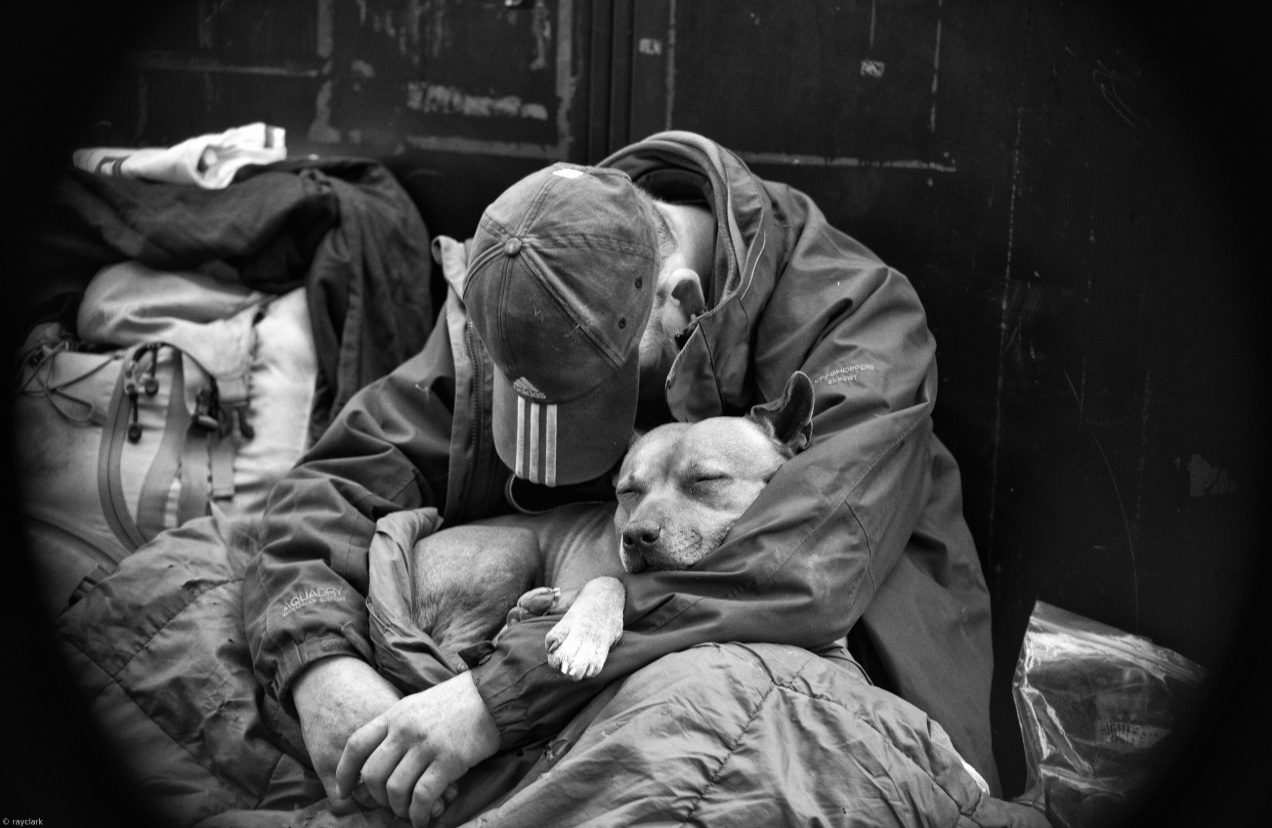
Photo by Ray Clarck

.

Certain phrases sound like the cold gleam of churches, Ricardo Navajo thought, as he stroked, lost to himself, the small dog at his side.

In this corner of the city, alms are, in a way, less miserly but far noisier. A man pressed to the ground hears everything, including words articulated with rote wisdom.

“We should feel grateful for what He has set aside for us and recognise that a crust of bread is as important as the beauty of the saxifrage.”

Whoever said it did so with a calm assurance that was at once the outward expression of a frantic search of the soul. Then, turning to his listeners in a kind of improvised sermon, he also said,

“Behold: there is a depth towards which the body weighs, and a whole sky towards which we must raise the soul. Beneath us the earth to cover us; above us the galaxies that shall guide our spirit for evermore.”

Ricardo Navajo scratched his chin with frozen fingers and long nails. Then he scratched his belly, unsettled by hunger. Next, he began to massage the nape of his mongrel companion, forgetting the plastic bowl where a few cents slept in peace.

At this corner of the city, people almost always walk in haste and almost never with pity. The conversations flung into the air are very much like fireworks: brief flares that glitter without warming.

The speaker has just gone into the Seminary with his disciples; cars blare their horns with steady ferocity; traffic lights open and close with the indifference of ancient gods.

Navajo has the habit of brooding on what others leave hanging as they pass by. Human thought, if there is any left, is organised like a structure of scaffolding. Each man sees the world in the way that suits him, supposing it to be unique and universal from the height, or the depth, of his own vantage point.

That there are beautiful flowers and stars around us, the beggar did not doubt. But a crust of bread and money so that the earth may receive our bones with dignity are another matter altogether.

Just now Navajo received the firm clink made by a one-euro coin. The Christmas season is a good harvest, he would reply, if anyone wished to know how life is going. He thanks it with a studied bow, while the palm of his hand runs along Riquinho’s back. That is the name of his best friend.

That is what he would say, if anyone asked him.

.