
O Moscardo e Outras Histórias (2018)
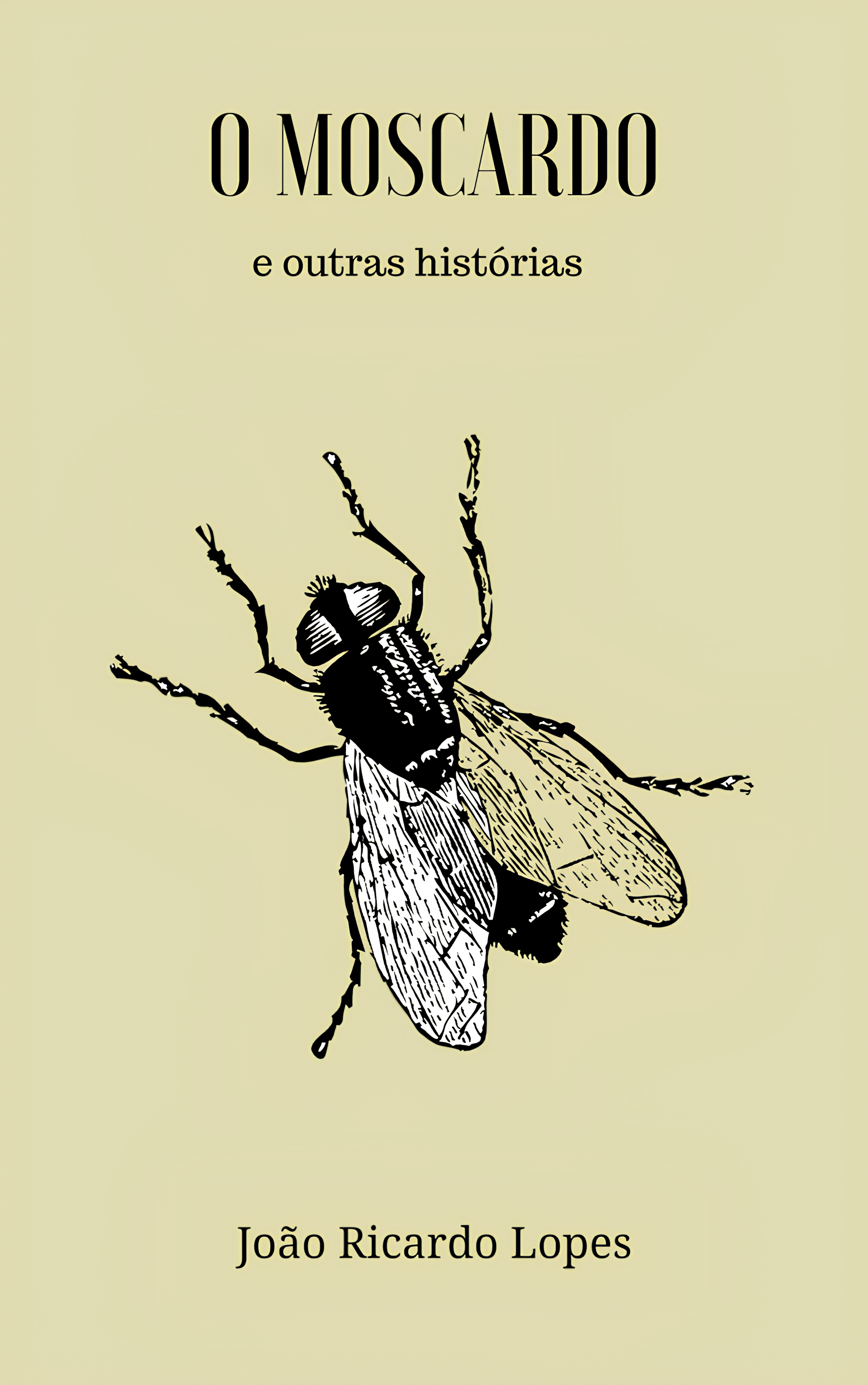
.
João Ricardo Lopes’ O Moscardo e Outras Histórias (The Horsefly and Other Stories) emerges as a multifaceted literary project, shaped by the author’s deep engagement with the short story tradition of writers such as Edgar Allan Poe, Machado de Assis, Anton Chekhov, Jorge Luis Borges, István Örkény, Stig Dagerman, and Tonino Guerra. Written between 2015 and 2018, the collection includes 86 carefully selected narratives that reflect Lopes’ refined literary sensibility and philosophical concerns.
The collection has been described by Paula Morais as comprising “narratives that problematize reality.” Rather than offering linear or conventional plots, these stories resemble visual and conceptual fragments—frames or tableaux—that demand active engagement from the reader. Morais emphasizes the reflective and critical lens through which Lopes explores the human condition, portraying the contemporary world as a fragmented and uncertain landscape. In her analysis, the book is likened to a mosaic or tiled wall, where each story acts as a unique piece contributing to a larger, polyphonic vision of modern existence—a “house with many windows” opening into a shared courtyard filled with the contradictions and ambiguities of daily life.
The concept of a “liquid modernity,” drawn from Zygmunt Bauman’s sociological framework, is key to understanding the narrative environment of the collection. The stories are populated by characters navigating a world devoid of grand narratives or stable values, where multiperspectivism and disillusionment prevail. Not even language is exempt from this condition of instability—writing itself becomes an act of interrogation and reinvention.
Sara Freitas further underscores the interactive dimension of Lopes’ storytelling. The author is seen as a guide who challenges the reader, leading them through darkly satirical terrains and moral dissonance. The reader must be not only attentive but also intellectually and emotionally invested, invited to decode, reflect, and even continue the stories in their own imagination.
The book’s epigraph—a quote by Borges asserting that “facts no longer matter; they are merely starting points for invention and reasoning”—sets the tone for this aesthetic of ambiguity and philosophical play. Lopes’ work is, in essence, a celebration of the creative act as reinterpretation: originality resides not in the invention of the unheard, but in the artful reconfiguration of the already known. The buzzing of the titular horsefly becomes a metaphor for language itself—unceasing, provocative, and impossible to ignore.
.
KAFKA
After once more reading Kafka’s The Metamorphosis, the poet and entomophile Tomas Tranströmer found himself wondering: if, absurdly, what happened to Gregor Samsa were to happen to him, into what kind of insect might he be reborn?
His wife laughed.
— I think you’d make a beautiful butterfly, Tomas. Like the ones we saw in the East. An Ornithoptera alexandrae…
But Monika also imagines he might just as well become a speckled jewel beetle from the Philippines, a delicate dragonfly from Canada, or a Mantuan honeybee — like the ones Virgil once sang of.
The island of Runmarö is abundant in silence and the hoofprints of roe deer — and likewise in murmurs, in the rustle of wings, in quaint, pastoral creatures. The poet Tomas Tranströmer moves through it with discretion and humility. In the hush of the woods, it is the lowliest of beings that draw his gaze — worms, things that crawl and burrow. Scarabs, stag beetles, weevils, fireflies — these are far too resplendent. Tomas prefers the ant.
— An ant, Tomas?
Yes. Of that he is quietly certain: Kafka would have made him into an ant. He sees himself in that endless column of his kin, bearing the same burdens with a kind of resigned grace — with no hunger for grandeur, no longing for distinction. Just one among millions. An ant, without doubt.
A future biographer would be enraptured.
We, who admire such a poet, are too.

