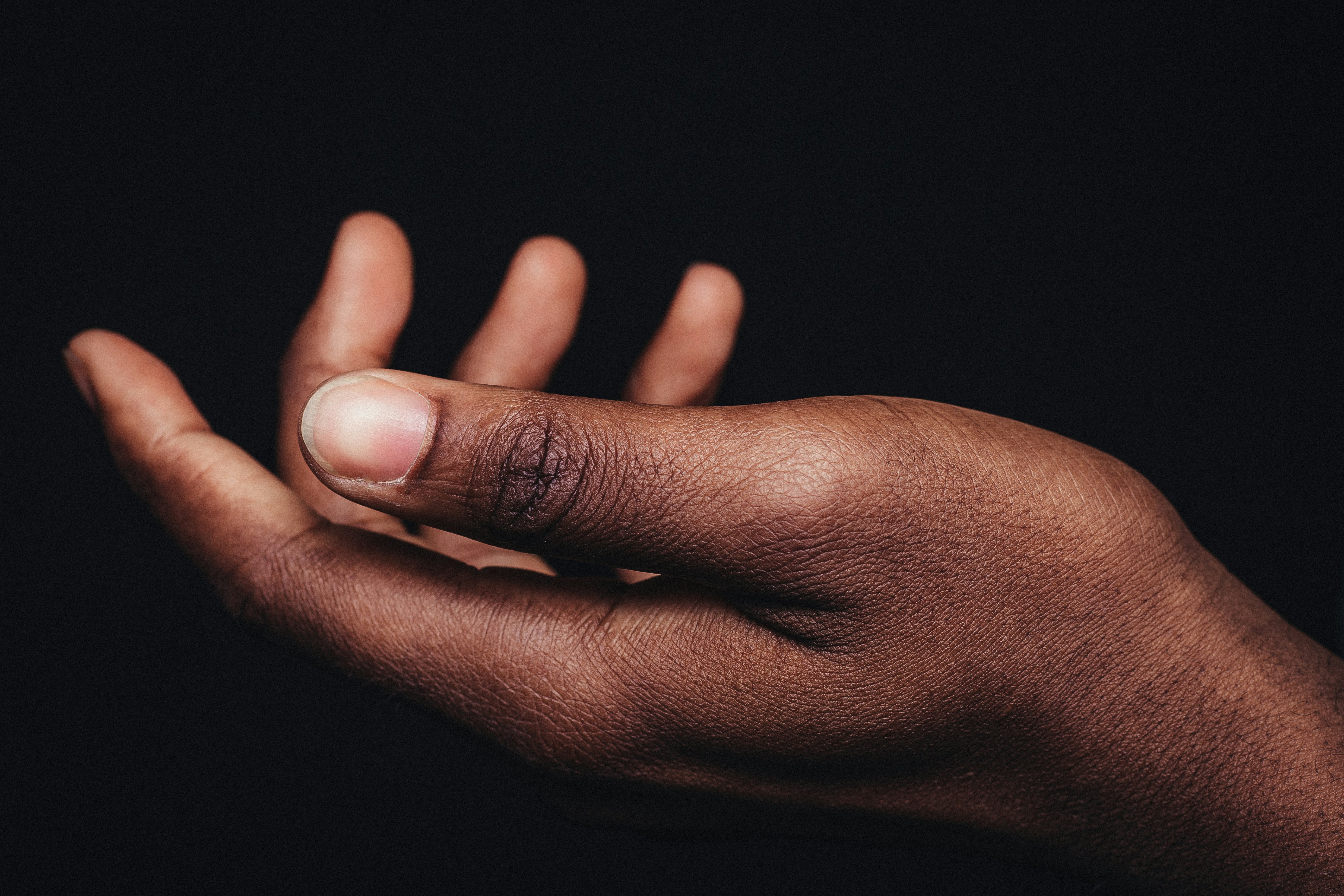
Hands

Photo by Nsey Benajaj

.

One of Herberto Helder’s most celebrated poems begins: “Amo devagar os amigos que são tristes com cinco dedos de cada lado” / “I love slowly the friends who are sad, with five fingers on each side” (“Aos Amigos,” Poemacto, 1961). Nothing gives itself to us—or gives us so deeply to others—as our hands do. The touch of hands trains our feelings, soothes the wretched, supports the powerless, opens places of refuge and hope to strangers and wanderers, draws in both the different and the familiar, seals pacts, builds bridges, and writes the essential words that the future will allow to take root.

On their skin, in the varied form of the fingers (as though the blessed difference of size and function made them inseparable creators of life), in the beauty of the nails, in the small blue threads of blood running to the tiniest venules and arterioles, in the lines where their phalanges bend and the full shell of their bones closes—there lies a science of fire.

By this science of fire I mean the gift we all possess (and so often refuse): the gift of loving, even in shadow, even in silence, on the humble scale of those who bring forth not injury but a poem, not hatred but friendship, not a hostile fist but an open and willing hand.

Herberto ends his poem with prophetic lines: “– Temos um talento doloroso e obscuro. / Construímos um lugar de silêncio. / De paixão.” / “– We have a painful and obscure talent. / We build a place of silence. / Of passion.” The world of men will only be saved when they understand what their hands are for—when they love the sad ones who keep them open, with five fingers on each side.

Something happened

Photo by Pranav Adarsh

.

Suddenly I grasp the bestiality of humankind as I never had in nearly half a century of life. What is desecrated is the commonplace, the place of others, one’s own place. Each person becomes a latent enemy, a possible hatred, a quarrel, an insult, an act of aggression, a predatory gesture. I see how easily someone is wounded—without cause, without reason, without any concern for what each act is or signifies: a driver abandons his car to raise a violent arm against the one behind him; a ten-year-old hurls a death threat in class, at a fellow pupil or at the teacher; a patient dies on a hospital stretcher before the very eyes of the doctor meant to heal him; a president slanders and divides his people, scorning the oath sworn upon the Bible; a once-decimated nation commits mass murder, justifying force with the cowardly, hypocritical justice it claims to inherit. And suddenly I realize that the clear sun spilling across the windowsill and the blank page of my notebook is impure, unbearable.

I turn to Johann Sebastian Bach as a leper to his refuge. I turn to childhood, to the memory of good friends, of the idyllic walks to primary school, of the ancestral scent of herbs along the streams. I turn to the rigor of colors, the unequivocal weight of words, the care of nails, the truth in the eyes. Then, there was an immeasurable sense of hope. I learned to respect, to give thanks, to be gentle, to cultivate humor, to cherish the rare, beautiful objects given to me, to read books with delicate care, to press my spirit into the considered phrases I was asked to set down—one after another—in school compositions and in dialogue of subtlety. I turn to silence to remember all of this, to listen to the guitar suites, to step away from the noisy patina the days secrete.

The other day a student asked how I find inspiration. For an instant a banality hovered on my lips, a cliché, a ready-made reply. We were in a long room lined with state-of-the-art computers, breathing the air steeped in cables and devices. We were speaking of António Vieira, and of the courage to preach on the edge of the abyss. «I don’t know», «I never knew». That is the certainty. Inspiration—like opening one’s chest to the clean October air, brushing against dew, against the bright green of fennel and lemon verbena—I cannot explain it. Unless, perhaps, as a vast nostalgia, a melancholy urge to reinvent the days backwards, as when the pencil snapped along the nervous line and I thought «this is not the way». Suddenly humanity crumbles on the page, swollen with stupidity and perverse pride. And it is necessary that someone say «this is not the way».

Our own image

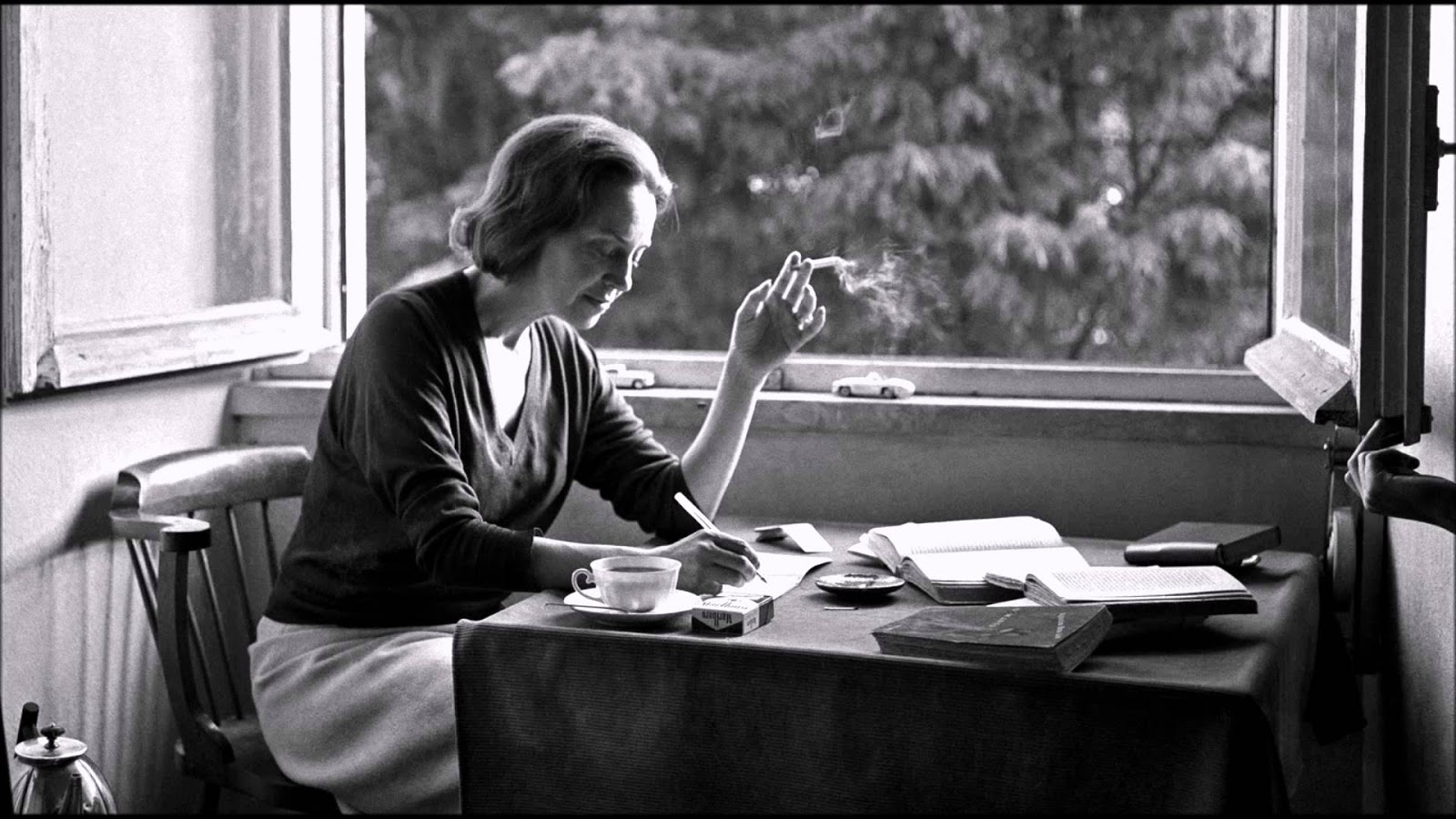
Sophia de Mello Breyner Andresen photographed by Eduardo Gageiro

.

In one of the poems of No Tempo Dividido, Sophia de Mello Breyner Andresen writes, in the manner of an inscription: “Que no largo mar azul se perca o vento / E nossa seja a nossa própria imagem” — “That in the wide blue sea the wind be lost / And ours be our own image.”

The pelagic world was for the poet, as is commonly known, a demiurgic, almost religious space, from which emerged her creative force, her fascination with ancient time (which was equally her fascination with the inscrutable future), but also her most personal delight in the peoples who, having sailed those seas of a remote past (the Greeks, in particular), bequeathed to us their art, their beauty, their nude, and within them (as in Heidegger’s ontology) our destiny.

Sophia’s poems are, without exception, exercises in incomparable lapidary art. We read them today under the relative oblivion to which every work is consigned after the death of its author. Yet for this very reason we rediscover them as more vehement, more marvellously sculpted, more true. We read them as an extension of ourselves, as though seated on a garden bench among the twisted trunks of giant trees (like these metrosideros in Foz do Douro), the wide blue sea before us seemed more real, and our own spirit wandered amid those waves and the scent of the sea breeze, while between the seated body and the wandering spirit there existed something unnameable. Something like our own image, doubly beheld in the mirror.

24.11.2024

Children’s Day

Photo by Kant Smith

.

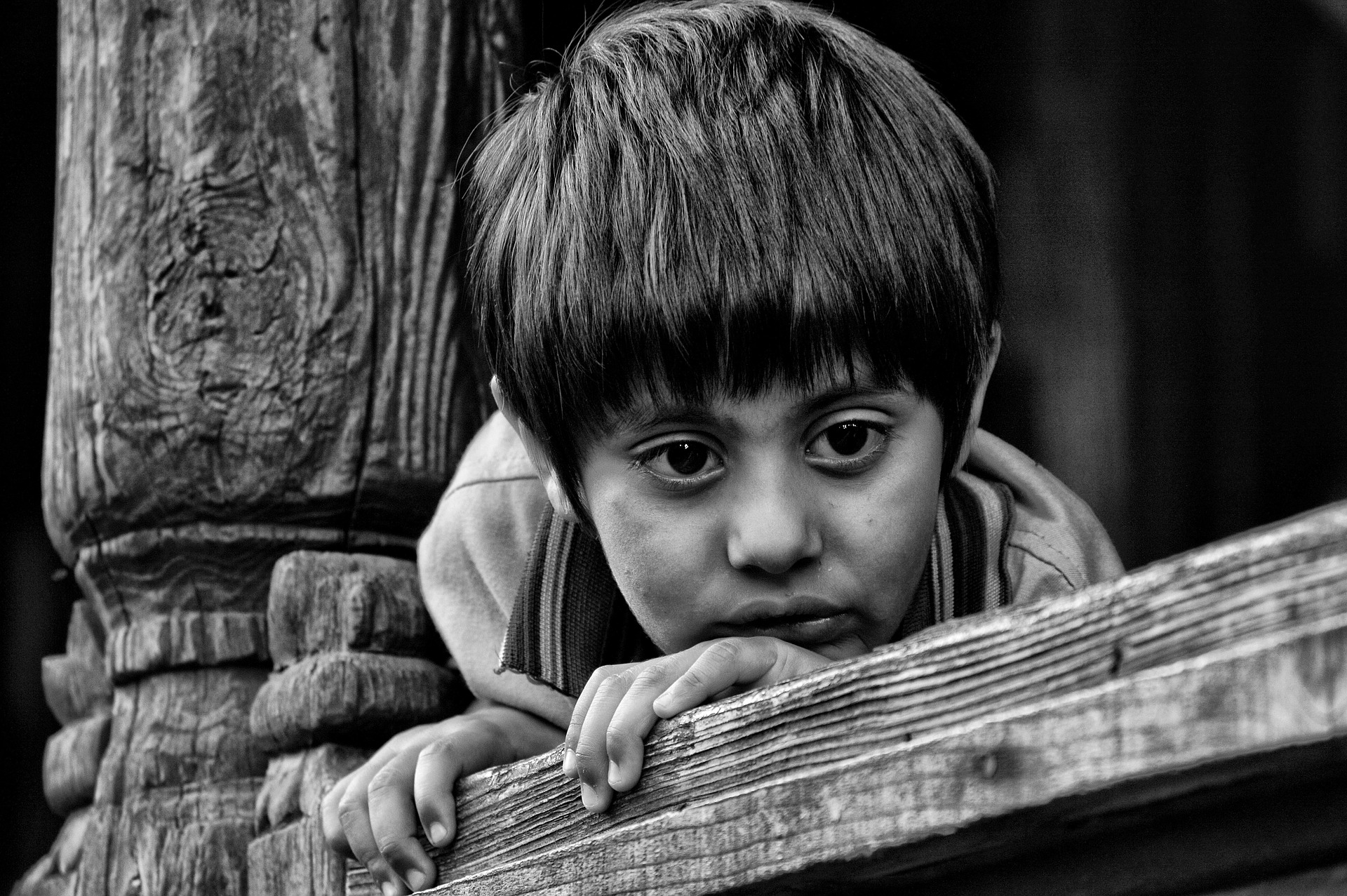
The world exasperates. A latent brutality thrums within it, undoing the stubborn innocence of things, and making ever murkier the divination of times that shall outlive us. We know History swings, endlessly, between seasons of peace and seasons of war, between ages of brilliance and ages of barbarity, between hours of human grandeur and hours of atrocious pillage. If we return to the 1980s, we recall the searing images of Biafra, of Ethiopia—the solidarity campaigns that gathered the world against hunger. We recall the fall of the Berlin Wall, the dawn of democracy in countries once shackled by Soviet rule. We recall Mandela’s release, the silencing of guns in Northern Ireland. A time, perhaps, when free thought was loosening its chains, when democracy and the rights of the unheard began, however briefly, to hold.

But the world is once again turned inside out by the same old forces—those who forever gnaw after wealth, after power, after dominion. One wave of hope gives way to another of grim despair. I think of the children in Gaza, in Ukraine, in that half of the world left wrinkled and worn, enslaved by the relentless sprawl of multinationals. It is hard to believe that a handful of words could matter—and that, too, exasperates.

And still, in these places seemingly abandoned by God—long since forsaken by humanity—there remains a force, faint but unyielding, that drives us to persist. A kind of breath of truth threads its way through the sulphur and phosphorus of falling bombs, compelling us to resist. Resistance itself exasperates. As though some hidden covenant between the last flickers of moral conscience and justice, poetry and the sheer passion for life, shame and a whisper of prayer were urging us to rise—to face the impious cries of tyrants, and the colluding silence of nations that call themselves free. I think of the children of Gaza, starving. The children stolen from Ukraine. The children of Yemen, Sudan, Venezuela. The ones who drown off Lampedusa and Tenerife. The ones who toil from dawn till dark in Bangladesh, in India, in countless places lost to maps. The ones ruled by the Taliban, by mafias, by the degenerate hands of men who harm them. I know that words do not console. Nor do donations (for ten years now I’ve given one to UNICEF on this day). Both are drops in the sea. But I must not forget. I need, as Pedro-Daniel Névio once wrote, to “place a blue thistle in the space left by the stolen heart.”

Perhaps that is the invisible, stubborn force—the one that, beneath the fingernails of the few (and of many more), moves mountains.

To dear friends

Photo by Cristina Gottardy

.

When Jesus saw her weeping, and the Jews who had come along with her also weeping, he was deeply moved in spirit and troubled.
John, 11:33

.

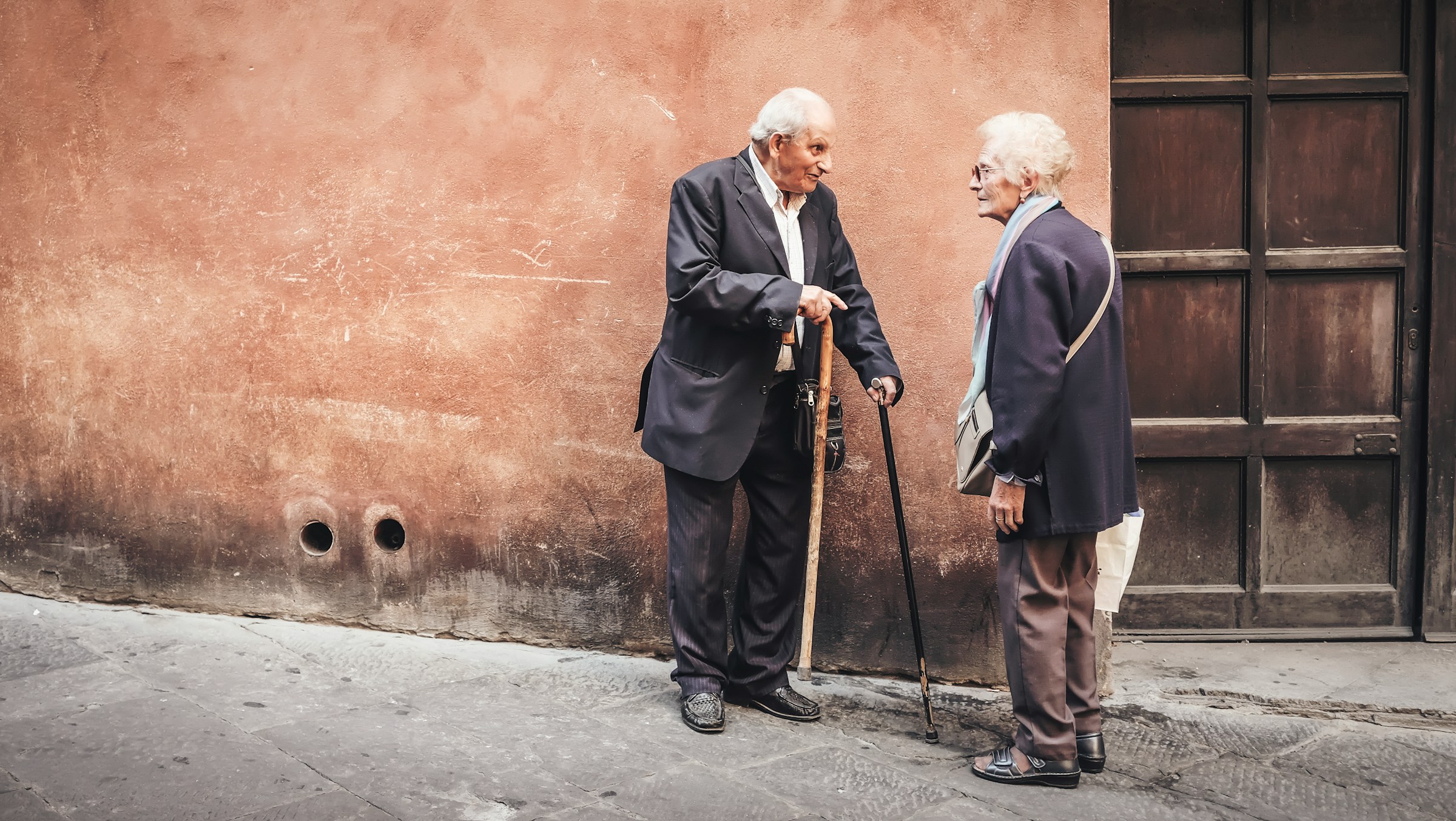
One of the tenderest landscapes from which we should never stray is that of one shoulder offered to another — and both, together, upholding the dignity of being human. A few days ago, while crossing a lattice of narrow streets with Céu on our way to the São João National Theatre, I caught sight, on a steep stretch of pavement, of an old man supporting another. It was both curious and deeply moving to see how the first, steadying himself with a cane, guided the second — whose small, bewildered eyes seemed on the verge of being swallowed by the noise and the frenzied rhythm of passing legs. Hand in hand, as we always are, Céu and I paused for a moment, watching the first gently draw the second forward, trading slow, whispered words, the two walking on like actors offstage, or like shy survivors adrift in a time and place that no longer seems to (re)cognise them.

There is little point in listing — or even hinting at — the many vile examples of selfishness, meanness or cruelty offered by society. The world is a cradle of serpents, and society the swamp where they slither round the simple and the meek.

Yet it is worth remembering José Mattoso, in a magnificent passage from Levantar o Céu – Os Labirintos da Sabedoria: “We are, without doubt, living through a dramatic moment in human history. But as long as there is life on this planet, and the sun returns in the east each morning, as long as men and women love one another, and children are born and play, there remains a trace of hope.” Watching — with the woman I love beside me — those two elders nurturing each other in that sliver of encouragement and light, I could not help but feel a deep stirring, and recall the strength of that line by Herberto Helder: “I slowly love the friends who are sad, with five fingers on each side.” So long as there is a friend who cares for us, we are not lost in darkness. Nor has the meaning of life vanished. Friendship is, by far, the finest tonic for these cursed times — and, perhaps, the only path toward their resurrection.

Poetry

Photo by Toa Eftiba

.

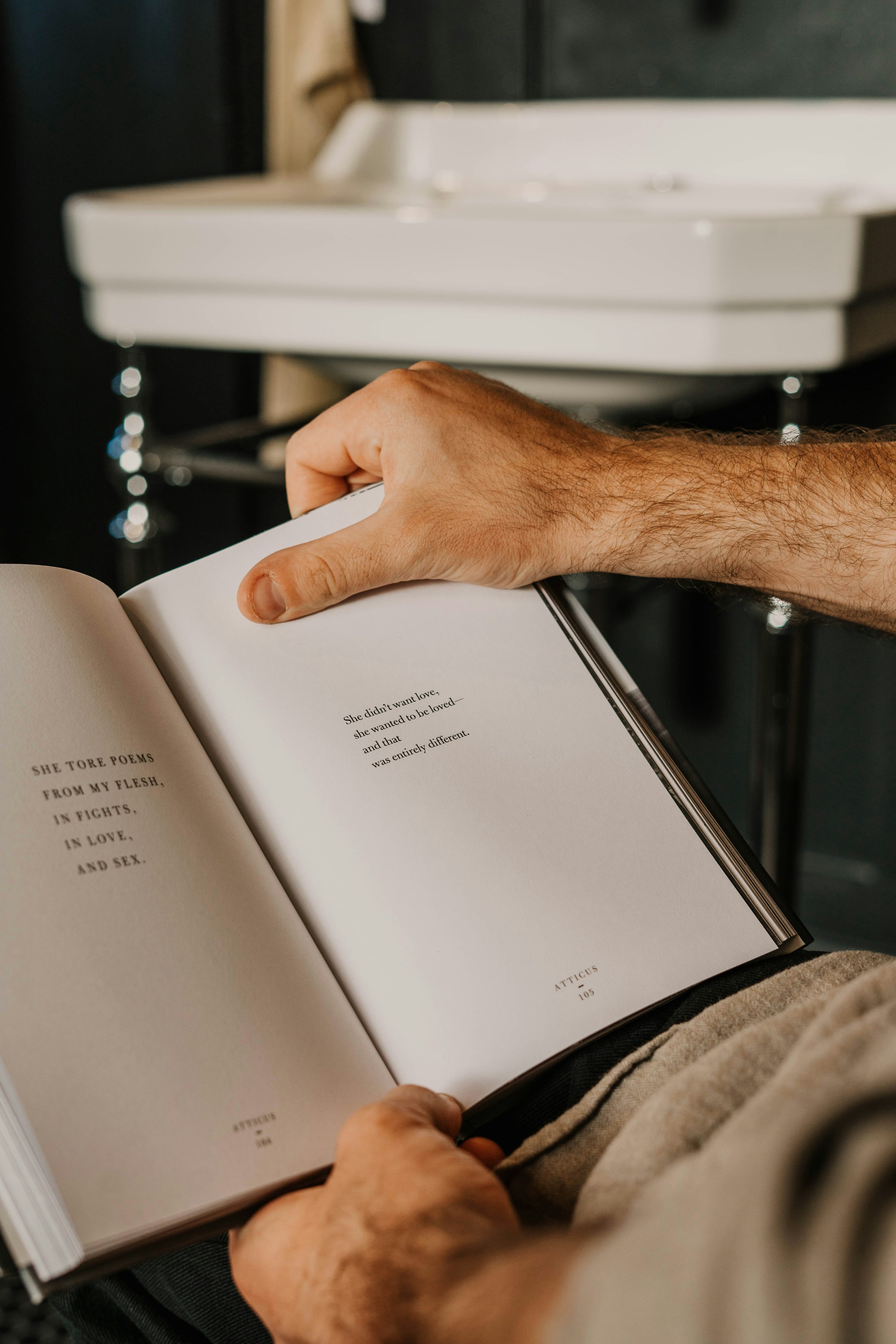
I have long read, written, collected, and loved poetry. My bookshelves cradle a considerable number of volumes dedicated to this art the ancient Greeks believed was consecrated to Euterpe—an art whose hold on me deepens with time, as I come to grasp the astonishing power of freedom contained in this ποιείν (poiein): the freedom to think, to feel, to speak.

These days, in my classes, it is rare to find a student who chooses a book of poems for their own quiet, autonomous reading. Rarer still the one who brings to their peers a collection by Sophia, José Régio, Miguel Torga, Antero, Pessanha—or even by Florbela Espanca or Eugénio de Andrade (who, despite these “hard times for lyricism,” as Bertolt Brecht once wrote, still manage to glean some measure of admiration). Rarest of all is the one who admits to loving, or even intuitively grasping, this literary form.

Perhaps this is why—saddened by yet another crisis, this slow dwindling of love—I find myself thinking, more and more obsessively, about how to preserve Homer and Hesiod, Virgil and François Villon, Whitman and Emily Dickinson, Federico García Lorca and Anna Akhmatova. How to help them survive the great catastrophe of forgetting, and above all, the cataclysm of indifference. For time has taught me that the noblest battles for the life of the spirit are almost fated to fail in a society brutalised and brutal, prosaic and stained in its sentiments by the cement blocks we trample in the streets.

Poetry must be cared for—urgently. As with the great seed vault of Svalbard, we must shelter the most extraordinary force ever forged by the human mind, heart, and courage, working in concert. Only, in place of seeds, we must seal verses within.