João Ricardo Lopes é um poeta e escritor português, autor de livros de poesia, crónicas e contos. Parte da sua obra foi traduzida para inglês, francês, castelhano, francês, alemão, sueco, dinamarquês, neerlandês, polaco, romeno, servo-croata e arménio.
do not wait so long for me
I have no future
as past I did not have.
handsome I may be
however crude
no less than statue
nor better than sand.
like every creature
what I am I am no longer.
my hands burn with the cold
and I may already be dead
or too far.
do not wait so long for me
you do not know who you wait for
Translated by Bernarda Esteves
.
O ACTOR OLHA-SE AO ESPELHO
não esperes tanto por mim
não tenho futuro
como passado não tive.
belo talvez seja
porém cru
não menos que estátua
nem melhor do que areia.
como toda a criatura
o que sou não sou.
as mãos ardem-me de frio
e talvez esteja já tão morto
ou longe de mais.
não esperes tanto por mim
não sabes quem esperas.
Original version in Portuguese, from the book Reflexões à Boca de Cena / Onstage Reflections by João Ricardo Lopes
When Jesus saw her weeping, and the Jews who had come along with her also weeping, he was deeply moved in spirit and troubled.
John, 11:33
.
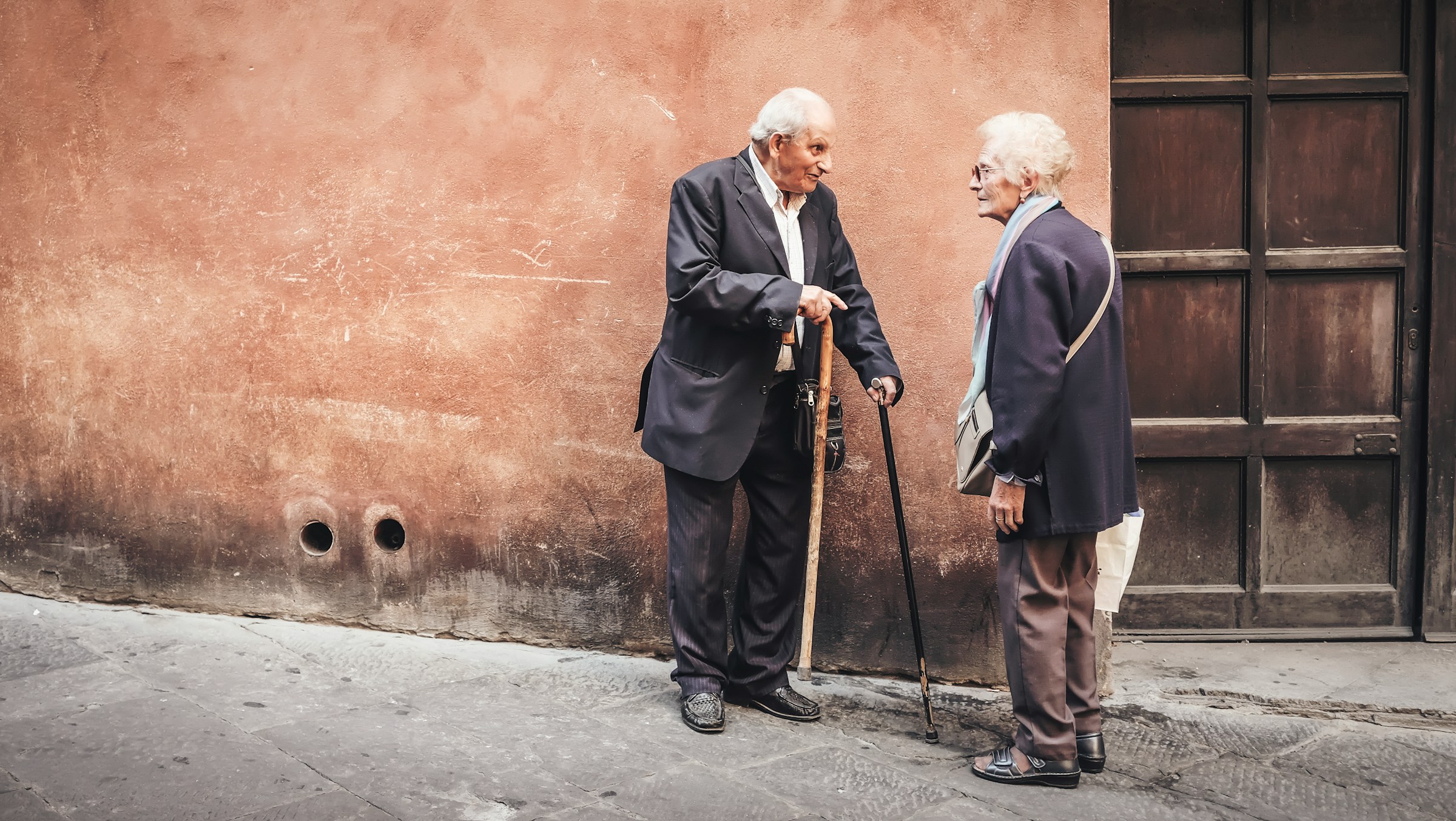
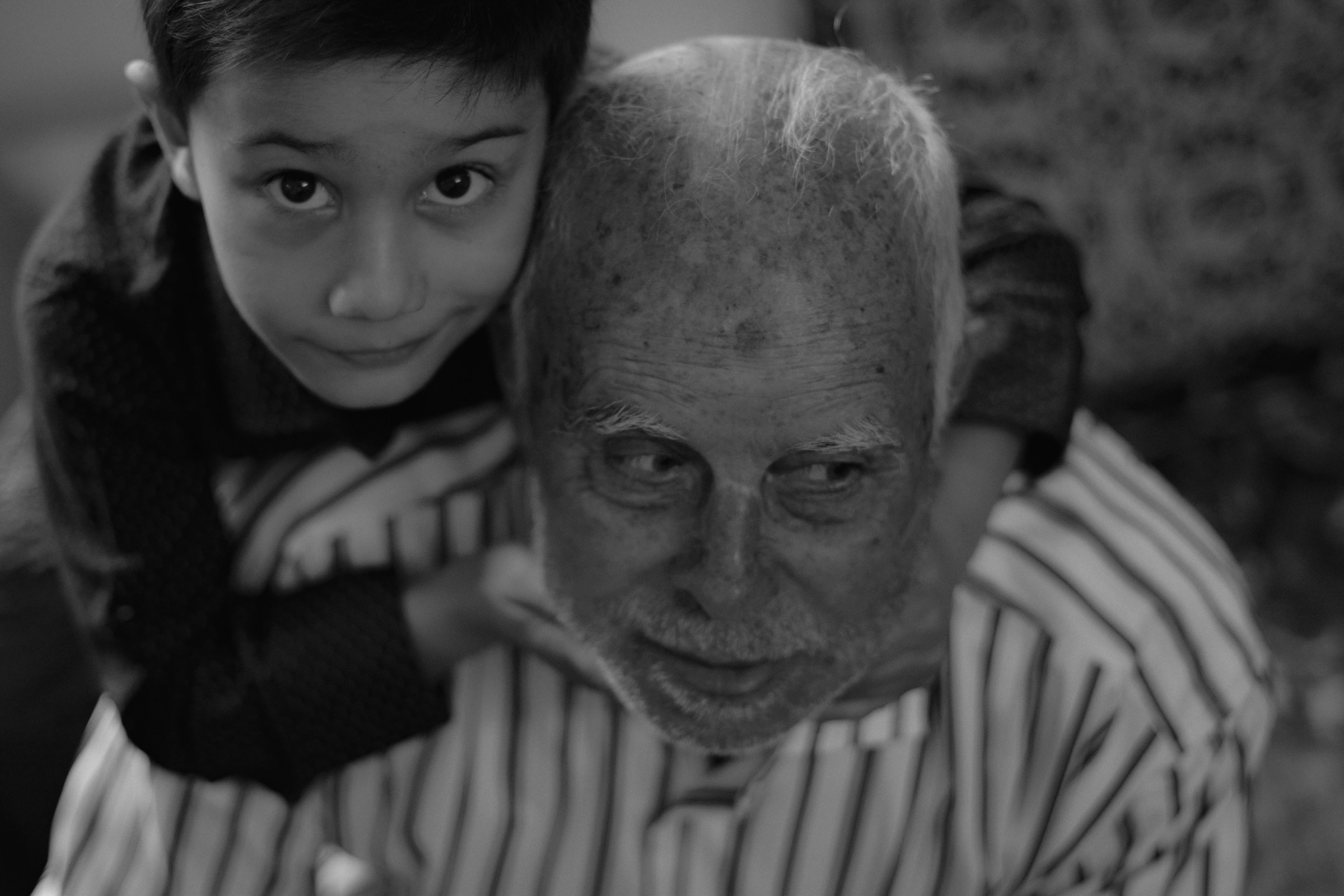
One of the tenderest landscapes from which we should never stray is that of one shoulder offered to another — and both, together, upholding the dignity of being human. A few days ago, while crossing a lattice of narrow streets with Céu on our way to the São João National Theatre, I caught sight, on a steep stretch of pavement, of an old man supporting another. It was both curious and deeply moving to see how the first, steadying himself with a cane, guided the second — whose small, bewildered eyes seemed on the verge of being swallowed by the noise and the frenzied rhythm of passing legs. Hand in hand, as we always are, Céu and I paused for a moment, watching the first gently draw the second forward, trading slow, whispered words, the two walking on like actors offstage, or like shy survivors adrift in a time and place that no longer seems to (re)cognise them.
There is little point in listing — or even hinting at — the many vile examples of selfishness, meanness or cruelty offered by society. The world is a cradle of serpents, and society the swamp where they slither round the simple and the meek.
Yet it is worth remembering José Mattoso, in a magnificent passage from Levantar o Céu – Os Labirintos da Sabedoria: “We are, without doubt, living through a dramatic moment in human history. But as long as there is life on this planet, and the sun returns in the east each morning, as long as men and women love one another, and children are born and play, there remains a trace of hope.” Watching — with the woman I love beside me — those two elders nurturing each other in that sliver of encouragement and light, I could not help but feel a deep stirring, and recall the strength of that line by Herberto Helder: “I slowly love the friends who are sad, with five fingers on each side.” So long as there is a friend who cares for us, we are not lost in darkness. Nor has the meaning of life vanished. Friendship is, by far, the finest tonic for these cursed times — and, perhaps, the only path toward their resurrection.
I have long read, written, collected, and loved poetry. My bookshelves cradle a considerable number of volumes dedicated to this art the ancient Greeks believed was consecrated to Euterpe—an art whose hold on me deepens with time, as I come to grasp the astonishing power of freedom contained in this ποιείν (poiein): the freedom to think, to feel, to speak.
These days, in my classes, it is rare to find a student who chooses a book of poems for their own quiet, autonomous reading. Rarer still the one who brings to their peers a collection by Sophia, José Régio, Miguel Torga, Antero, Pessanha—or even by Florbela Espanca or Eugénio de Andrade (who, despite these “hard times for lyricism,” as Bertolt Brecht once wrote, still manage to glean some measure of admiration). Rarest of all is the one who admits to loving, or even intuitively grasping, this literary form.
Perhaps this is why—saddened by yet another crisis, this slow dwindling of love—I find myself thinking, more and more obsessively, about how to preserve Homer and Hesiod, Virgil and François Villon, Whitman and Emily Dickinson, Federico García Lorca and Anna Akhmatova. How to help them survive the great catastrophe of forgetting, and above all, the cataclysm of indifference. For time has taught me that the noblest battles for the life of the spirit are almost fated to fail in a society brutalised and brutal, prosaic and stained in its sentiments by the cement blocks we trample in the streets.
Poetry must be cared for—urgently. As with the great seed vault of Svalbard, we must shelter the most extraordinary force ever forged by the human mind, heart, and courage, working in concert. Only, in place of seeds, we must seal verses within.
At the top of the hill lies the center of the world. From there, you can see everything: the village nestled on the slopes, the medieval church, the river below with its little Roman bridge, the hay carts and the flocks passing slowly, just like the hay carts and flocks from a thousand years ago.
There, sheltered beneath the branches of an old ash tree thick with saplings and roots, we hear the following dialogue:
– My life was cowardly, weak, miserably lived…
– Why do you say such things?
– Because I’ve always been a coward, a weak man, a miserable one…
– Don’t say such ugly things…
– But you, my child, you can have a different fate!
– What do you mean, Grandpa?
– You can look into my eyes and see what you don’t want for yourself, glimpse yourself now in a future time…
– But Grandpa, how can you believe what you just said? You’ve always been kind to everyone.
– I killed all my dreams, turned away from every woman for fear they would turn away from me, ignored the warnings, dismissed good advice, believed myself old at every stage of my life…
In the end, I wasn’t even able to put an end to the terrible remorse that eats me alive!
– What do you mean by that?
– You know… Ending everything…
– Grandpa!
– But you are different, my child! I’m telling you, a different fate awaits you. I’m telling you to go! Go while the shadow of your own feet is not yet heavy enough to drag you down, nor strong enough to turn your head back… Go, and never look behind you!
The clouds drift up above. The hill is gentle, like the curve of a fruit. All who love a good story know how vain words can be—and how fond they are of a fine pastoral setting.
“Never look behind you!”
Indeed, when walking forward, one must never turn back. It is a universal truth.
The online edition of Der Spiegel recently reported the discovery, in an antique shop in the small town of Vauffelin, of a notebook (modest in size, A6 format) containing previously unpublished writings by Robert Walser, known to us through the edition of Ash, Needle, Pencil, and Match, a delightful anthology of short prose pieces, which the author composed during his (somewhat enigmatic and extremely discreet) passage through this world.
The following text is part of the manuscript now surrendered to the eager hands that will dissect it. For better or worse, the translation is ours. We share it, moved.
•
If you are keeping vigil over someone ill and he sleeps, if the crackling of firewood makes the silence of the house all the more vivid, if the afternoon — like all cold and shadowed January afternoons — lends itself to meditation, and perhaps even to introspection, then perhaps you might grant yourself a few moments in which it still seems worthwhile to put to use a stubby pencil and a scrap of paper.
There is nothing quite like the poignant peace of one who waits. Most of the time, the clock finds a way to burrow into us and leave us restless and aching, perhaps even hollow. But that is not the case now: the flicker of the fire and the faint, drowsy light cast on the walls quiet our gestures.
The presence of someone sick, in need of our care, inspires a kind of concern akin to that which one feels for the stub of a candle: at any moment the wick might expire, and the tiny flame bid farewell in a thin, pale thread of final smoke. But while it burns, that tiny remnant of wax is marvellous, touching — a reason to revere the present.
Much the same could be said of a taut rope, across which our shirts hang, and whose frayed strands already foretell that painful peak at which the two ends will part forever, never to meet again. The breaking of matter is a puncture. But a sisal rope dies when it must die. The feeling of duty fulfilled requires no explanation, nor should it be prolonged.
I end here, grateful, reader, for your time. Time is precious — I might even say, deeply beautiful. A text, when read through someone else’s eyes, is nearly a miracle. You cannot imagine how much so, dear friend. Nor how profoundly.
There are times when we are overtaken by a kind of fatigue that scatters everything we cherish, as though it were cutting down at the root the very trunk of our emotions. We feel ourselves swaying inwardly, intoxicated by an unrelenting paralysis, sleepwalking through a temporary death, felled by what the elders call ennui, what the poets name acedia, what psychiatrists term slackness — or, more commonly, indistinctly, sorrow, depression, boredom.
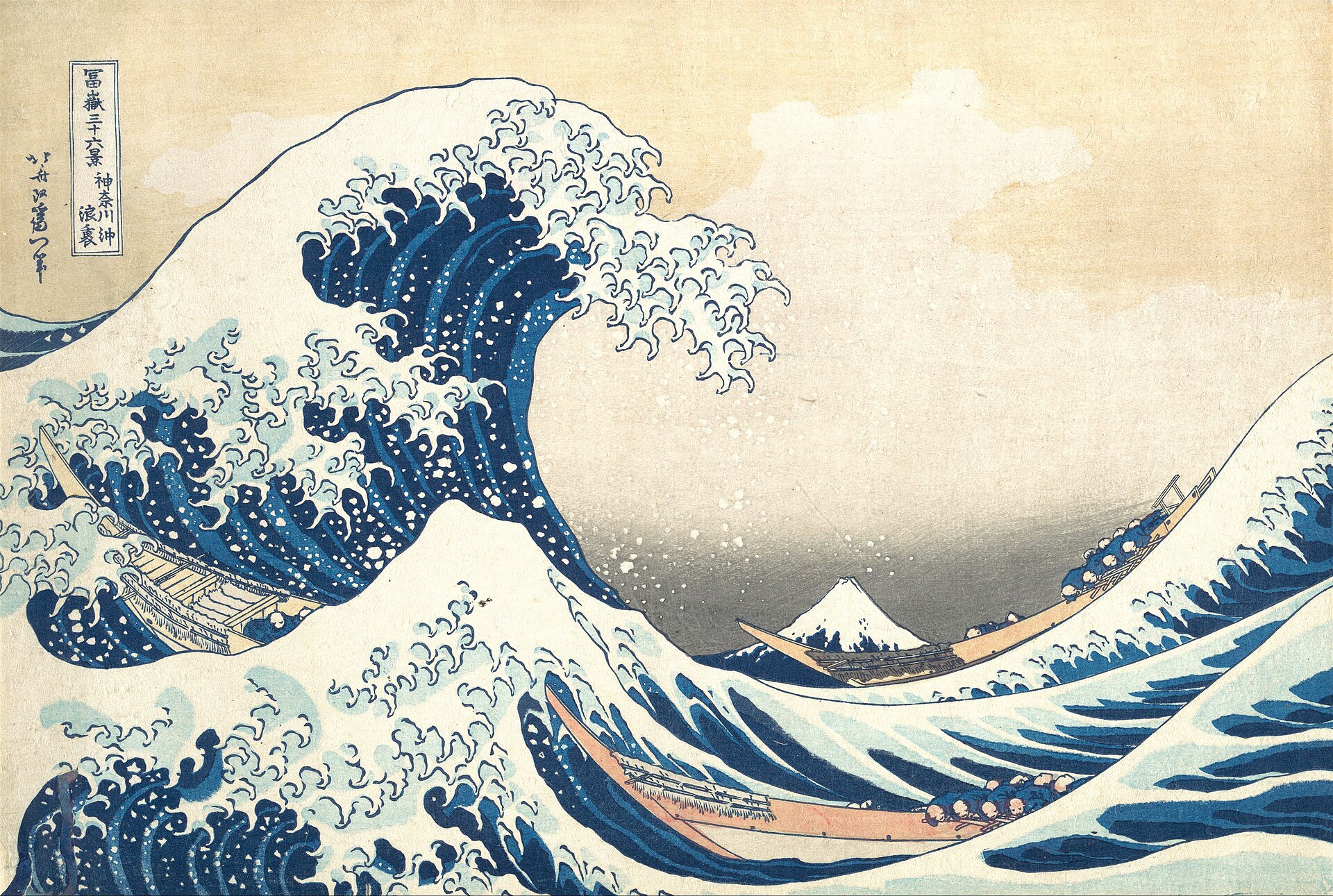
When we are swallowed by this wave — and it is impossible not to recall the one Hokusai painted, devouring the poor fishing boats off Kanagawa — there is very little left to us, almost nothing, as though we lingered in an existence of ashes and silence.
And yet, along the great voyage of days and years, a few scraps of miracle remain. After the fatigue, the torpor, the stillness, there always follows a season of radiant openings of the soul. In it, as a flame rekindles among half-extinguished embers in the hearth, the meaning of existence is lit again — the thread of words, the glint of joy. It is the most wondrous time in our lives: the moment when the Self and Faith are rediscovered.
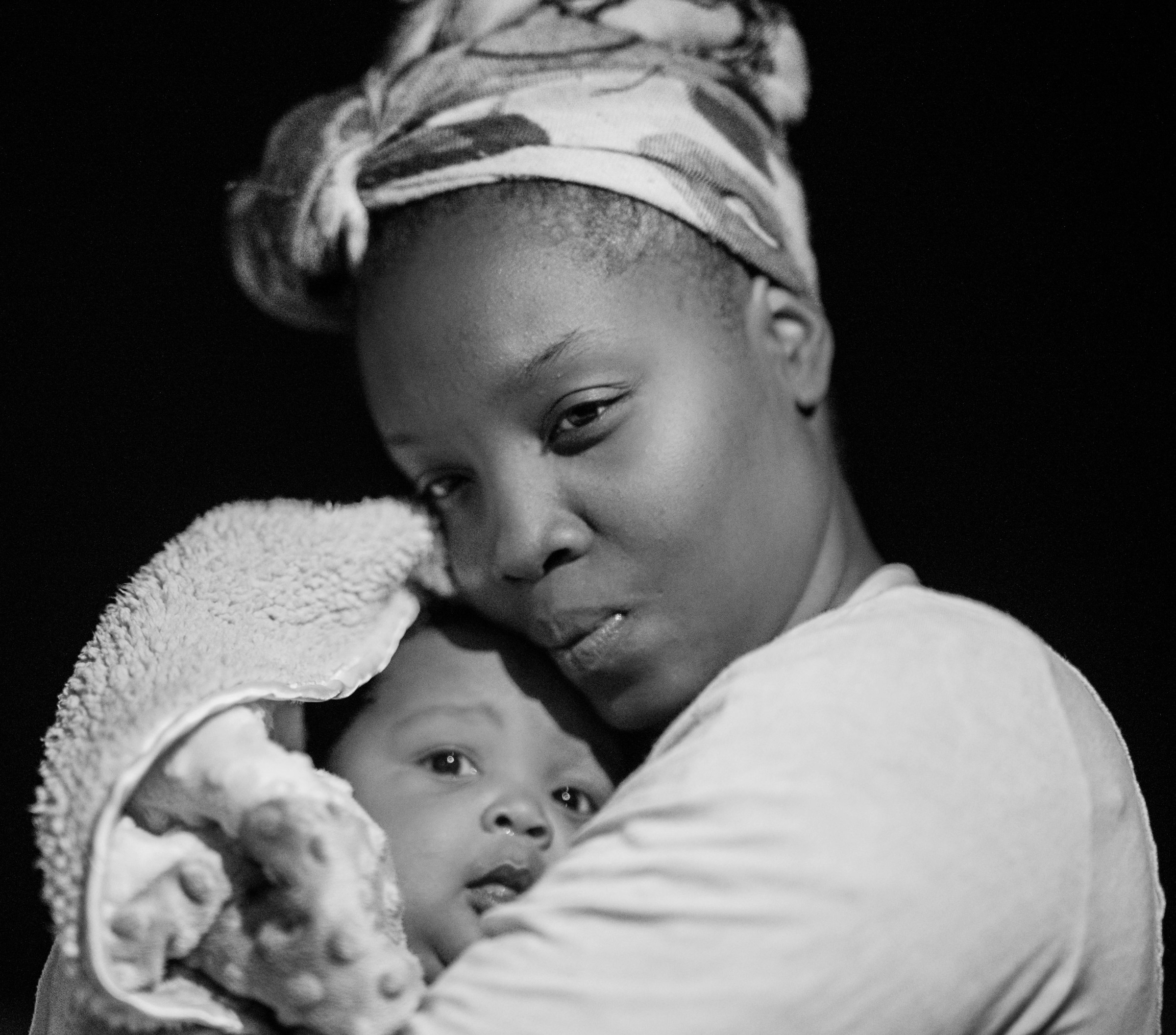
The girl quickened her pace. The rain would not be long. It was a strange afternoon, a street that stretched endlessly, a people with chill upon their faces. Now and then, whenever a flicker of doubt brushed past her—a loud voice, a hint of menace—she would place her hand gently on her belly: blessed was the fruit that grew there, slowly, unhurriedly, in quiet wonder.
She wore her coat collar turned up, the bag slung across her shoulder, her heart beating wildly. All she wanted was to reach home, slip off her shoes, retreat to her corner, feel the hush and shelter of the walls, the presence of familiar things. There was something umbilical in it all: a promise of comfort, a sense of permanence and peace, a resistance against everything and everyone. It was within herself that she liked to dwell—to imagine the future, to dream it softly, to cradle the child not yet born.
At night, when no one could hear, she would speak to the cat, to the sofa, to the lit lamps—she would speak as one who yearns to be heard: “This child of mine will prevail,” “This little one shall know neither hunger nor want of love,” “No harm shall come to this child—because I will not allow it.”
She trembled when she murmured those words. And she was all courage, all resolve, the very incarnation of a strength she did not know she possessed. And the rain did not fall. And no one came between her and time. And no danger even approached the child she held so close. And she was so slight. And the child, so very small.