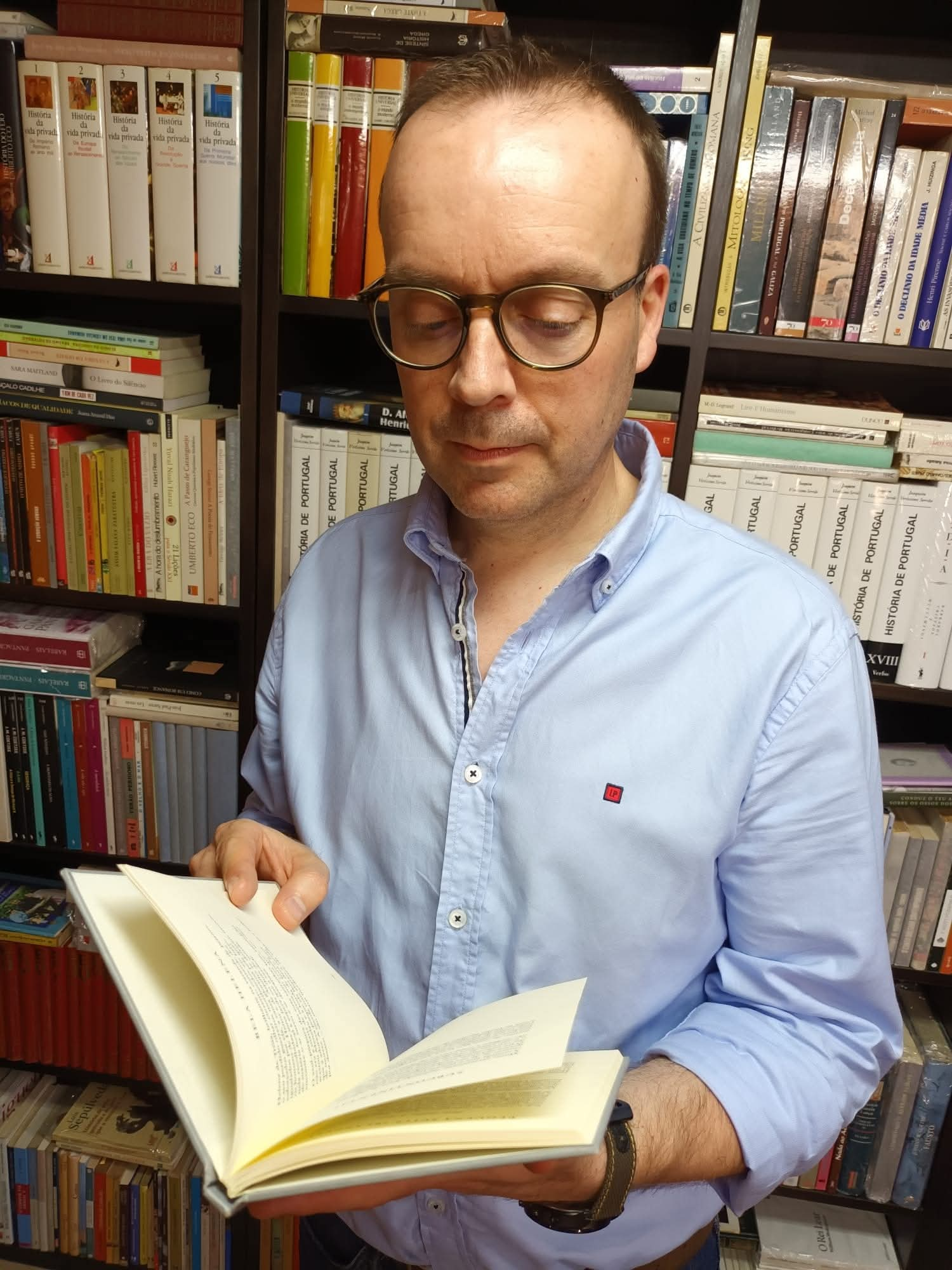
Poèmes Choisis de João Ricardo Lopes

João Ricardo Lopes (Guimarães, 1977) est un écrivain, poète et enseignant portugais. Il est l’auteur d’une œuvre poétique vaste et cohérente, composée de sept volumes publiés, auxquels s’ajoutent un recueil de nouvelles et une anthologie de chroniques littéraires. Son travail a été reconnu par d’importants prix nationaux et traduit en plusieurs langues, dont l’anglais, l’espagnol, l’italien et le français.
Crédit photo : Catarina Lopes

.

.
João Ricardo Lopes (Guimarães, 1977) est un écrivain, poète et enseignant portugais. Il est l’auteur d’une œuvre poétique cohérente, composée de sept volumes publiés, auxquels s’ajoutent un recueil de nouvelles et une anthologie de chroniques littéraires. Son travail a été reconnu par d’importants prix nationaux et traduit en plusieurs langues, dont l’anglais, l’espagnol, l’italien et le français.

Sa poésie se distingue par un ton méditatif et interrogatif, souvent centré sur la quête du silence, de la rédemption et de l’énigme de la condition humaine. Éloignée de tout lyrisme ornemental, son écriture s’ancre dans une tension philosophique profonde, avec des échos explicites ou subtils à la pensée de Schopenhauer, Sartre, Camus et Cioran. Malgré la profondeur de sa réflexion, sa poésie n’est pas exempte d’une subtile pointe d’ironie et d’humour, apportant une légèreté inattendue à ses interrogations.

Lopes entretient également un dialogue constant avec d’autres formes artistiques, en particulier la musique et la peinture, qui jouent un rôle structurant dans sa vision poétique. Cette inclination interdisciplinaire se reflète aussi dans son activité critique et essayistique, souvent attentive aux croisements entre le mot, l’image et le son.

Il vit et travaille à Fafe, dans le nord du Portugal, où il enseigne la langue et la littérature portugaises. Son engagement éducatif accompagne depuis des années une réflexion éthique et esthétique sur la fonction de la poésie dans le monde contemporain.

À L’INTÉRIEUR DU SILENCE

tu poses le livre sur ton nez pour en respirer l’odeur du papier.
puis tu balbuties des choses indéfinies,
tu te souviens des jeunes filles peintes par Vermeer,
tu absorbes, par les fentes de la maison, comme elles,
l’amour des lettres

tu as trouvé l’intérieur du silence,
cet instant de tarlatane, ou de soie, ou de satin,
où tu ressens dans les choses la tiédeur
que les doigts enveloppent

puis tes lèvres tremblent un peu,
tu dis rien n’est aussi pur,
tu observes, comme une débutante, la promesse du soleil sur l’appui de la fenêtre
et c’est comme si tu rentrais dans un rêve

tu es à l’intérieur de toi.
tu ne sais comment

Extrait du livre Em Nome da Luz (2022)

.

NO INTERIOR DO SILÊNCIO

depões o livro sobre o nariz para aspirar-lhe o cheiro do papel.
depois balbucias coisas indefinidas,
lembras-te das raparigas pintadas por Vermeer,
absorves pelos vãos da casa, como elas,
o amor das cartas

encontraste o interior do silêncio,
esse instante de tarlatana, ou de seda, ou de cetim,
em que sentes nas coisas a calidez
que os dedos cobrem

depois tremem-te um pouco os lábios,
dizes nada é tão puro,
observas, como debutante, a promessa do sol no parapeito
e é como se reentrasses num sonho

estás no interior de ti.
não sabes como

De Em Nome da Luz (2022)

.

À CINQUANTE ANS

à cinquante ans, on ne se trompe plus sur la qualité d’un poème,
ni sur l’amour d’une femme.
à cinquante ans, règne dans ce que l’on fait
la lumière fixe d’une lampe

on impose des règles :
écouter en voiture Mingus, Davis, Coltrane,
ne lire que Borges et au-delà,
partir,
choisir bien ses ennemis, oublier les médiocres,
écouter le dentiste, promettre à la famille,
entretenir l’espérance

à cinquante ans, la lumière ne voile ni ne révèle,
elle est seulement un lieu vers lequel on va
quand aucun autre ne suffit –
on habite les heures, car le temps aussi
est un lieu où l’on dépose le corps

à cinquante ans, un seul vers parfois suffit.
c’est presque toujours lui qui nous sauve

Extrait du livre Em Nome da Luz (2022)

.

AOS CINQUENTA

aos cinquenta já não se confunde a qualidade de um poema,
ou o amor de uma mulher.
aos cinquenta impera nas coisas que fazemos
a luz fixa de uma lâmpada

impomos regras:
ouvir no carro Mingus, Davis, Coltrane,
ler somente de Borges para cima,
ir,
escolher bem os inimigos, esquecer os medíocres,
ouvir o dentista, prometer à família,
acalentar a esperança

aos cinquenta a luz não tapa nem destapa,
é somente um lugar aonde se vai
quando nenhum sítio é capaz
– moramos nas horas, porque também o tempo
é um lugar onde deixamos o corpo

aos cinquenta um só verso às vezes basta.
quase sempre é ele que nos salva

De Em Nome da Luz (2022)

.

AU NOM DE LA LUMIÈRE

pardonne, pardonne tout.
au nom des matins frais,
des jours brûlants, au nom des herbes
qui ne sont qu’herbes, mais valent
ton poème, au nom des voix immaculées
des oiseaux qui s’emparent de la terre,
au nom de la lumière

pardonne. pardonne tout

Extrait du livre Em Nome da Luz (2022)

.

EM NOME DA LUZ

perdoa, perdoa tudo.
em nome das manhãs frescas
dos dias quentes, em nome das ervas
que são ervas, mas valem
o teu poema, em nome das prístinas vozes
dos pássaros que se assenhoreiam da terra,
em nome da luz

perdoa. perdoa tudo

De Em Nome da Luz (2022)

.

ROSES ÉCARLATES, AGAPANTHES AZUR

rien de plus beau à cette heure
que le l’écarlate des roses,
que les agapanthes azur sur la terre

rien de plus sublime
que le brouillard très bref
qui précède les choses et annonce l’été

cet instant
où la lumière tombe plus dense et la route tourne
et les grilles soutiennent la petitesse insupportable
du monde

cet instant
où les yeux volent comme des pierres jetées
sans même savoir
de quel côté ils volent

Extrait du livre Eutrapelia (2021)

.

ROSAS VERMELHAS, AGAPANTOS AZUIS

nada mais belo agora
do que o vermelho das rosas,
do que os agapantos azuis sobre a terra

nada mais sublime
do que o nevoeiro brevíssimo
que antecede as coisas e anuncia o verão

esse instante
em que a luz cai mais junta e a estrada roda
e as grades amparam a insuportável pequenez
do mundo

esse instante
em que os olhos voam como pedradas
e não sabem sequer
para que lado voam

De Eutrapelia (2021)

.

ORAGE

au moins cela,
les éclairs pataugeant
dans l’espace,
égayant la nuit,
les tonnerres frappant
aux gonds des portes,
l’odeur de la terre sèche
que les doigts de la pluie
soulèvent.
au moins cela,
sentir quelque chose d’éveillé
en nous et pour nous,
comme un vibrato au piano
que quelqu’un joue
à une heure tardive,
juste à temps pour nous sauver

Extrait du livre Eutrapelia (2021)

.

TROVOADA

ao menos isso,
os relâmpagos chafurdando
no espaço,
alegrando a noite,
os trovões percutindo
nos gonzos das portas,
o cheiro da terra seca
que os dedos da chuva
levantam.
ao menos isso,
saber algo acordado
em nós e para nós,
como um vibrato ao piano
que alguém toca
a horas tardias,
mesmo a tempo de nos salvar

De Eutrapelia (2021)

.

SOLSTICE EN CRÈTE, PALAIS DE CNOSSOS

à Catarina

.
nous aimerons à jamais cette lumière limpide de Crète
qui, au palais de Minos, éclaire les poissons et le taureau
et toutes les formes que notre existence labyrinthique
a emprisonnées

éblouis ou aveugles, nous voyons encore comme des ombres chromatiques
le blanc des pierres, le rouge pompéien,
le bleu cyan des fresques, le jaune moutarde,
l’orange acidulé des visages et des corps,
l’ocre des amphores dressées en offrande aux dieux

le temps peut (comme on crache les pépins amers) nous rejeter,
mais nous avons vu la vie et à un miracle
très ancien
nous remercions le soleil de ce jour

Extrait du livre Eutrapelia (2021)

.

SOLSTÍCIO EM CRETA, PALÁCIO DE CNOSSOS

para a Catarina

.

amaremos para sempre essa luz límpida de Creta
que no palácio de Minos os peixes ilumina e o touro
e todas as formas que a nossa existência labiríntica
aprisionou

ofuscados ou cegos, vemos ainda como sombras cromáticas
o branco das pedras, o vermelho-pompeia,
o azul ciano dos afrescos, o amarelo-mostarda,
o laranja cítrico dos rostos e dos corpos,
o ocre das ânforas erguidas em oferecimento aos deuses

pode o tempo (como se faz a pevides amargas) cuspir-nos,
mas nós vimos a vida e a um milagre
antiquíssimo
agradecemos o sol deste dia

De Eutrapelia (2021)

.

PAVANE, RAVEL

And death is real, and dark, and huge.
John Updike

.
tomber en nous-mêmes
sans bruit
comme tombent sur la terre
les insectes.
rester dans le silence,
pesant la douleur
ou les euphories vaines.
croire à la netteté
des choses,
surtout maintenant
que se comprend
la dimension de l’abîme

Extrait du livre Eutrapleia (2021)

.

PAVANA, RAVEL

And death is real, and dark, and huge.
John Updike

.

cair dentro de nós mesmos
sem rumor
como caem na terra
os insetos.
permanecer no silêncio,
sopesando a dor
ou as vãs euforias.
acreditar na lisura
das coisas,
sobretudo agora
que se compreende
a dimensão do abismo

De Eutrapelia (2021)

.

MAISON DES GRANDS-PARENTS

dans les greniers tombait l’air épais de l’après-midi,
la lumière claire et tiède de juin,
parfois les voix, le parfum du chiendent

sur la poussière acide
les grands balais de fibres réveillaient la pénombre
et c’était là la maison, là le temps

aucune vitre ne s’interposait entre nous et les choses.
c’était nous et l’aile des oiseaux,
nous et nous-mêmes

dedans, au sol, à la cave, la terre lévitait
humide et sèche

le bric-à-brac, malgré tous nos soins,
appartenait aux toiles d’araignées sans fin,
à la ferraille, aux pierres du pressoir

la lumière tombait.
c’était là l’enfance, là le temps.
je le jure, c’est encore

Extrait du livre Eutrapelia (2021)

.

CASA DOS AVÓS

dentro das tulhas caía o ar espesso da tarde,
a luz limpa e cálida de junho,
às vezes as vozes, o perfume do joio

sobre a poeira ácida
os vassourões acordavam a penumbra
e era aí a casa, aí o tempo

nenhum vidro se intrometida entre nós e as coisas.
éramos nós e a asa dos pássaros,
nós e nós mesmos

dentro, no chão, na cave, a terra levitava
húmida e seca

o bricabraque, por muito que o limpássemos,
pertencia às infindáveis teias de aranha,
à sucata, às pedras do lagar

a luz caía.
era aí a infância, era aí o tempo.
juro, ainda é

De Eutrapelia (2021)

.

PETIT ÉLOGE AUX CITRONS

à Céu

.
je les pèse dans la main, j’en caresse la peau ridée,
la poussière verdâtre reposant dans les volutes de leur
dos.
dans la corbeille, ils sont invariablement le soleil, lumière
que la maison chérit avec joie

le couteau qui les fend en deux se gorge de leur sang
translucide et parfumé – et amer –
et les narines s’emplissent de leur présence vive
et vigoureuse

aucun aliment ne méprise la sécrétion humble
de cet agrume, pas plus que la mémoire
ne dédaigne la voix des vieux maîtres que nous avons eus,
et qui autrefois
nous imposaient la décence inaltérable
du stylo sur le cahier

je dirais que le sang des citrons est candide
et peut-être un peu triste,
mais jamais inoffensif – jamais indifférent

(Poème inédit)

.

PEQUENO ELOGIO AOS LIMÕES

para a Céu

.

sopeso-os na mão, acaricio-lhes a pele enrugada,
o pó-verdete repousando entre as volutas do seu
dorso.
depois na fruteira eles são invariavelmente o sol, luz
que a casa acalenta com prazer

a faca que os corta pela metade enche-se do seu sangue
translúcido e perfumado – e amargo –
e as narinas ventilam a sua presença vívida
e pujante

nenhum alimento desdenha o segregar humilde
deste citrino, como não o faz a memória
à voz de velhos mestres que se tiveram, e que outrora
nos impunham a decência inquebrável
da caneta sobre o caderno

diria que o sangue dos limões é cândido
e talvez um pouco triste,
mas jamais inócuo – jamais indiferente

(Poema inédito)

.

LES GINKGO BILOBA D’HIROSHIMA

Pour Tsutomu Yamaguchi, ingénieur naval, le plus célèbre des hibakusha
Pour Akira Hasegawa, professeur, dont le corps et la maison disparurent dans l’air, comme poussière de papillon

.

après la terreur, il fallut nettoyer la ville.
les fonctionnaires impériaux venaient par roulements,
plongeaient les pelles dans les débris poudreux de la pierre,
balayaient la boue d’un côté à l’autre,
entendaient le vent gémir dans les cendres – le pire de tout
c’était ce sifflement du silence, ce crissement du fer sur les cadres sans verre,
dans les ruines des ponts qui dansaient comme des gonds,
dans les têtes qui mouraient plus lentement que les autres organes

les fonctionnaires de l’empire allaient
et venaient en roulements

parfois, ils enlevaient et pressaient leur casquette avec émotion,
conservaient dans de petits sarcophages de cèdre
les squelettes pas entièrement consumés par le grand embrasement

il fallut – il fallut – réapprendre
la carte de la pensée :
là, c’était le zoo, plus loin, l’école primaire,
cela – cette ombre calcinée sur le sol – une femme
avec un enfant dans les bras

parfois, on tombait à genoux à l’endroit précis
qui avait été la cachette purement intacte d’un rite,
d’un baiser, d’un adieu

jamais les mots ne parurent si peu nombreux parmi les décombres,
ni si amers,
ni si déments

des mois durant, se répétèrent le démantèlement, l’oubli,
la poursuite – le pire de tout,
c’était le noyau de la mort,
la manière dont elle ouvrait la gorge
et restait

Ichiro Kawamoto, à qui Philip Levine dédia
un poème puissant, affirma que, au printemps 46,
un miracle eut lieu :
vers la mi-mars, quelque vert détacha sa langue
dans le paysage infernal

– on regardait et voyait des bourgeons surgir des branches brisées
des ginkgos biloba,
renaissaient de petites pointes imprégnées de sève

et cela – pensaient les fonctionnaires de l’empereur –,
cela – pensons-nous – cela voulait dire quelque chose

21.03.2023

(Poème inédit)

.

AS GINGKO BILOBAS DE HIROSHIMA

Para Tsutomu Yamaguchi, engenheiro naval, o mais célebre dos hibakusha
Para Akira Hasegawa, professor, cujos corpo e casa desapareceram pelo ar, como pó de borboletas

.

depois do terror foi preciso limpar a cidade.
os funcionários imperiais vinham em turnos,
metiam as pás nos restos polvorentos da pedra,
varriam a lama de um lado para o outro,
ouviam o vento ganir nas cinzas – o pior de tudo era
este assobio do silêncio, esse guinchar do ferro nas aérolas sem vidro,
nos escombros das pontes que dançavam como dobradiças,
nas cabeças que morriam mais devagar do que os outros órgãos

os funcionários do império iam
e vinham em turnos

às vezes retiravam e apertavam o barrete cheios de comoção,
guardavam em pequenos sarcófagos de cedro
os esqueletos não inteiramente consumidos pelo grande lume

foi preciso – foi preciso – reaprender
o mapa do pensamento:
ali era o zoológico, acolá a escola primária,
aquilo – aquela sombra calcinada no pavimento – uma mulher
com o filho ao colo

às vezes caía-se de joelhos no lugar exato
que havia sido o esconderijo puramente intacto de um rito,
de um beijo, de uma despedida

nunca as palavras se pareceram tão poucas no entulho,
nem tão amargas,
nem tão dementadas

meses a fio repetiu-se o desmantelar, o esquecer,
o prosseguir – o pior de tudo era
o caroço da morte,
o modo como escancarava ela a garganta
e permanecia

Ichiro Kawamoto, a quem Philip Levine dedicou
um poema portentoso, afirmava que na primavera de 46 aconteceu
um milagre:
aí por meados de março, algum verde soltou a língua
na paisagem infernal

– olhávamos e víamos brotos sair dos ramos espedaçados
das gingko bilobas,
renasciam pequenas pontas impregnadas de seiva

e isto – pensavam os funcionários do imperador –,
isto – pensamos nós – isto queria dizer alguma coisa

21.03.2023

(poema inédito)

.

Biographie de l’auteur, sélection de textes et traduction par Emma Vousseur et Guillaume Meunier.
.

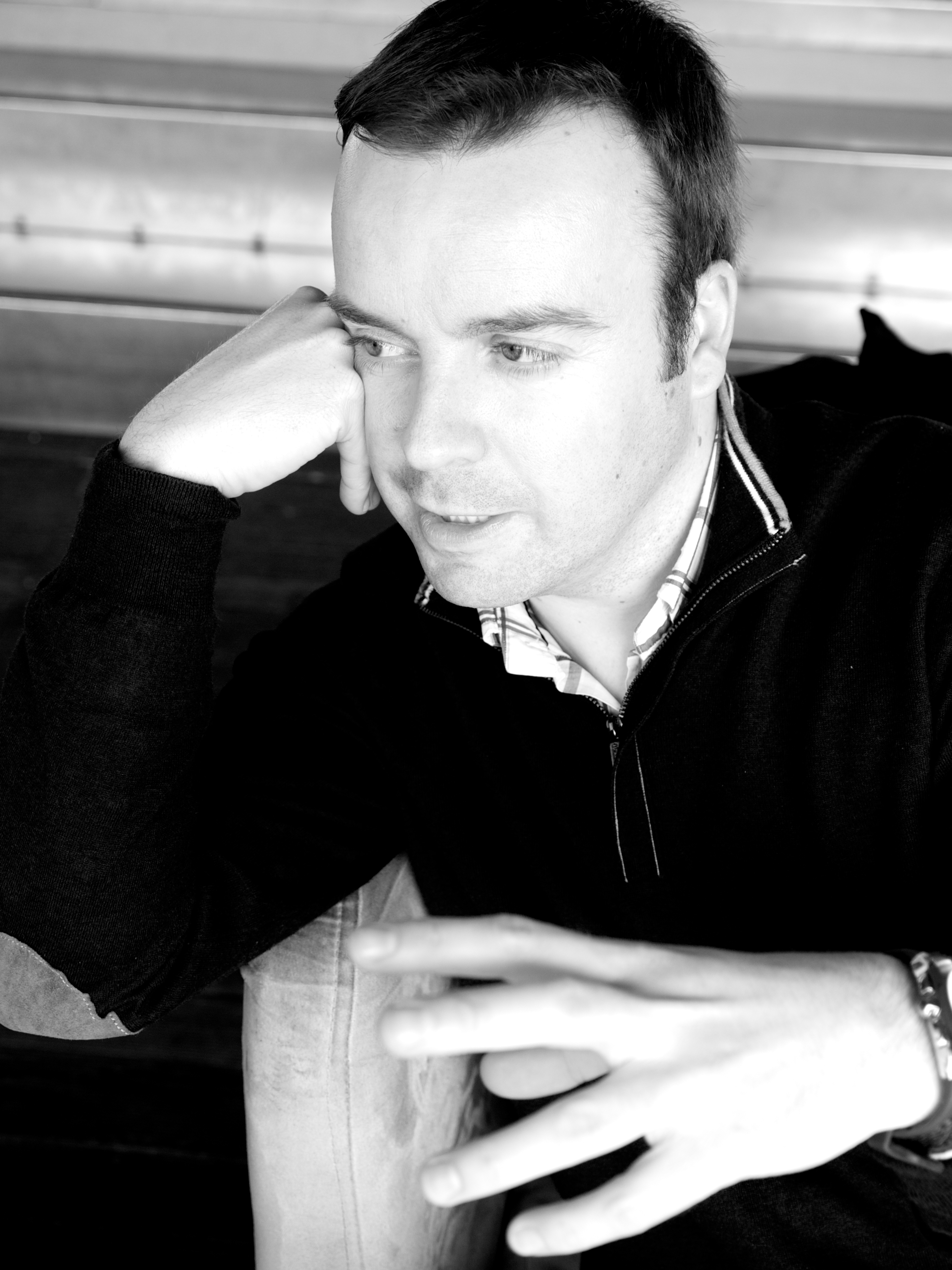
Sette Visioni Minime: Poesie di João Ricardo Lopes

João Ricardo Lopes (Guimarães, 1977) è uno scrittore, poeta e docente portoghese. È autore di una vasta e coerente opera poetica, composta da sette volumi pubblicati, a que se aggiungono una raccolta di racconti e un'antologia di cronache letterarie. Il suo lavoro è stato riconosciuto con importanti premi nazionali e tradotto in diverse lingue, tra cui l’inglese, lo spagnolo, l’italiano e il francese.
Fotografia di Sónia Antunes

.

João Ricardo Lopes (Guimarães, 1977) è uno scrittore, poeta e docente portoghese. È autore di una vasta e coerente opera poetica, composta da sette volumi pubblicati, a que se aggiungono una raccolta di racconti e un’antologia di cronache letterarie. Il suo lavoro è stato riconosciuto con importanti premi nazionali e tradotto in diverse lingue, tra cui l’inglese, lo spagnolo, l’italiano e il francese.

La sua poesia si distingue per un tono meditativo e interrogativo, spesso centrato sulla ricerca del silenzio, della redenzione e dell’enigma della condizione umana. Lontana da ogni lirismo ornamentale, la sua scrittura si nutre di una tensione filosofica profonda, con richiami espliciti o sottili al pensiero di Schopenhauer, Sartre, Camus e Cioran.

Lopes coltiva inoltre un costante dialogo con altre forme artistiche, in particolare la musica e la pittura, che assumono un ruolo strutturante nella sua visione poetica. Tale inclinazione interdisciplinare si riflette anche nella sua attività critica e saggistica, spesso attenta alle intersezioni tra parola, immagine e suono.

Vive e lavora a Fafe, nel nord del Portogallo, dove insegna lingua e letteratura portoghese. Il suo impegno educativo accompagna da anni una riflessione etica ed estetica sulla funzione della poesia nel mondo contemporaneo.

IL FUOCO DEI GITANI

per Catarina

.

nel sud di Lanzarote, vicino a Playa Blanca,
in un luogo che chiamano Los Charcones,
ho visto ciò che più somiglia, sulla terra,
alla luna

il paesaggio è coperto di piroclasti, di cenere dura,
di polvere.
qui non sopravvive nulla, tranne l’euforbia strisciante
e qualche specie di lucertola

ma di notte questo deserto si riempie di fuochi,
di piccole fiamme sparse
tra muri e tende

dicono sia il fuoco dei gitani,
nessuno sa da dove vengano o dove vadano.
e io dico: siano benedetti, perché esistono

Poema tratto dal libro Em Nome da Luz (2022)

.

O LUME DOS CIGANOS

para a Catarina

.

no sul de Lanzarote, perto de Playa Blanca,
num lugar a que chamam Los Charcones,
vi o mais parecido que há na terra
com a lua

a paisagem cobre-se de piroclastos, de cinza dura,
de pó.
nada aqui sobrevive, exceto a rasteira eufórbia
e uma ou outra espécie de lagarto

mas à noite este deserto enche-se de fogueiras,
de pequenas labaredas dispersas
entre muros e tendas

explicam é o lume dos ciganos,
ninguém sabe de onde vêm ou para onde partem.
e eu digo abençoados sejam, porque existem

Testo originale in portoghese: dal libro Em Nome da Luz (2022)

.

SOLSTIZIO D’ESTATE, ROMA

tra le tende
il sole insiste ed entra. quel che di lui
ci scalda sul davanzale
è un riflesso velato
del paradiso.
la luce copre la pelle
e la spoglia,
ricuce,
l’addolcisce senza paura.
è questo il tempo: un misto
amaro e dolce, di brivido solitario
e di tenerezza

Poema tratto dal libro Em Nome da Luz (2022)

.

SOLSTÍCIO DE VERÃO, ROMA

por entre as cortinas
o sol insiste e entra. o que dele
no parapeito nos aquece
é um resquício velado
do paraíso.
a luz cobre a pele
e despe-a,
sutura,
amacia-a sem medo.
é isto o tempo: uma mescla
amarga e doce, de arrepio solitário
e desvelo

Testo originale in portoghese: dal libro Em Nome da Luz (2022)

.

MATTINE DI ASSISI

O que nos chama para dentro de nós mesmos
é uma vaga de luz, um pavio, uma sombra incerta.
Fiama Hasse Pais Brandão

.

la santità di questo luogo è la luce,
il bianco che si solleva dalle mura e non si lascia imprigionare
da nulla

di questa luce parlo in altri poemi, e a proposito di altre città

non sarà più che la chiarezza di una margherita,
o il bagliore del finocchio selvatico,
più che una finestra socchiusa sul nascondiglio
delle memorie,
più che un camminare di pietre dove si va a piedi

la luce, questa luce limpida di Assisi, è un silenzio

levita con il suo peso casto, e consola.
e non ci sono parole per lei, non ci sono

Poema tratto dal libro Em Nome da Luz (2022).

.

MANHÃS DE ASSIS

O que nos chama para dentro de nós mesmos
é uma vaga de luz, um pavio, uma sombra incerta.
Fiama Hasse Pais Brandão

.

a santidade deste lugar é a luz,
o branco que se eleva das muralhas e se não deixa prender
a nada

dessa luz falo noutros poemas e a propósito de outras cidades

não será mais do que a claridade de um malmequer,
ou o fulgor do morrião dos campos,
mais do que uma janela entreaberta para o esconderijo
das memórias,
mais do que um caminhar de pedras por onde se vai a pé

a luz, esta luz límpida de Assis, é um silêncio

levita com o seu peso casto e acalenta.
e não há palavras para ela, não há

Testo originale in portoghese: dal libro Em Nome da Luz (2022)

.

ROSSE ROSE, AGAPANTI BLU

niente ora è più bello
del rosso delle rose,
degli agapanti blu sopra la terra

niente è più sublime
della nebbia brevissima
che precede le cose e annuncia l’estate

quell’istante
in cui la luce cade più compatta e la strada gira
e le ringhiere sorreggono l’insopportabile piccolezza
del mondo

quell’istante
in cui gli occhi volano come sassi
e non sanno nemmeno
da che parte stanno volando

Poema tratto dal libro Eutrapelia (2021)

.

ROSAS VERMELHAS, AGAPANTOS AZUIS

nada mais belo agora
do que o vermelho das rosas,
do que os agapantos azuis sobre a terra

nada mais sublime
do que o nevoeiro brevíssimo
que antecede as coisas e anuncia o verão

esse instante
em que a luz cai mais junta e a estrada roda
e as grades amparam a insuportável pequenez
do mundo

esse instante
em que os olhos voam como pedradas
e não sabem sequer
para que lado voam

Testo originale in portoghese: dal libro Em Nome da Luz (2022)

.

AGOSTO

su frágil armazón de inseguros instantes
José Luis García Martín

.

dovrei parlarti della madreperla,
di quanto splendano i corpi iridescenti,
senza scordare la chitina dello scarabeo,
o la macchia iridescente dell’olio

dovrei dirti quanto mi affascinano
le forme segrete del quarzo,
del sale, delle biglie

o questo verde azzurrato del mare
che mi punge come crisocolla tra le dita,
questo blu dove gli occhi si addormentano
e incerti gelano nel silenzio

questo punto preciso
dove l’infimo e l’infinito stillano l’attimo
e si fanno vetro

Poema tratto dal libro Eutrapelia (2021)

.

AGOSTO

su frágil armazón de inseguros instantes
José Luis García Martín

.

deveria falar-te do nácar,
de como são belos todos os corpos iridescentes,
sem esquecer a quitina do escaravelho,
ou a mancha de combustível

deveria contar-te o quanto me intrigam
as formas interiores do quartzo,
do sal, dos berlindes

ou este verde azul do mar
ferindo-me como crisocola entre os dedos,
este azul onde os olhos adormecem
e indecisos gelam em silêncio

este ponto exato
em que o ínfimo e o infinito segregam o instante
e em vidro solidificam

Testo originale in portoghese: dal libro Eutrapelia (2021)

.

IN NOME DELLA LUCE

perdona, perdona tutto.
in nome dei mattini freschi,
dei giorni caldi, in nome delle erbe
che sono solo erbe, ma valgono
il tuo poema, in nome delle voci pristine
degli uccelli che si impadroniscono della terra,
in nome della luce

perdona. perdona tutto

Poema tratto dal libro Em Nome da Luz (2022)

.

EM NOME DA LUZ

perdoa, perdoa tudo.
em nome das manhãs frescas
dos dias quentes, em nome das ervas
que são ervas, mas valem
o teu poema, em nome das prístinas vozes
dos pássaros que se assenhoreiam da terra,
em nome da luz

perdoa. perdoa tudo

Testo originale in portoghese: dal libro Em Nome da Luz (2022)

.

UN GIORNO CONCRETO

chiesero a Ludwig Wittgenstein se quello fosse un giorno concreto

cos’è un giorno concreto?
che cazzo è, un giorno concreto?

non ho mai saputo quale fu la risposta dell’austro-inglese

un giorno concreto.
concreto come un campo di zizzania o di cicuta davanti a noi.
concreto come Tōru Takemitsu in Nostalghia.
concreto come l’odore della serratella, della cipolla o della gomma da masticare nella tua bocca.
concreto come un bicchiere d’acqua sul tavolo

un giorno concreto come restare svegli davanti a un grande orologio da parete.
come incrociare lo sguardo che ci osserva dallo specchio

un giorno concreto come il bruciore alla vescica.
come far rotolare una pietra tra le dita

un giorno concreto come tossire senza grazia per via della polvere.
come scrivere su un foglio infinito la sequenza di Fibonacci
come toccare un sedere.
come sentire il soffritto che prende fuoco

un giorno passato tra il maestrale gelido e la luce che brucia.
un giorno concreto.
ad ascoltare i grilli o a pulirsi le cispe dagli occhi.
concreto come preparare un’insalata con scarola, rucola o lattuga.
come leggere in piedi Bernardo Atxaga o Philip Levine.
o fumare una brutta copia di un Cohiba.
come sbraitare al telefono con qualcuno per le spese del condominio

un giorno concreto.
concreto come tutti i giorni concreti, pieni di fretta e lentezza,
con le mani in tasca, nei guanti, sulla pelle,
pronte a stringere il quaderno e storpiare un’altra poesia

un giorno concreto come amare Le Quattro Stagioni di Vivaldi
e non avere altro da aggiungere.
concreto come avere la barba lunga e nessuna lametta o sapone in casa,
né voglia di radersi quel volto stanco, quasi di nuovo bambino.
concreto come l’autocommiserazione.
come ascoltare alla radio la Quarta di Brahms diretta da Bernstein.
concreto come una mela, al contrario: obclava, svanita.
come il gemito succubo nel coltello che la taglia in due, in quattro.
concreto come prendere un pugno o un paio di corna,
e camminare per settimane con le ossa dolenti.
concreto come i sacchi di tela sulle spalle di uno straccivendolo.
come il tanfo di un animale in decomposizione sull’asfalto.
concreto come il riflesso della pioggia e il peso di un bacio sulle guance

torniamo dunque all’inizio:
chiesero a Wittgenstein, credo sia stato Bertrand Russell,
mentre succhiava la pipa:

cosa significa per lei un giorno concreto?

uno pensava all’ipotetico ippopotamo nascosto tra i mobili del salotto.
l’altro rifletteva su materia e antimateria, sulla lettera che avrebbe scritto
a Niels Bohr

cosa significa per lei un giorno concreto?

era una chiacchierata da filosofi.
e, come si può facilmente sospettare, non arrivarono a nessuna conclusione

Poesia inedita
.
.

UM DIA CONCRETO

perguntaram a Ludwig Wittgenstein se aquele era um dia concreto

o que é um dia concreto?
o que é a porra de um dia concreto?

nunca soube a resposta que deu o austro-inglês

um dia concreto.
concreto como um campo de cizânia ou de cicuta à nossa frente.
concreto como Tōru Takemitsu em Nostalghia.
concreto como o cheiro da serralha ou de uma cebola ou do chewing gum na tua boca.
concreto como um copo de água sobre a mesa

um dia concreto como estar acordado diante de um grande relógio de parede.
como olhar nos olhos os olhos que nos olham ao espelho

um dia concreto como sentir ardor na bexiga.
como ter uma pedra a rolar entre os dedos

um dia concreto como tossir sem blandícia por causa do pó.
como escrever numa folha interminável a sequência de Fibonacci.
como apalpar um traseiro.
como sentir o estrugido a queimar

um dia passado entre o frio mistral do vento e o abrasador da luz.
um dia concreto.
a escutar grilos ou a limpar ramelas.
concreto como fazer uma salada com escarolas ou rúcula ou alface.
como ler de pé Bernardo Atxaga ou Philip Levine.
ou fumar uma imitação barata de um Cohiba.
como vilipendiar alguém ao telefone por causa do condomínio

um dia concreto.
concreto como todos os dias concretos, cheios de pressa e de vagar,
mãos nos bolsos, nas luvas, na pele,
prontas a segurar o caderno e a estropiar mais um poema

um dia concreto como amar as Quatro Estações de Vivaldi
e não ter mais que dizer.
concreto como ter a barba crescida e nenhuma lâmina ou sabão em casa,
nem vontade para escanhoar o atordoado rosto, quase de novo infantil.
concreto como a autocomiseração.
como ouvir na rádio a Quarta de Brahms conduzida por Bernstein.
concreto como uma maçã, ao contrário, obclávea, tonta.
como o gemido súcubo dentro da faca que a corta em dois e em quatro.
concreto como levar um murro ou um par de cornos
e andar semanas, magoadamente, a cair sobre os ossos.
concreto como sacos de lona às costas de um farrapeiro.
como o fedor de um animal em decomposição sobre o asfalto.
concreto como o reflexo da chuva e o peso de um beijo sobre as faces

voltemos, portanto, ao começo:
perguntaram a Wittgenstein, creio que foi Russell quem o fez,
enquanto alambazava o cachimbo

o que é para si um dia concreto?

um indagava no putativo hipopótamo escondido entre os móveis da sala.
o outro meditava em matéria e antimatéria, na carta que haveria de escrever
a Niels Bohr

o que é para si um dia concreto?

era uma conversa fiada, de filósofos.
a nenhuma conclusão chegaram, como é fácil, aliás, de suspeitar

Testo originale (inedito) in portoghese

.

Biografia dell’autore, selezione dei testi e traduzione di Fabrizio Poli.

.

A Photograph

Photograph by Thorsten von Overgaard

.

On the night of June 23rd that year, the only lamp still lit in the university residence was mine. From the third floor, I could take in the sky ablaze above the city and the festivities. In Porto, it’s mandatory to enjoy oneself on the eve of St. John’s Day. Patios, stairways, alleys, passageways, squares, and avenues fill with noise, colored paper streamers, and the glint of sardine scales. It is compulsory to go out, to mingle, to raise a racket, to drink with abandon, to brandish leeks and press them against the insincerely naïve noses of young women. Tradition has it that this is the solstice night. Even if it’s not the shortest night of the year, it is certainly the longest. Every reveler knows that.

As for me, I stubbornly shut myself in to study Linguistics. From outside, the world burst in—loud, full of life—like a stab to the heart. Through the windowpane I could see the rooftops and church towers where the trailing fire of paper lanterns climbed skyward, the scattered light from crowded balconies, from grills and barbecues burning bright, and the lagging groups running about with their plastic hammers. I could swear the dozens of students’ rooms were empty. Since mid-afternoon, I hadn’t seen a soul in the hallways, nor heard a single voice inside the building.

Martinet’s notes struck me as monstrously tedious. I underlined them with a fluorescent marker and recited the glosses aloud from my notebook. I was alone.

It was in that solitude that I noticed the sky sinking into ever darker shades of green-black, eerily like chromium oxide, suffocating the horizon. The first lightning bolt and thunderclap I mistook for part of the celebration. But then came more. The storm wasted no time shaking the windows and unleashing the most vengeful rain I had ever witnessed.

In an instant, cries of confusion multiplied—hysterical, terrified. Sheets of rain hammered mercilessly against the long tables on the terraces. The grills were dragged under awnings however best they could. Old and young alike huddled together in kiosks and under doorways. The scene of the commotion struck me as so amusing, so full of warmth, that I opened a drawer and took out my Leica.

Despite the fogged glass and saturated air, the landscape had changed. It seemed beautiful now—human, sheltering, inviting.

Far away, the floodlights of the churches lit the storm. Closer, the streetlights revealed the damage. I went down to see it better. As soon as I opened the door, I came face to face with one of those poor souls so common in our cities.

— Didn’t mean to scare you, son. Forgive me!

— You didn’t. Don’t worry!

I hesitated for a moment, unsure whether to step out or invite him in. There was a mix of smoke and vapor rising from the asphalt. My camera was ready.

— This rain. Who could have guessed!

The man said nothing. He only shrugged. In one hand he held an apple, in the other a nylon sack. That downpour, it seemed, was nothing unusual to him.

— You’ll be soaked through… Come in, take shelter!

Without a word, the man obeyed.

I looked at the street: a box of peppers on the ground, abandoned beers, cats under cars, smoke. St. John, it seemed, had proven himself indecent. I couldn’t bring myself to fire the flash. Then the man said:

— In any case, what you’re feeling now is déjà vu.

And it was true: the whole scene felt familiar, as if some link in my memory had sparked the impression I had lived that moment before. The man—though I’d never seen him—was, I could swear, oddly familiar.

— You’re not going to take a single shot with that camera. The objects don’t interest you. Only the subject in front of you is worth noting. Isn’t that right?

His tone, nearly arrogant, sounded like a reproach. He went on:

— Right now, you’re thinking about how to get out of this mess. The street no longer seems the strangest place in the world—this little space here does, doesn’t it? You’re thinking how that box of peppers, those abandoned beers, those screams, those cats hiding under the cars, that smoke—none of it compares to the chaos reigning in your head.

— And how can you possibly know all this?

— Martinet’s Elements of General Linguistics upstairs is proof enough that we’ve both sunk into the same wretched solitude.

— Who are you?

— You always choose the side door, never the corridor straight ahead… You’re still thinking in mazes. And yet, since the moment we saw each other just now, you’ve known—we are the same person!

— We’re the same person?

— The same character, yes!

— The same character?

— Don’t look so surprised. Borges—whom you’ve yet to meet—does the same in the first story of The Book of Sand. Dickens—whom you’ve already forgotten—does it with Ebenezer Scrooge. Dante—whom you’re about to discover—dreams of his own soul transmigrating through the circles of Hell, Purgatory, and Paradise.

— And you’ve come to show me the future, is that it? To prove something? That I—we—are wretched? That I need to change so we can both be redeemed?

— I haven’t come to prove anything at all…

My other self bit into the apple, slung his bundle over his shoulder, and stepped back out into the night, unafraid of the deluge, swallowed by the dirty reflection of a thousand shattered lights.

With the Leica off in my hands, I watched him go, unable to add a single word.

Truth be told, there was nothing left to say.

.

From the book O Moscardo e Outras Histórias (The Horsefly and Other Stories, 2018, pp. 255–259)

A Quest

Photograph by Colin Watts

.

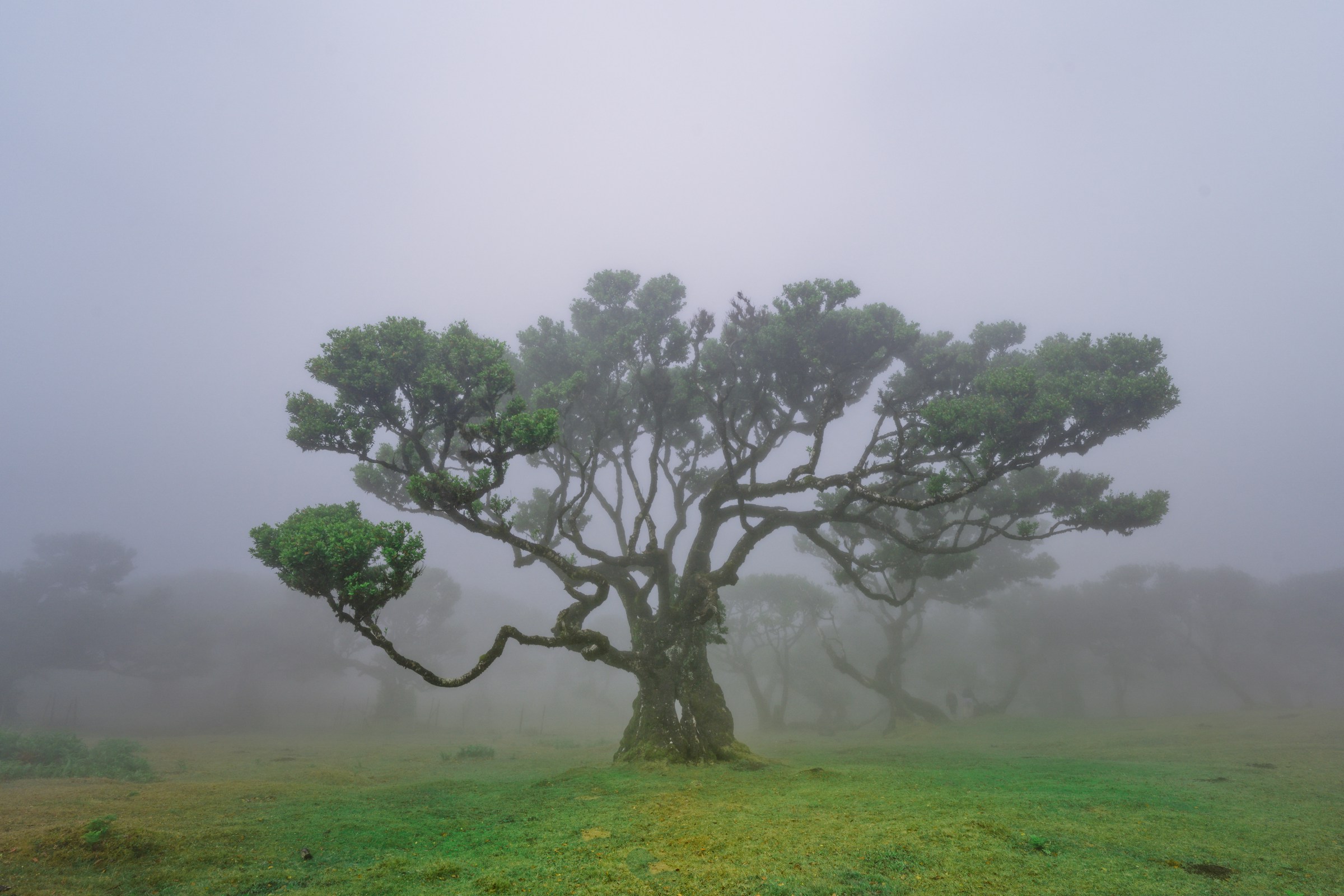
Weary of the errors of his age, of the injustices of his people, and of the brazen lies by which one fed the other— weary of the vileness with which both had cast aside the primacy of kindness among men— Kazuya turned his back on the city and walked toward nothingness for as many days as his sandals would carry him.

In a certain misty place, he came upon a curious tree, which seemed as lost as he was. There, beside it, he began to draw from within himself the words he had long kept buried—words that rattled in his mind like water boiling in a pot.He said many things: first in whispers, then in cries, and at last in deep regret.

Then he felt a great cold. An immense, devastating solitude. An uncontrollable urge to weep. And weep he did, as much as his eyes could bear. Afterward, he embraced the tree, thanked it, and continued his journey into the green-gray horizon. Nothing more was known of him than this.

The last person to see him was an old spinner of thread.

She marveled that such a ragged vagabond could seem happier than a lit lamp— and that he had asked her for nothing, not even a good day.

The Blessed One

Photo by Leroy Skalstad

.

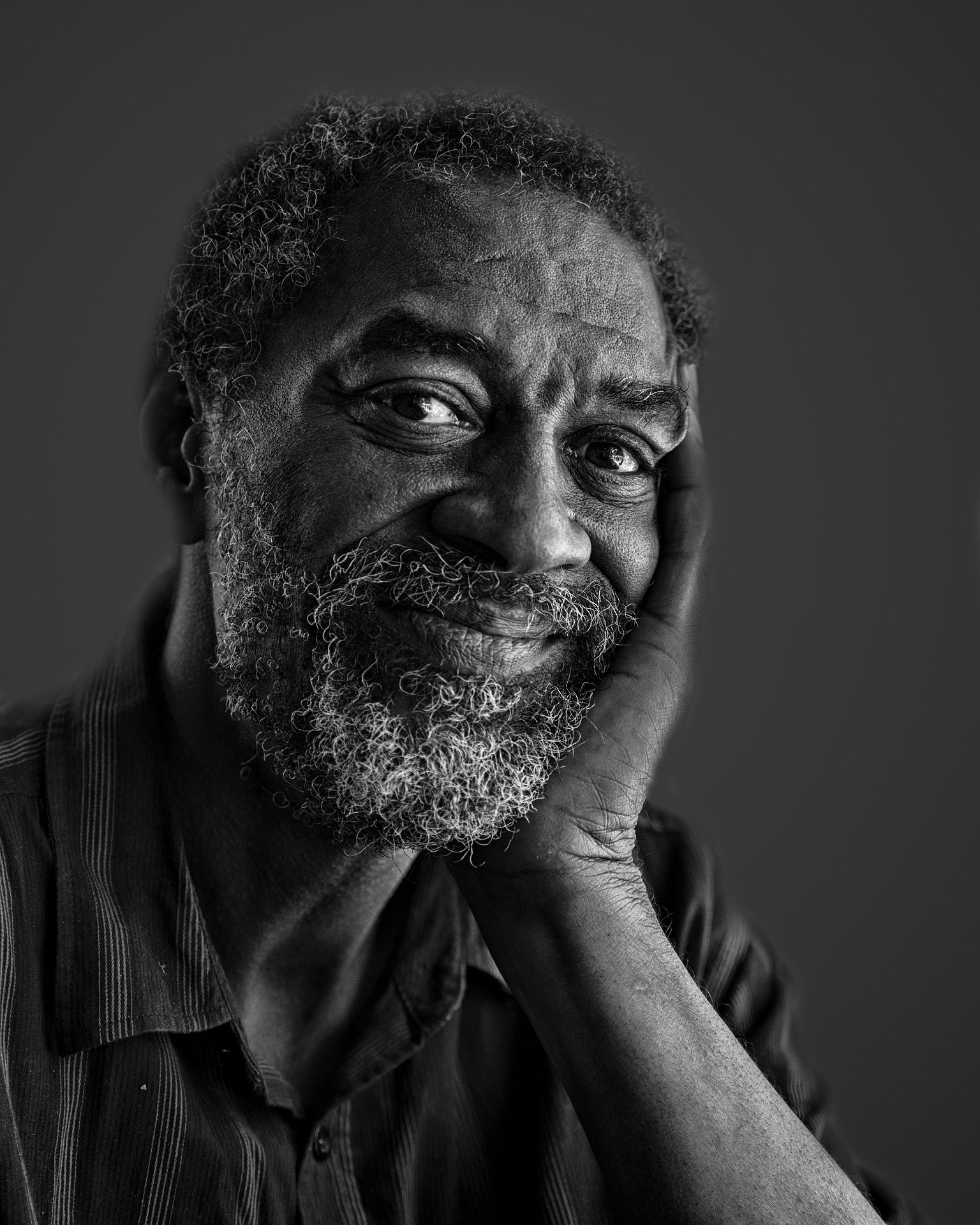
They brought him ivory, and he carved it with the most refined patience of which the human kind is capable. The objects that came from his hands were among those most ravenously coveted by foreigners in Brazzaville, in Djambala, in Sibiti, in Mandigou, and throughout the Congo. They called him “The Blessed One,” though his real name was Isidor Nkobanjira. As he grew old, he boasted of having no fewer than seventy children.

Near the end, he began to cut and pierce and carve deep grooves into an elephant tusk. First, he etched the winding course of a river, then the rise of a mountain, then a flurry of perfectly hemispheric stars. With care, he added water and fish, earth and impalas, sky and vultures. He filled the ivory with every creature he could remember, omitting neither silence, nor death, nor fear.

“The whole universe fits here,” Nkobanjira thought.

But in truth — he noticed with a look of dissatisfaction — after all was done, a bit of space still remained.

Is It Wrong to Write Too Often About Someone You Love?

Photo by Nancy Borowick

.

For Maria Alice Pereira Costa, my mother (08-06-1956 – 21-09-2024), in memoriam

.

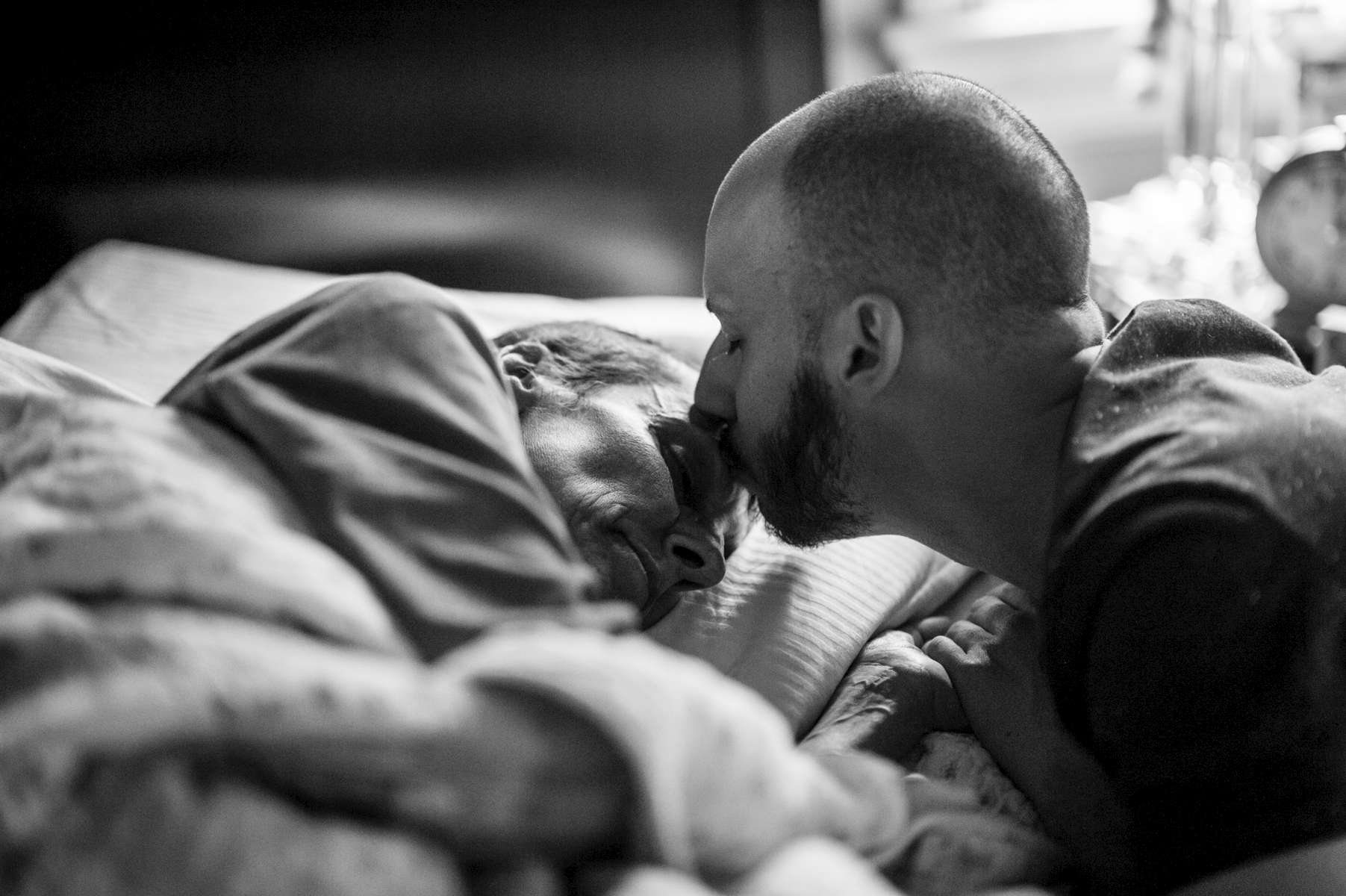
A light always burns beside the Holy Family. I made a promise, one I keep without fail. That is where the light must stay—there, in that place where even the night becomes beautiful. It’s like in Caravaggio’s paintings: shadows nestle close to candles, to lanterns, to flaming eyes, to the deep colors of robes, and fall asleep. When you left, I swore there would always be light to soften the darkness at home, even if only a single match lit, a phrase whispered from the soul to the depths, even just a hello, mother.

Dates are terrible. I always say the same thing, but I haven’t found another way to put it. It was November first—dreadful, heavy, numbing. Christmas was a sharp blow: the Nativity scene and the tree were here—Catarina insisted—but the little village of Bethlehem felt farther than the edge of the universe from which the jubilant star once burst. Then there was Mother’s Day, and I couldn’t write a single line. And now, your birthday. The first one. And I’m lost in this house, tossed about by memories, adrift in sentences, in your laughter, in the subtleties of your voice, calling back those strands of mischief you would weave around the table at night while the soup simmered in iron pots by the hearth and we prayed the rosary, recited aloud by Rádio Renascença from the Chapel of the Apparitions. Your life was full and hard, mother. My soul is in tatters. And yes, dates are cruel.

You turn 69 today. And yet, how can I say this—you don’t. To have a birthday is to be here, and you are here, but you don’t have one. A son (and we are four) stumbles over words: not long ago you declared, prophesied, with that irritating certainty:

This is the last time you’ll sing me happy birthday.

And already that day—so near, so distant now—cracks open the walls of reason.

Don’t say that, mother.

And then your silence, your opaque eyes without light or phosphenes, your weariness swelling until it spilled from your nose with the start of a sigh.

God will know.

You were like someone who hears the train before everyone else does—rumbling, whistling, approaching in the hush of night, drawing near the light like Caravaggio’s shadows, pretending that everything being fine is a lovely thing.

Don’t say that, mother.

You were right. Everything happened suddenly, so quickly, everything so slow and yet dizzying, all of it soaked in awe and pain, everything inside me unraveling with every memory that tosses my soul into disarray: you holding me in your lap, you lying in the hospital bed, you bent over the looms, you raising a finger in suspicion, you caring for grandma, you kneading bread and putting it in the oven, you saying goodbye, intubated, covered in bruises, you radiant with joy, you in the coffin—cold as paper—when I kissed you one last time.

Next year, God knows!

Don’t say that, mother.

And I, all four of us, the five of us (for father belongs here too, of course), hallucinating, murmuring over lunch that today you would have turned 69, if you were alive. And I, we five, hating those verbs in the conditional, the subjunctive, as if you weren’t alive, as if you weren’t here, among us, listening with your mocking smile to “Happy Birthday to you, on this special day,” as if you’d fail us on a date so important, so unforgettable, so vividly awakened by morning’s small candle flickering beside the wooden box with the Virgin, Saint Joseph, and the Child.

Cancer intruded. I’ve always loathed my cowardice toward illness. I see you still, your lungs working in a terrible struggle, your fist pressed to your chest:

This son of a bitch won’t stop.

And us, eyes fogged over, noses dripping with sorrow, voices breaking in our throats:

Oh, mother of mine.

I swore—on the eve of your passing—that as long as I remain a person in this world, there would always be a light shining from the Holy Family, spreading through the cracks in the house, boldly pushing back the shadows, bringing in the friendly fire of a candle your steadiness, your sense, your resourcefulness, your sayings, your leadership, your way of telling stories with humor and no malice. I swore I would explain myself this way when the longing sometimes chokes me and punches me hard. The place for light is within metaphors. Light should say mother with the same solemn gentleness with which a flame says love.

Is it wrong to write too often about someone you love?

Herberto Helder once wrote in A Colher na Boca, 1961, what I believe is the purest justification for that love: “Mothers are the highest things / their children create, because they place themselves / in the combustion of their children, because / children stand like invading dandelions / in the fields of their mothers.” No verse could fit this chronicle more rightly or more luminously.

This won’t be the last time we sing you happy birthday, mother.

Don’t say that, children. Live your little lives.

And that’s why the light seems so delicate, so soft, so cathartic now that the night falls and the shadows—yes, I must say it again—arrive almost, as in Caravaggio, to be beautiful.

Children’s Day

Photo by Kant Smith

.

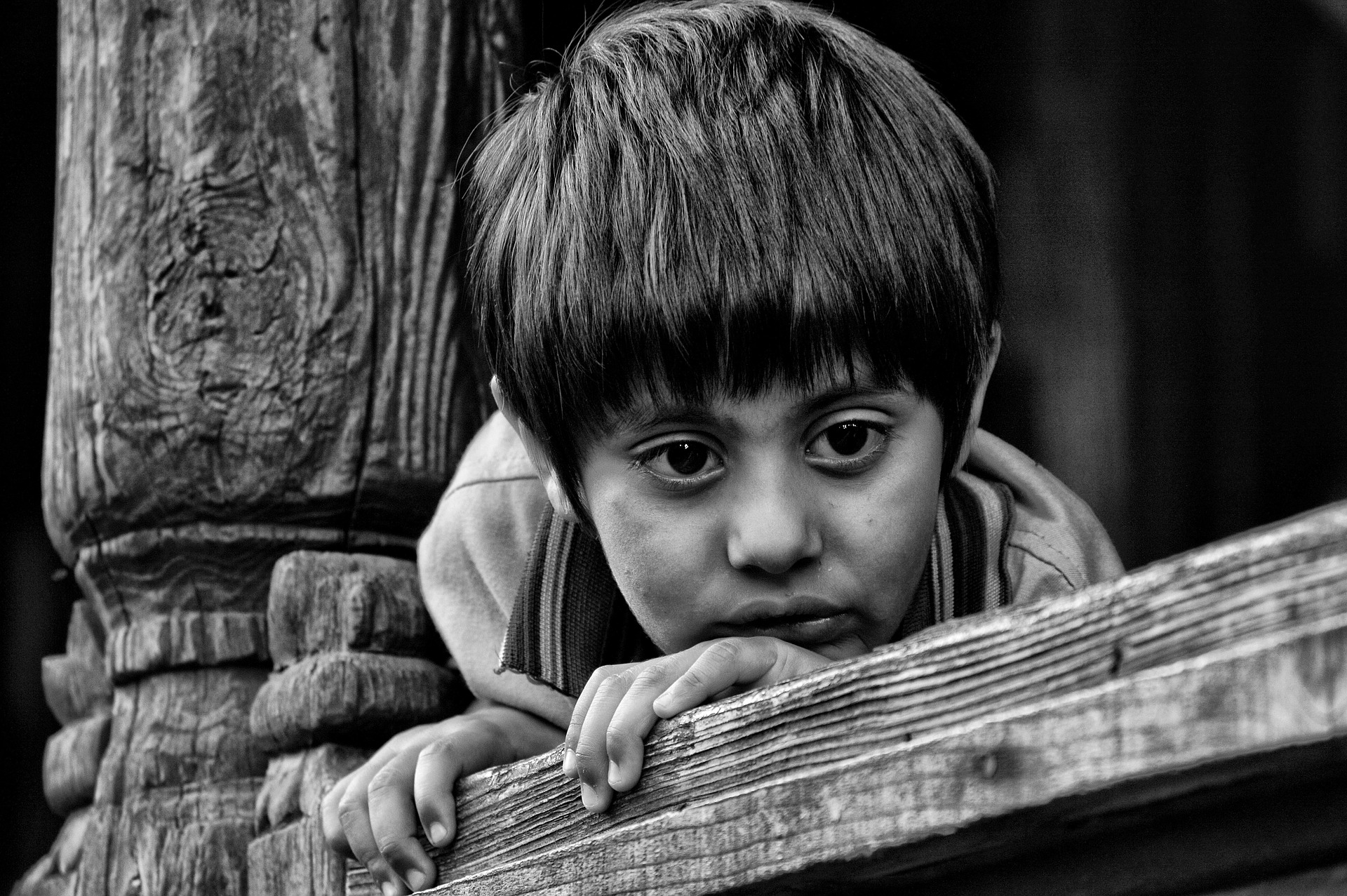
The world exasperates. A latent brutality thrums within it, undoing the stubborn innocence of things, and making ever murkier the divination of times that shall outlive us. We know History swings, endlessly, between seasons of peace and seasons of war, between ages of brilliance and ages of barbarity, between hours of human grandeur and hours of atrocious pillage. If we return to the 1980s, we recall the searing images of Biafra, of Ethiopia—the solidarity campaigns that gathered the world against hunger. We recall the fall of the Berlin Wall, the dawn of democracy in countries once shackled by Soviet rule. We recall Mandela’s release, the silencing of guns in Northern Ireland. A time, perhaps, when free thought was loosening its chains, when democracy and the rights of the unheard began, however briefly, to hold.

But the world is once again turned inside out by the same old forces—those who forever gnaw after wealth, after power, after dominion. One wave of hope gives way to another of grim despair. I think of the children in Gaza, in Ukraine, in that half of the world left wrinkled and worn, enslaved by the relentless sprawl of multinationals. It is hard to believe that a handful of words could matter—and that, too, exasperates.

And still, in these places seemingly abandoned by God—long since forsaken by humanity—there remains a force, faint but unyielding, that drives us to persist. A kind of breath of truth threads its way through the sulphur and phosphorus of falling bombs, compelling us to resist. Resistance itself exasperates. As though some hidden covenant between the last flickers of moral conscience and justice, poetry and the sheer passion for life, shame and a whisper of prayer were urging us to rise—to face the impious cries of tyrants, and the colluding silence of nations that call themselves free. I think of the children of Gaza, starving. The children stolen from Ukraine. The children of Yemen, Sudan, Venezuela. The ones who drown off Lampedusa and Tenerife. The ones who toil from dawn till dark in Bangladesh, in India, in countless places lost to maps. The ones ruled by the Taliban, by mafias, by the degenerate hands of men who harm them. I know that words do not console. Nor do donations (for ten years now I’ve given one to UNICEF on this day). Both are drops in the sea. But I must not forget. I need, as Pedro-Daniel Névio once wrote, to “place a blue thistle in the space left by the stolen heart.”

Perhaps that is the invisible, stubborn force—the one that, beneath the fingernails of the few (and of many more), moves mountains.